Cloud Storage Solutions v.18
用于将 Odoo 附件灵活归入文件夹并将目录与云客户端同步的工具:Google Drive、OneDrive/SharePoint、Nextcloud/ownCloud、Dropbox、Amazon S3、Box 和 NAS。DMS。文件管理器。文档管理系统
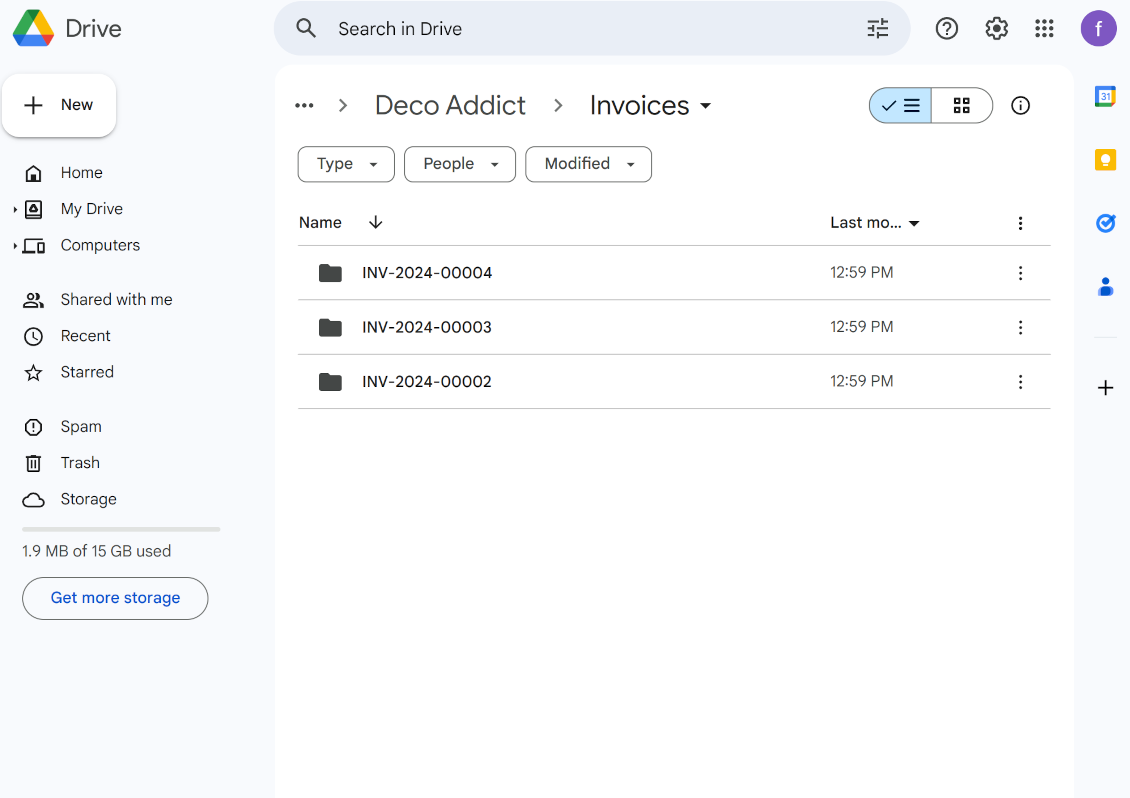
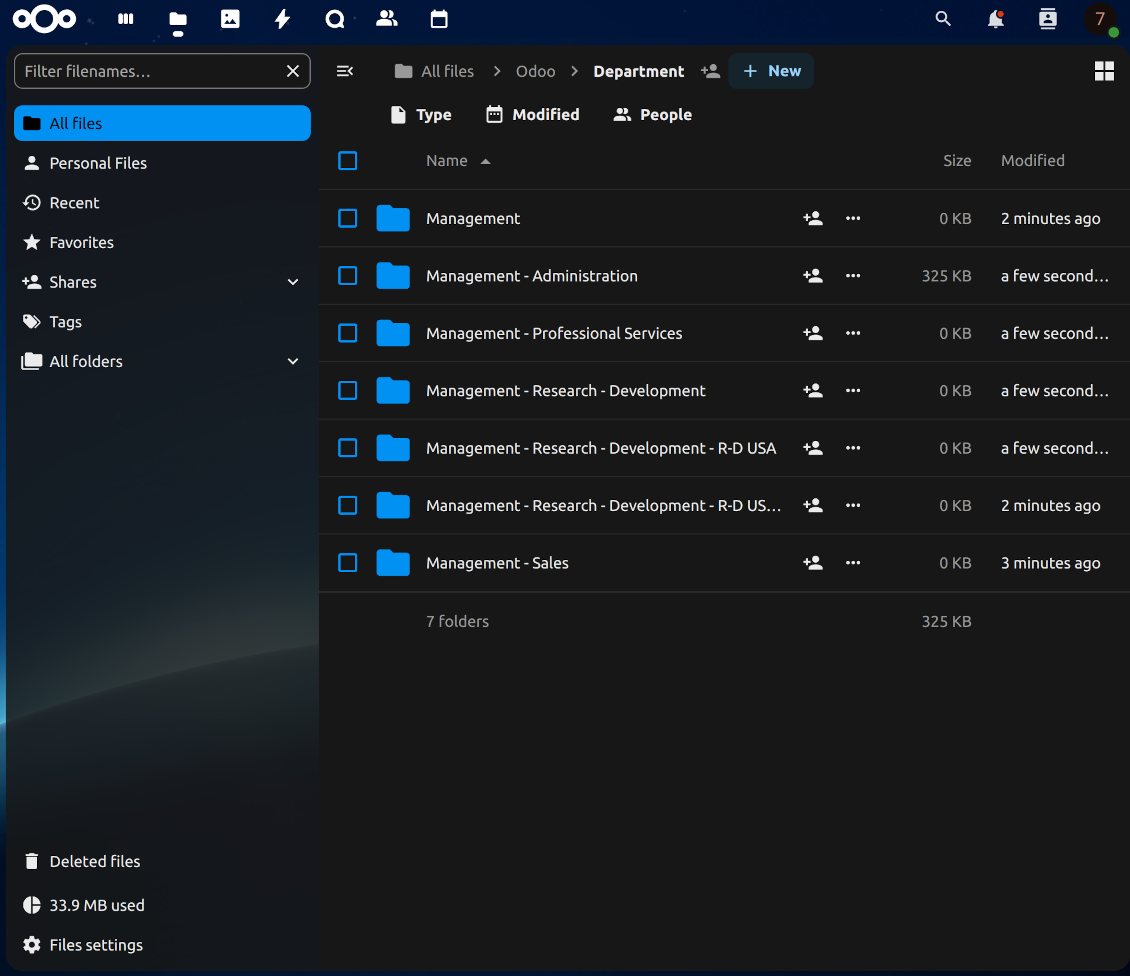
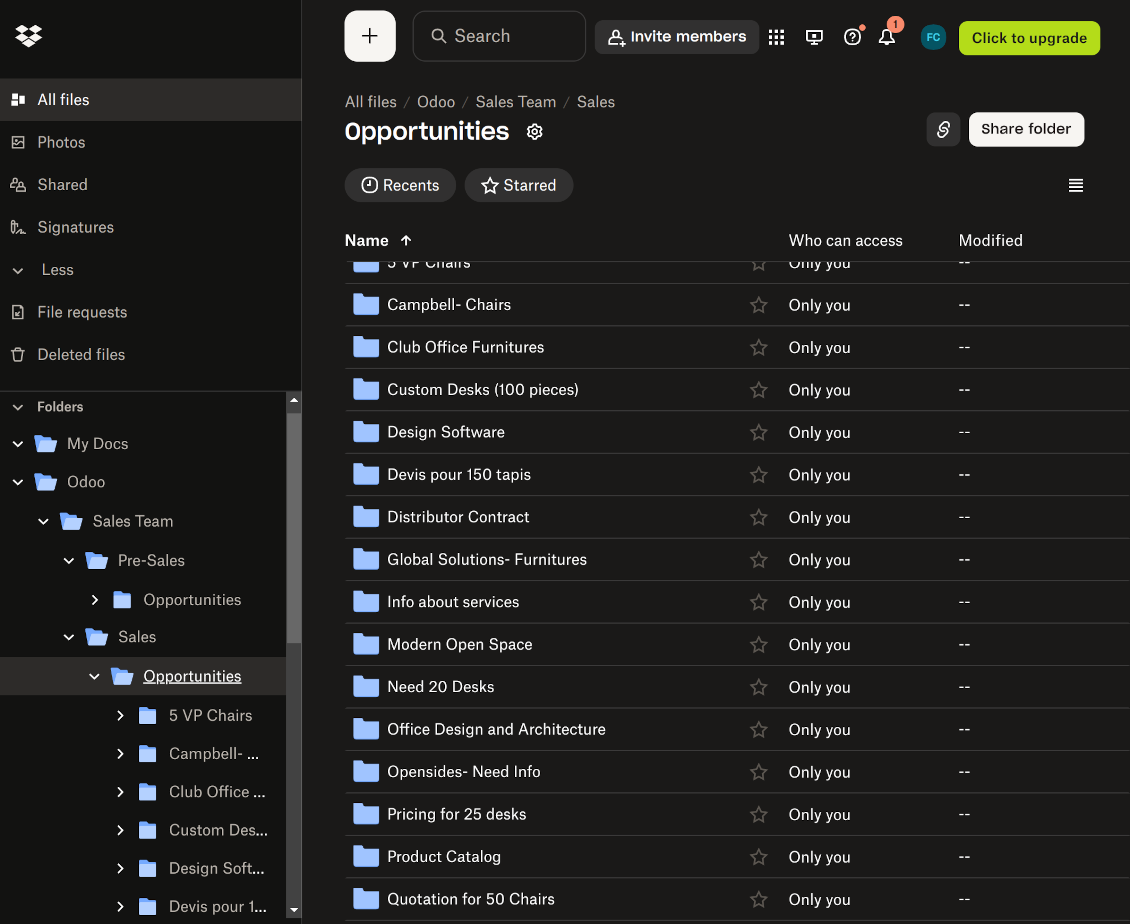
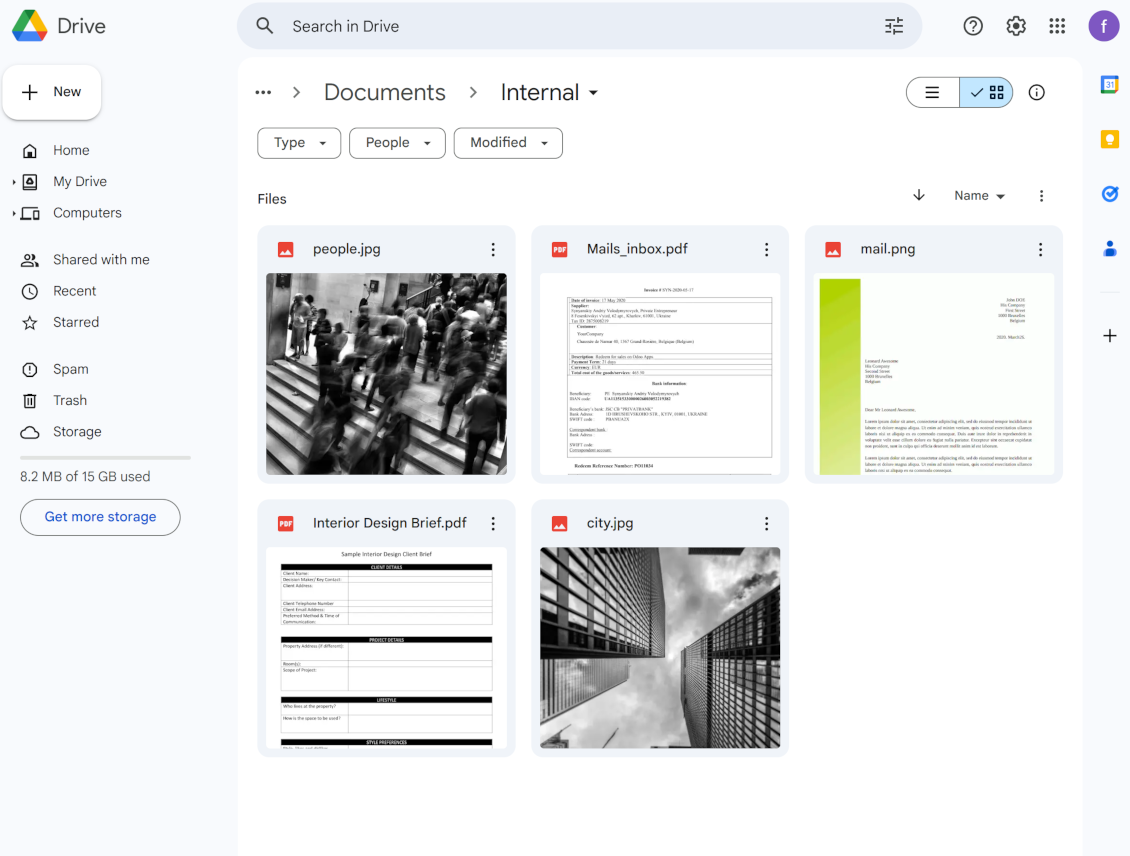

This tool organizes Odoo attachments in folders' trees and synchronizes those with your choice's cloud storage solution(s). The app introduces automatic algorithms to prepare directories for documents and integrate those with workflows of Google Drive, OneDrive/SharePoint, Nextcloud/ownCloud, Dropbox, Amazon/MinIO S3, Box, and NAS/WebDAV (Synology, QNAP, TrueNAS, etc.).
- the core module which introduces the file manager interface and basic mechanics for synchronizations with various cloud clients. 价格为 398€.
- 用于将 Odoo 文件夹和附件与 OneDrive 和/或 SharePoint 同步的连接器。此附加组件的功能以图标 标记。 价格为 89€.
- 将 Odoo 文件夹和附件与 Google Drive 同步的连接器。 本插件涵盖的功能以 图标标记。 价格为 89€.
- 将 Odoo 文件夹和附件与 Amazon S3 同步的连接器。 本插件涵盖的功能以 图标标记。 价格为 89€.
- 用于将 Odoo 文件夹和附件与 Nextcloud 和/或 ownCloud 同步的连接器。此附加组件的功能以图标 标记。 价格为 89€.
- 用于将 Odoo 文件夹和附件与 NAS 方案(Synology、QNAP、TrueNAS)及通用 WebDAV 存储同步的连接器。此附加组件的功能以图标 标记。 价格为 89€.
- 将 Odoo 文件夹和附件与 Dropbox 同步的连接器。 本插件涵盖的功能以 图标标记。 价格为 89€.
- 将 Odoo 文件夹和附件与 Box 同步的连接器。 本插件涵盖的功能以 图标标记。 价格为 89€.
- 用于准备工作区相关文件夹、并将 Enterprise 应用“Documents”引入的 Odoo 文档与云同步的可选插件。 本插件涵盖的功能以 图标标记。 价格为 44€.
Automatic Folders
Decide which Odoo document types should have their folder trees. Directories are regularly updated based on flexible rules and existing Odoo objects
Sync with Cloud Storage Solutions
Synchronize chosen folders and files with specific cloud storage: Google Drive, OneDrive, SharePoint, Nextcloud, Dropbox, Amazon, Box, MinIO S3, NAS/WebDAV (Synology, QNAP, TrueNAS, etc.), and ownCloud. Have as many connections as you need
File Manager Interface
Manage folders and attachments from a single view. Comfortably navigate by directories and tags. Search and download files one by one or in a batch. Upload and move attachments
Enhanced Attachment Box
Organize files of any Odoo object in a set of subfolders. Instantly access folders and files in the attachment box and in synced cloud interfaces
Portal Sharing
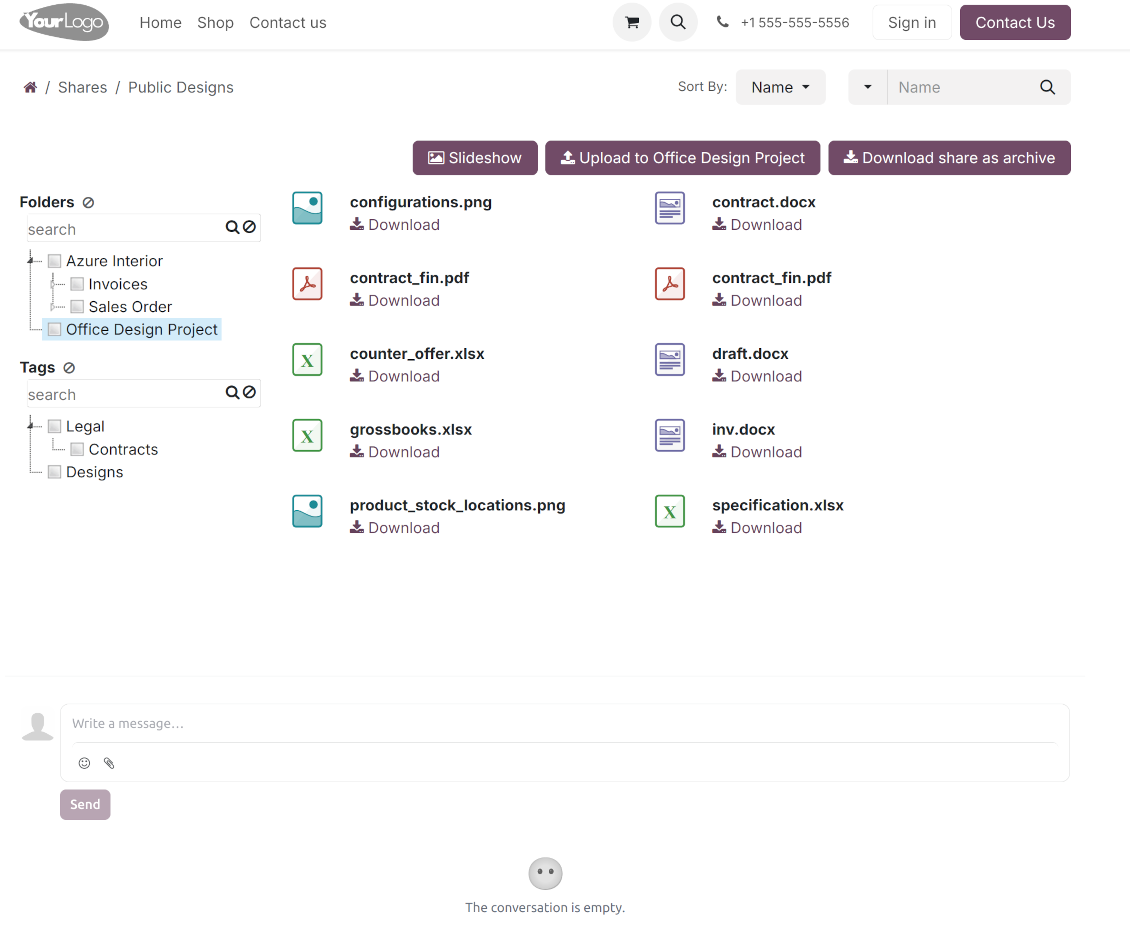
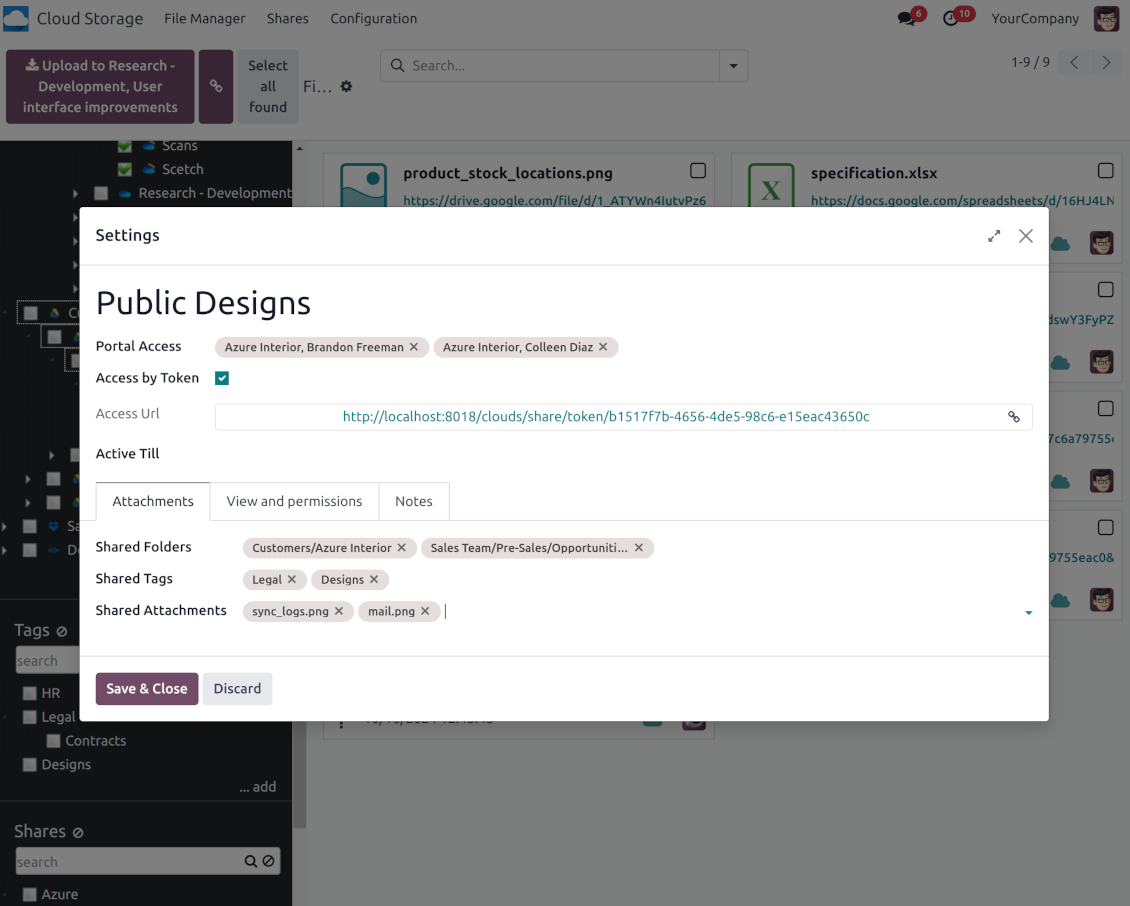
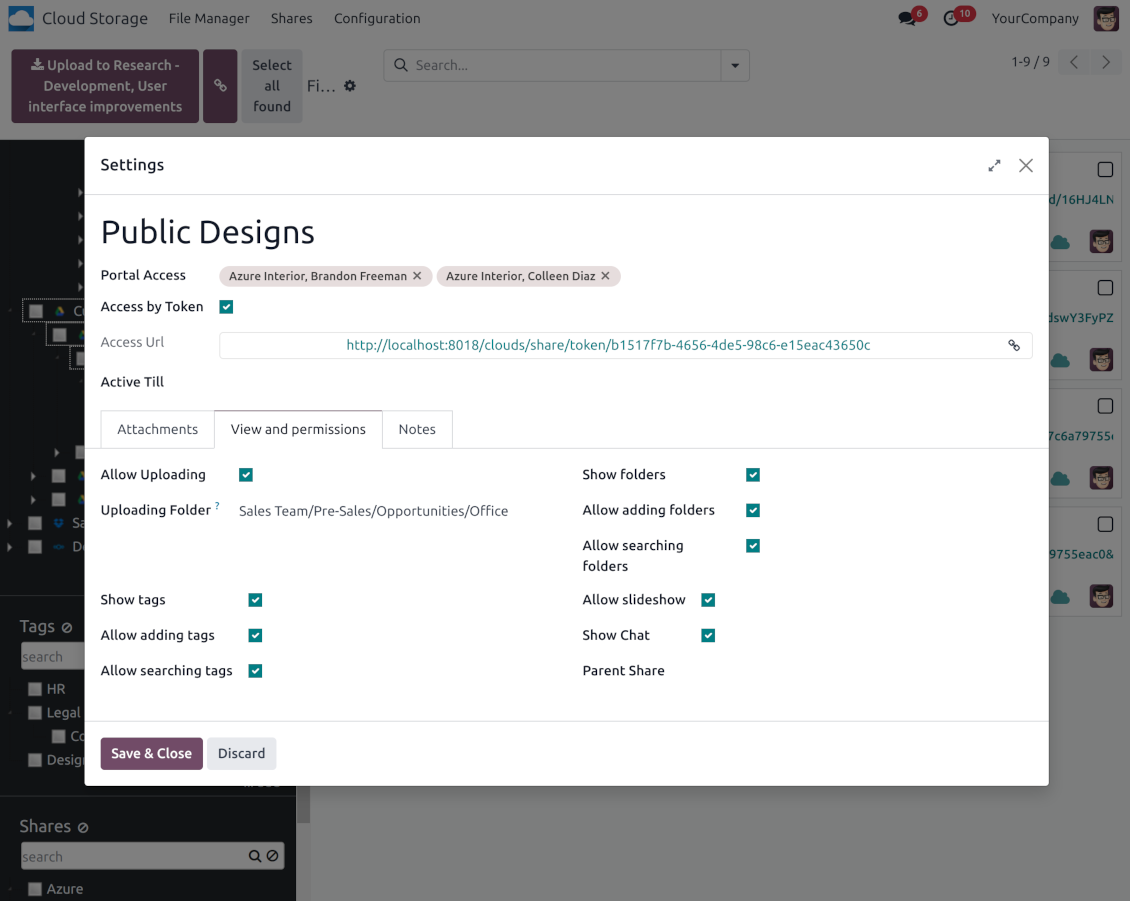
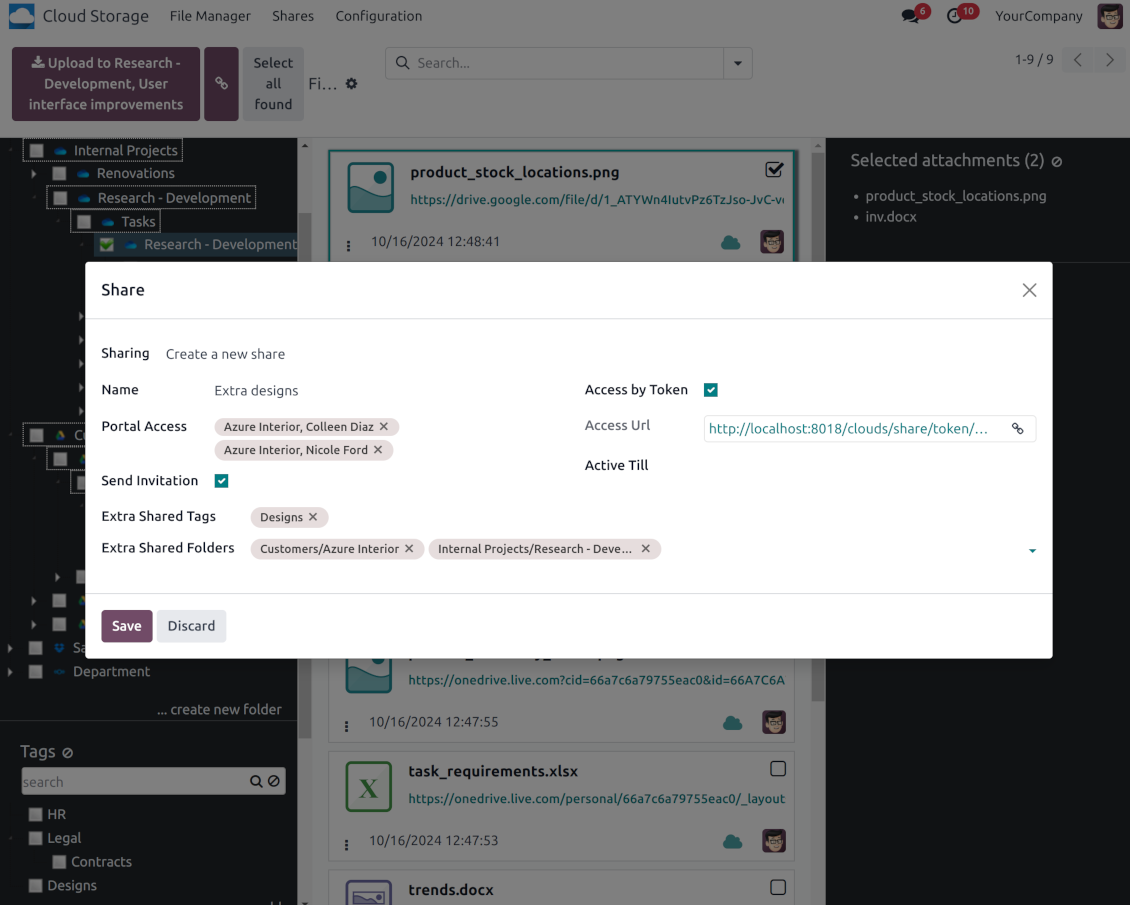
Share files, directories, and tags with particular partners or with an access URL. Let users download whole shares and separate items, upload attachments, and add folders or tags
Enterprise documents compatible
Set up rules to prepare folders based on Odoo Enterprise workspaces. All features, including sharing, downloading, and signing, will work even after the sync
Automatic Regular Sync
Rely on auto-synchronization between Odoo and cloud solutions based on scheduled jobs. No manual interaction is required
Bilateral Sync
Odoo sends attachments to cloud storage solutions and retrieves files from there. Binary content is kept in clouds, while Odoo provides direct access to synced items
Works well with SharePoint. Supportive team
We've been using this with SharePoint and it's been working great. One of the best things is having everything, including logs right in Odoo's interface, so you can actually see what's going on. It's also super convenient that you can view or download synced files from the attachment box without having to leave the page or even log in to Sharepoint.
Setup was pretty smooth for us. When we had a few questions about setting up the folder hierarchy and priorities, the developer team got back to us in just a couple of hours and helped us figure it out. Great support and great extension!
Tricky setup, but works perfectly now
Really solid module. We managed to get a very flexible folder structure (sorted by clients) and synced all our sales orders, invoices and tasks by projects to Google Drive.
Initial setup was a bit of a pain and kinda tricky to configure everything at first, but now it's running smoothly and works perfectly. The faotools team helped a lot. Def worth it if u need to keep your docs organized in Odoo and Google Drive.
Recommended!
Great support, assistance and very good connector!
We are very happy with the support we received when configuring the Sharepoint - Odoo connector. The connector has great functionalities.
All our questions were answered very fast (within one day).
FaOtools helped us optimising our connector and assisted us with future improvements.
We really recommend this connector.
Great module and Great Support!
The module works great! and the support is phenomenal!
A must-buy if it suits your requirements!
very professional app, excellen t customer service
This app is very well programmed and does its job very well. But the best is the excellent customer service who also helps when the problem lies somewhere else. You receive a lot for your money.
Excellent !!!
Great App and great Service from faOtools.
An impressive app and world-class support
I have been very impressed by the way the OneDrive / SharePoint Odoo Integration module synchronises content in both directions and allows me to share documents in Odoo with my SharePoint site. Above all the technical support is top-notch, which greatly increases the value of this product. I highly recommend this product for anyone considering synchronising Odoo with SharePoint/OneDrive.
Very good product
A perfect solution to integrate Owncloud with Odoo. We sync a high volume of objects across multiple Odoo models, which works seamless and stable. For us it is the perfect solution to have an external DMS instead of the Odoo native attachment handling, which also enables us to interchange files between systems in our best-of-breed setup.
The team behind this module is extremely professional and responsive. They helped us on a few occasions and provided clear answers and prompt support when required, and they even went out of their way to assist us with another requirement we had. Cannot recommend the product and team highly enough, try this if you're in the market to connect Odoo with an external document solution.
Works fine, good support
The first experience with the module is excellent. I had some trouble to configure things right on the Microsoft-side, but the team provided quick and good support.
Best module for integration with google drive
The module performs its function correctly and faOtools responds quickly to any problem and, in case of detecting any bug, quickly apply the changes. Its support is 10 stars.
Works according to specs
I have used this app with Odoo 12 and Nextcloud 16 and it works as specified. Odoo Tools offers very responsive support which is really helpful. Of course 5 stars...!
This is Awesome
I have used Cloud Sync on Next/Own Cloud and works really great.
Odoo 文件管理器界面
-
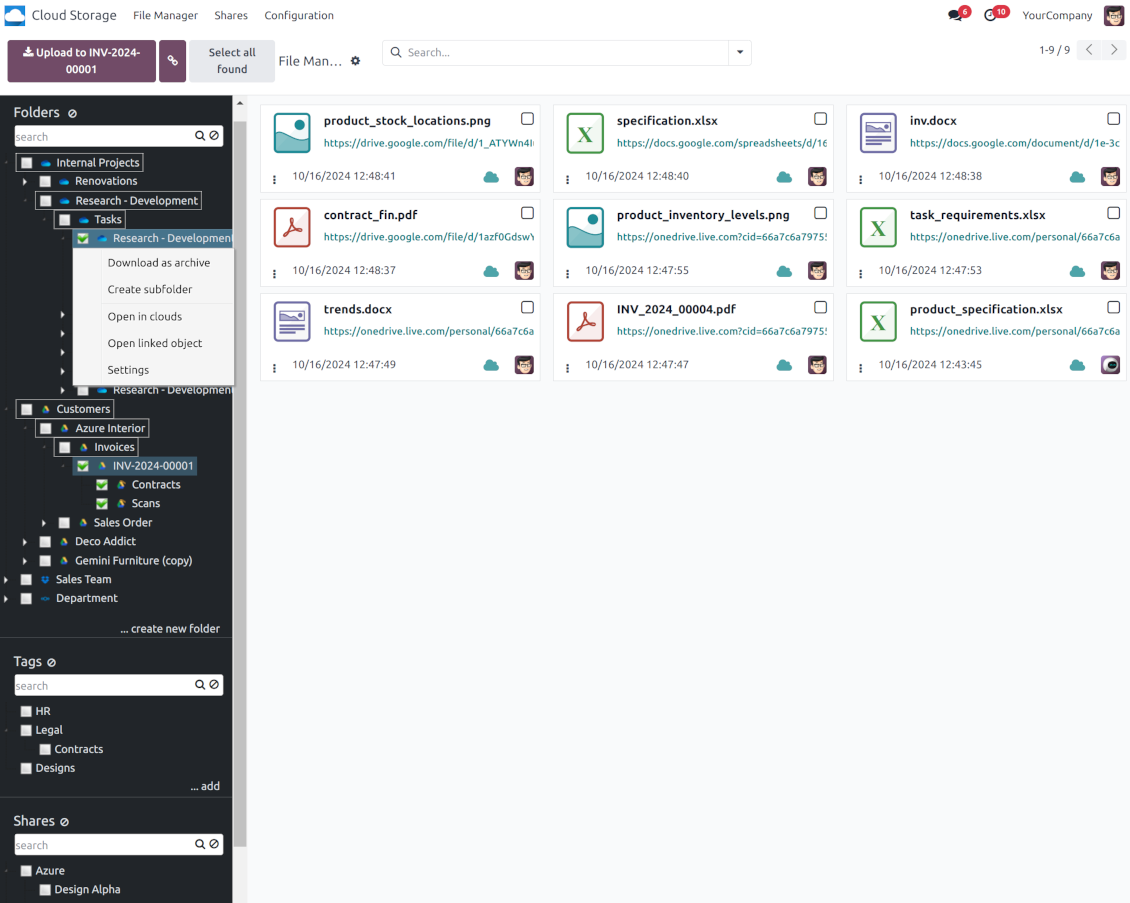
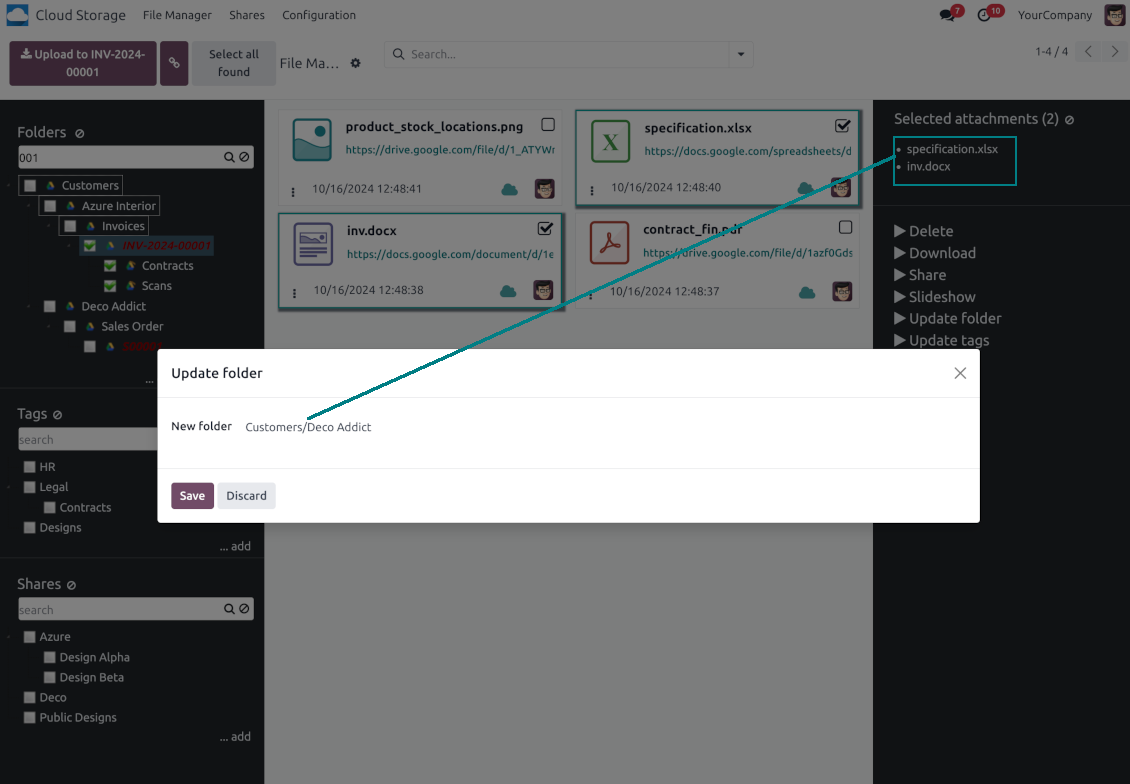
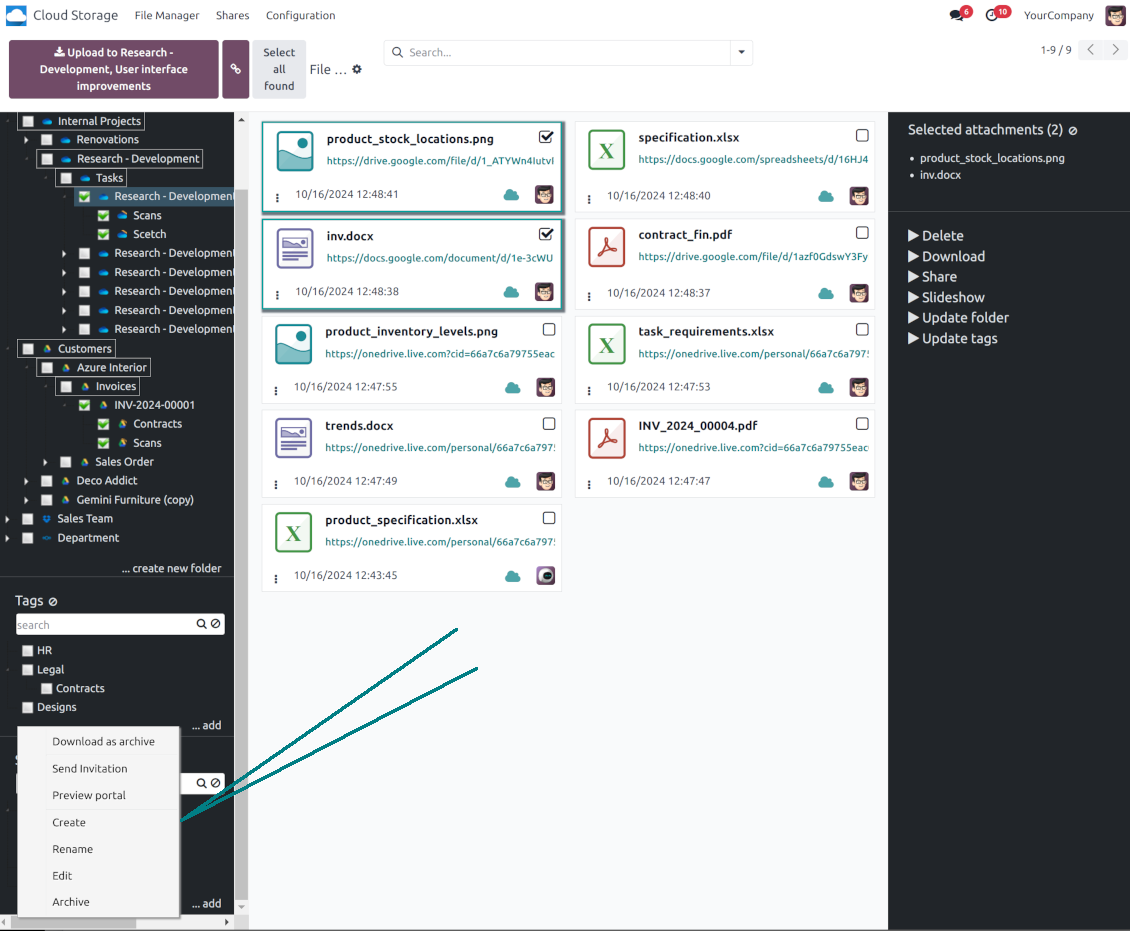
Navigate by folders: select a directory to show its attachments. Expand and hide folders' layers in a click. Add subfolders to any directory (right mouse click > Create subfolder)
-
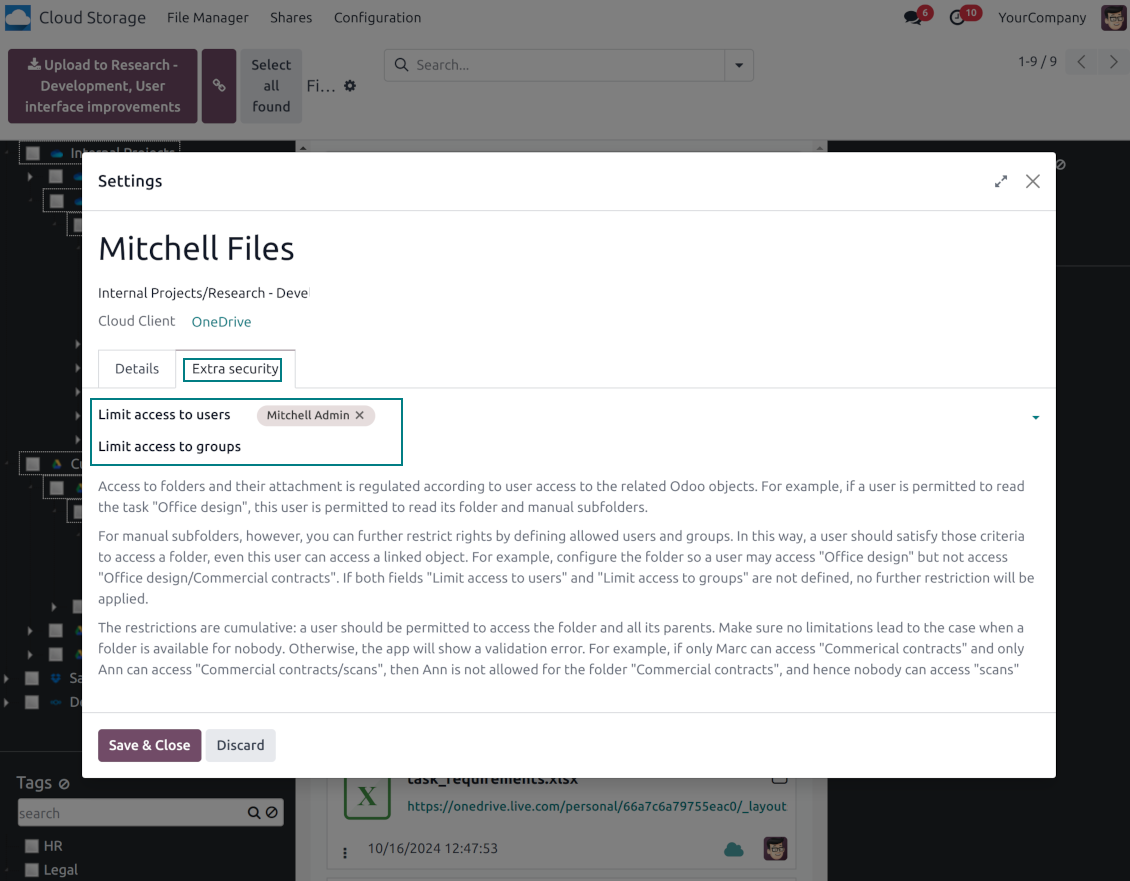
Open any synced folder in its cloud client (right mouse click > Open in clouds). Show a folder peer Odoo object if there is such a connection (right mouse click > Open linked object). Change settings of manually created folders, including granting access rights (right mouse click > Edit Settings)
-
Navigate by attachment tags. Create and edit tags right from the navigation panel
-
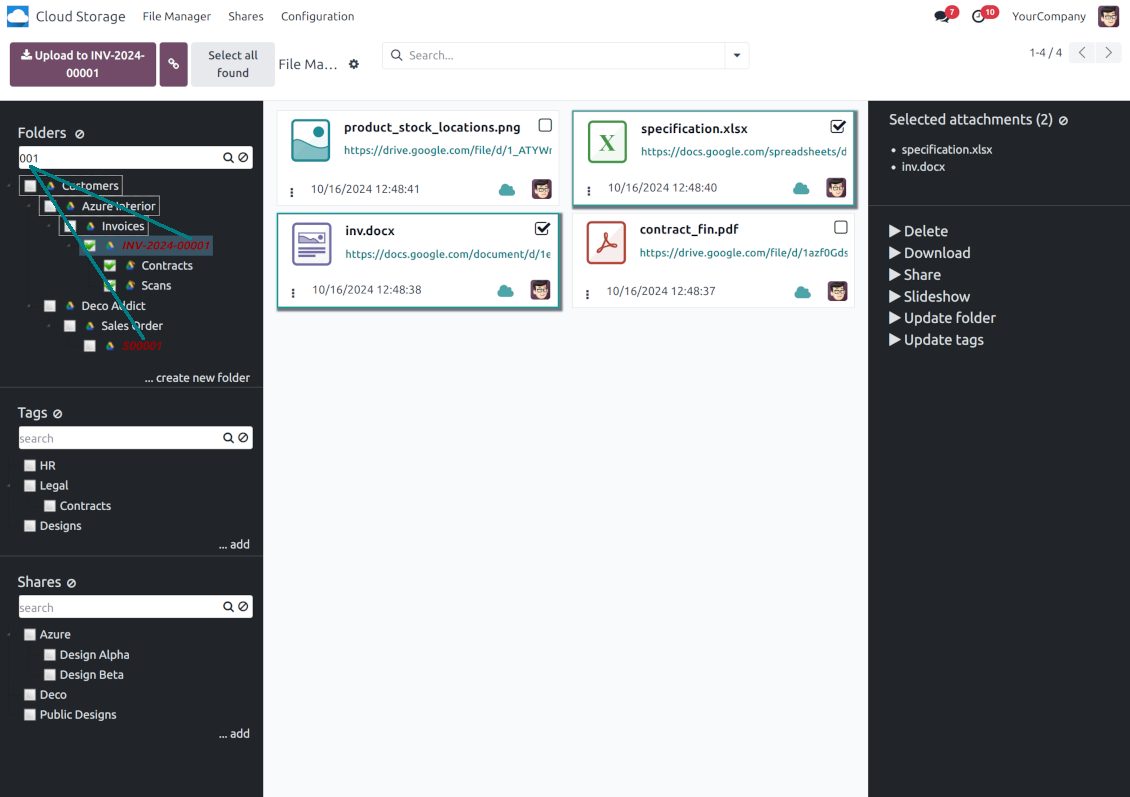
Search and highlight tags and folders in seconds even if there are thousands of items
-
Drag and drop to re-structure folders (relates only to manually created directories; for automatic folders change rules instead) and tags
-
Download any folder or any tag with all its attachments as a single zip archive (right mouse click > Download as archive)
-
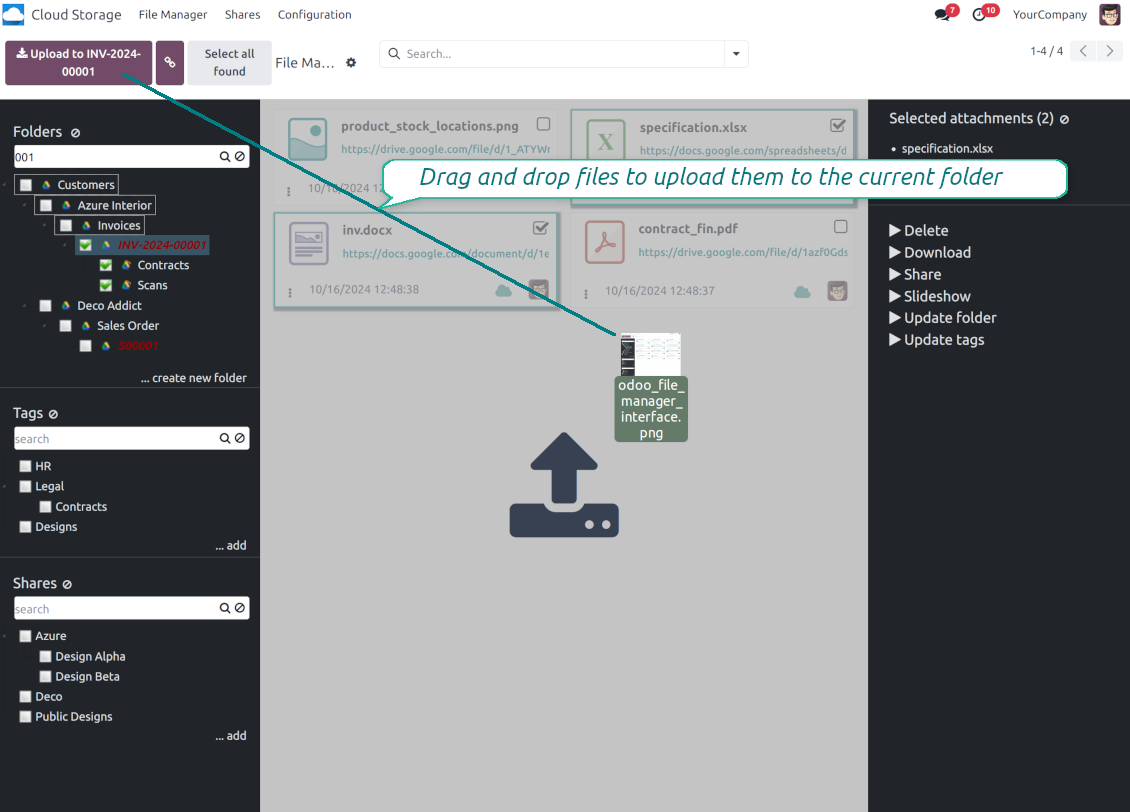
Upload attachments to the current folder. Use the top header button 'Upload file' or drag and drop files
-
Instantly open any synced attachment in a linked cloud client (push the link in the middle of attachment cards)
-
Download any attachment to your local computer disregarding whether it is synced or not (push the icon 'cloud' or 'download' in the footer right corner)
-
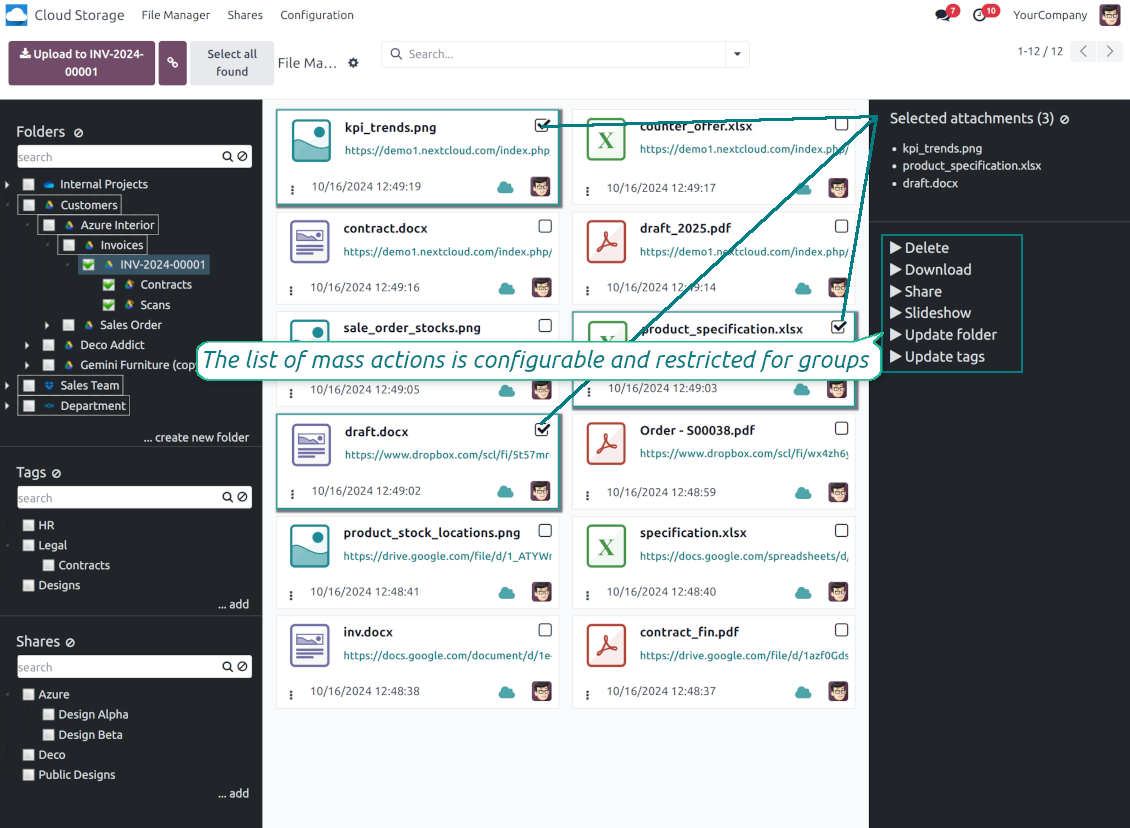
Consequentially select attachments and download them as a single zip archive
-
Move any files to any folder, including re-attaching items between Odoo objects (e.g. from a sale order SO-001 to another quotation or its customer folder). Use the mass action for that end or just drop an attachment to a required directory. Update attachments' tags by dragging those to the left navigation panel or by executing the mass action. Delete attachments in a batch
-
Apply standard attachments search to find required files.
Enhanced Attachment Box
-
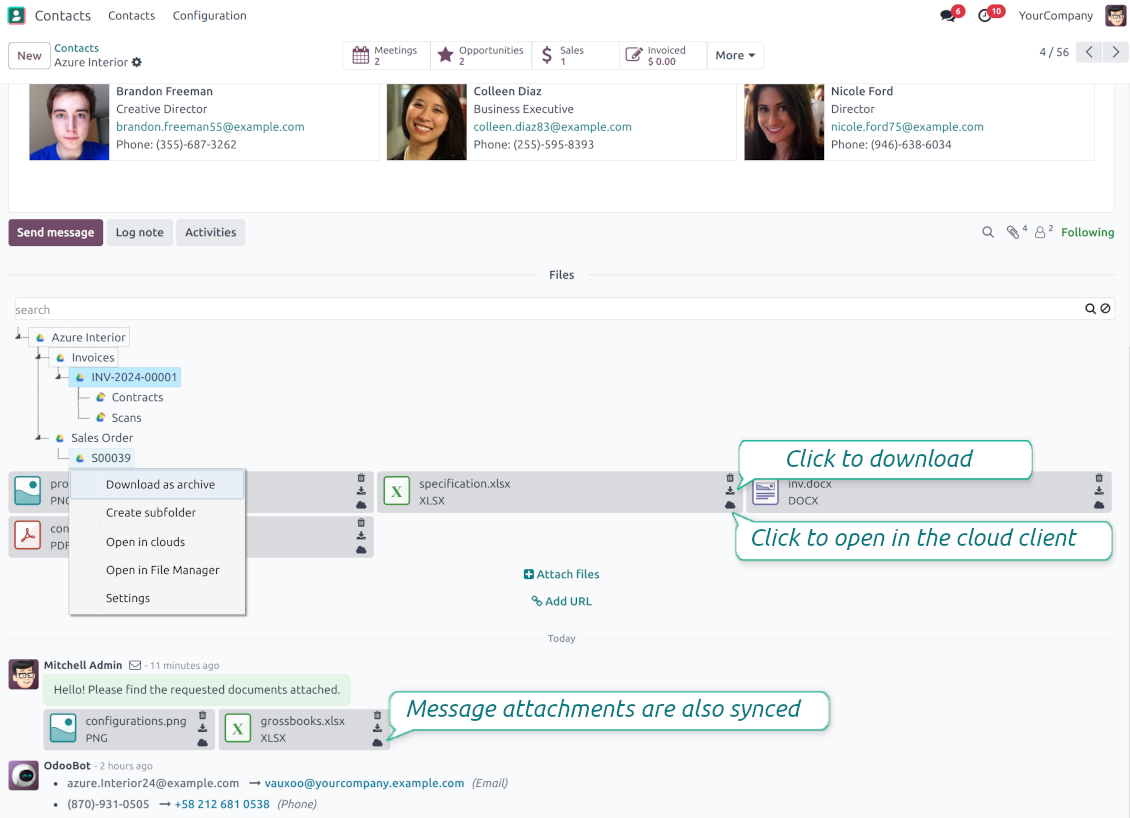
Any Odoo object might be linked to its folder. See Automatic folders' structure
-
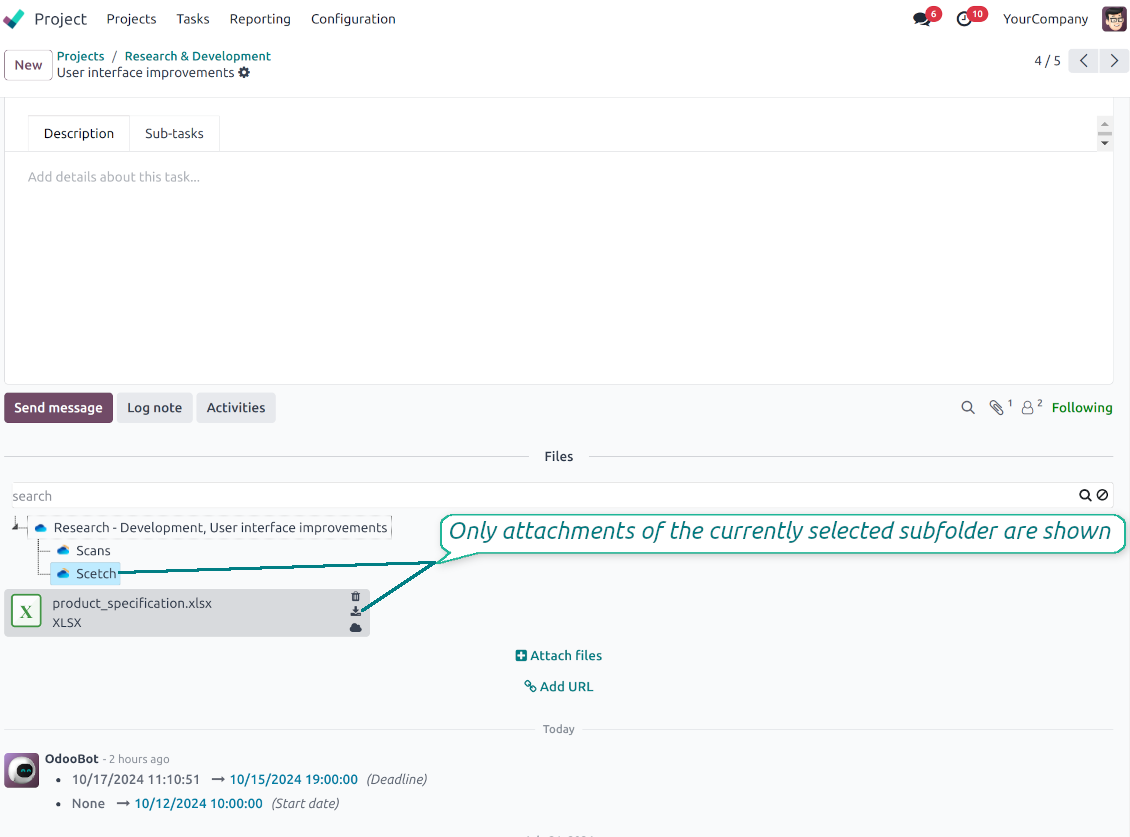
Flexibly define subfolders to organize the structure you need (right mouse click > Create subfolder)
-
Drag and drop to re-structure subfolders
-
Select a folder to see its attachments. By default, files of the object root directory are shown
-
Download any folder with all attachments as a single zip archive (right mouse click > Download as archive)
-
Open the already synced folder in its cloud client (right mouse click > Open in clouds)
-
Upload attachment to a chosen folder (use the button 'Add attachments' or drag files to the attachment box area)
-
Instantly open any synced attachment in a linked cloud client (push the icon 'clouds')
-
Download any attachment to your local computer disregarding whether it is synced or not (push the icon 'download')
-
Use standard Odoo preview for both synced and local files (click on a file thumbnail)
-
Delete attachments as usual
-
All actions are equally applicable to object attachments and attachments related to messages.
Cloud Storage 同步
Multi synchronization
-
Use optional add-ons to synchronize the document management system with the cloud client(s) of your choice: Google Drive, OneDrive, SharePoint, Nextcloud, Dropbox, Amazon, Box, MinIO S3, NAS/WebDAV (Synology, QNAP, TrueNAS, etc.), and ownCloud. Have as many connections as you need
-
Establish multiple connections to different cloud clients simultaneously. For example, sync sales-related folders to Google Drive; tasks and projects - to SharePoint or OneDrive; HR documents - to Nextcloud/ownCloud; manufacturing specifications - to Dropbox. Take into account that a specific folder might be synced to only a single cloud storage solution. Its children would be synced to the same client
-
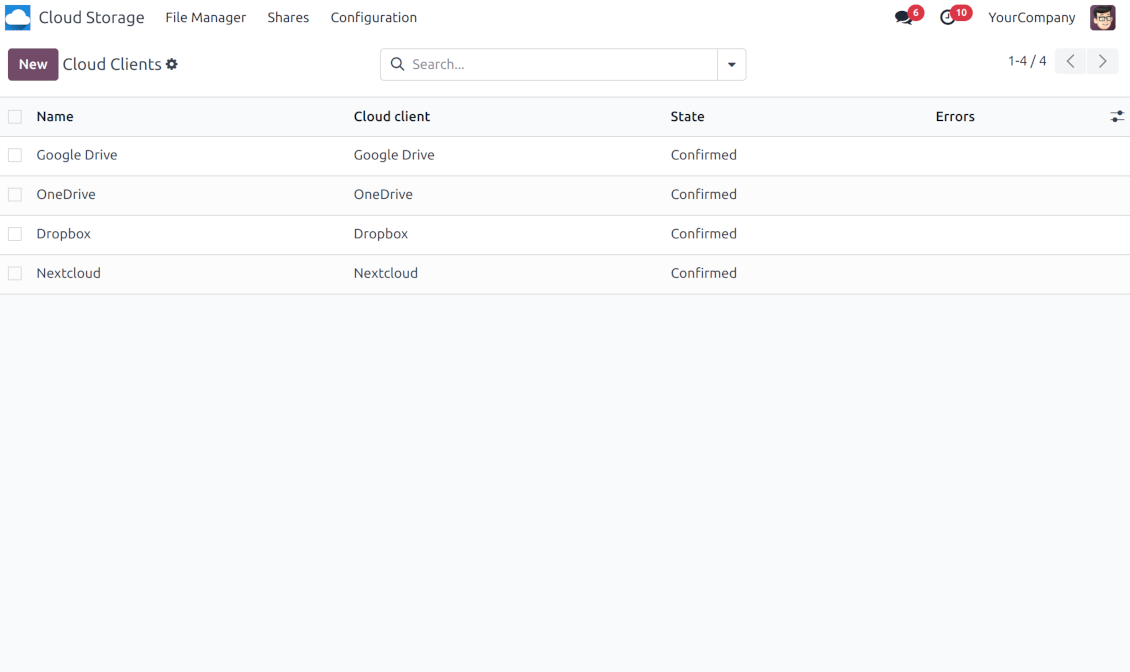
For each cloud client, the app lets set up a few instances. For example, for Google Drive, you may share some folders to your personal drive, others - to one of your team drives, and the rest - to your teammate's drive
-
To establish a connection with particular cloud storage, follow the instructions that are specific for client types. See the tab Configuration for details
-
Any connection might be paused manually if it is needed. It might be also auto-stopped if there are critical issues during the sync. Then, you should re-connect to a target cloud client
Cloud clients
-
Synchronization for all cloud clients is based on the same principles and on the same queue. Simultaneously, there might be differences in sync results due to different features of various cloud storage solutions
-
Establishing connections for different types of cloud clients assumes installing optional add-ons, different approaches for Odoo, and external API configuration. Follow the instructions on the tab 'Guidelines'
-
Google Drive Odoo Integration allows establishing a connection with any personal or team drive
-
OneDrive / SharePoint Odoo Integration assumes synchronization with any drive of personal/business/SharePoint tariffs
-
ownCloud/Nextcloud Odoo Integration et integrate Odoo with any instances of ownCloud and Nextcloud. In comparison to other clients, the app allows setting the type of attachment links. By default, Odoo links are internal: only authorized users may access them. Optionally make links public (the setting 'Use Public URLs'). See details on the guidelines tab
-
Dropbox Odoo Integration works for all DropBox tariffs, including Personal DropBox (Basic, Plus, Family) and business DropBox (Professional, Standard, Advanced). In comparison to other clients, the app allows choosing whether cloud items would be shared or internal. See details on the guidelines tab
-
Amazon S3 Odoo Integration (amazon_s3_odoo) synchronizes Odoo folders and attachments with Amazon S3 buckets
-
NAS/WebDAV Odoo Integration (nas_odoo) connects Odoo documents with NAS and WebDAV-compatible storage, including Synology, QNAP, and TrueNAS
-
Box Odoo Integration (box_odoo) synchronizes Odoo folders and attachments with Box cloud storage
Automatic two-sided sync
-
Integration is based on scheduled jobs and is fully automatized. The app regularly checks changes in systems and runs sync operations
-
Synchronization is bilateral. Updates in Odoo are reflected in cloud clients (direct sync); changes in cloud clients modify Odoo folders and attachments (backward sync)
-
在客户端关闭来自云端的同步,即可保持单向同步。Odoo 中的更改仍会推送到云存储,但在云端创建、重命名或删除的文件和文件夹不会反映到 Odoo。再次关闭该选项时,这些累积的更改(包括删除)会在下次同步时应用
-
Any cloud connection might be reset. In this way, the app assumes getting back all items back to Odoo (reverse sync)
-
Odoo folders and attachments might be re-attached to a new cloud client. Hence, items will be first taken back to Odoo (reverse sync) and then put will be put to the new cloud storage (direct sync)
Queue-based synchronization
-
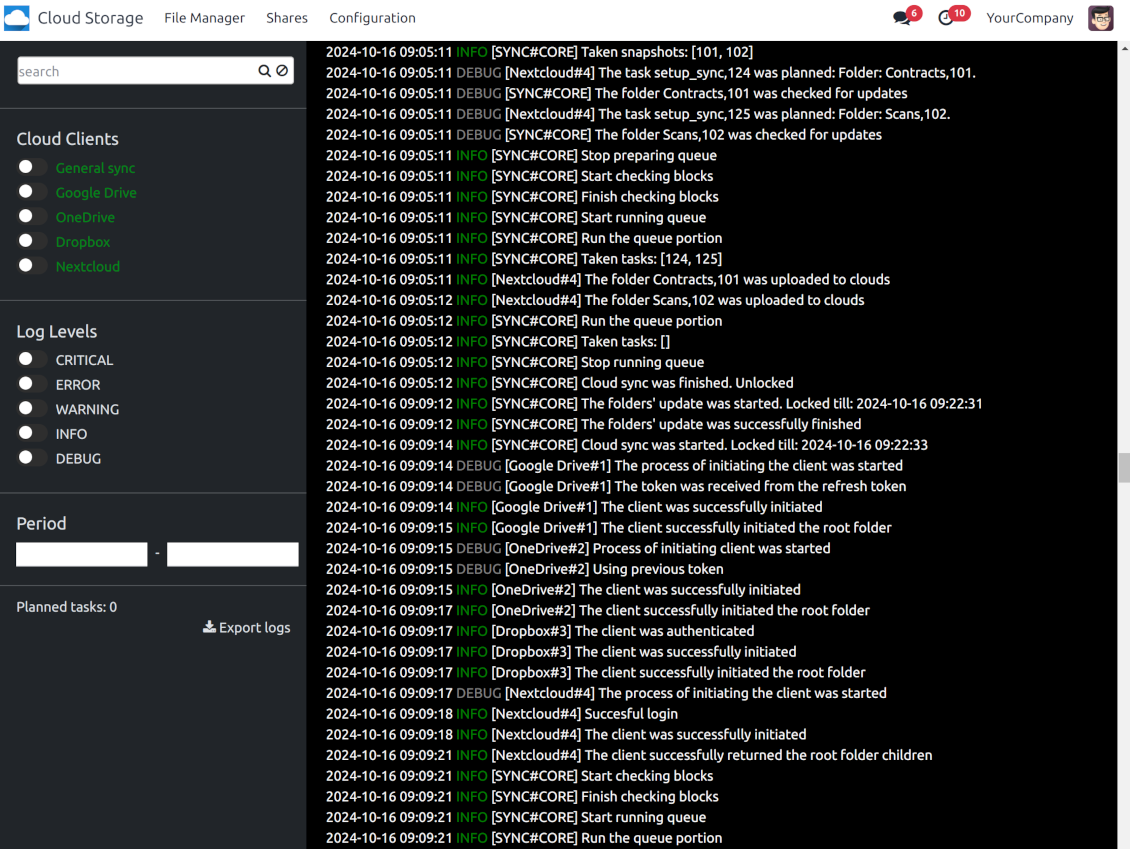
Once in 15 minutes, the app examines updates in Odoo and cloud storage(s) to prepare a synchronization queue
-
Folders' checks follow the First-In-First-Out (FIFO) principle. So, directories that have not been examined for the longest will be processed first
-
Once in 15 minutes, the sync queue is run by the special scheduled job. Firstly, the most important (blocking) tasks would be done
-
Control planned jobs and their fulfillment in the special Odoo logs interface (Cloud Storage > Configuration > Sync Logs). Subscribe for particular cloud clients notifications
-
If the app faces sync failures, it will re-try operations afterward. Sync queue processing would not be stopped if there are items not blocked by such failures
Odoo attachments for cloud storage: direct sync
-
Direct sync prepares the folders' hierarchy and uploads Odoo attachments for cloud storage
-
Direct sync checks whether attachments are added or deleted for synced directories. If so, they would be created or removed in cloud storage. In particular, it means that any file added to a folder-related Odoo object (e.g. Quotation), would be automatically moved to a linked cloud client
-
Direct sync makes all synced Odoo attachments change their type to a link (URL), while binary content is removed with one of the next Odoo cleaners. So, no actual files would be stored on your Odoo server
-
Direct sync checks whether a new folder is added. Disregarding whether it is done manually or automatically, the app would generate a peer directory in a cloud storage
-
Direct sync checks whether there are any updates in folders. If so, such changes are reflected in a cloud client
Cloud storage files and folders for Odoo: backward sync
-
Backward sync checks whether any files or subfolders are added to cloud storage folders. If so, the app would create URL attachments/subdirectories inside linked Odoo directories (and hence Odoo objects if any)
-
Backward sync checks whether there are any updates in folders or attachments. Such updates would be then reflected in Odoo
-
Backward sync checks whether any files are deleted/moved in a cloud document folder. If so, a linked Odoo attachment would be also unlinked or moved
-
If you deleted a cloud storage folder related to a folder rule / Odoo object, their child files would be deleted as well. Thus, Odoo would remove related attachments. The folders, however, will be recovered with a direct sync
-
In case of conflicts, direct sync changes are in general considered more important than backward updates.
Resetting or changing cloud client: reverse sync
-
In case you decided to reset the connection with a specific cloud client, files would be moved back to Odoo
-
当云存储中的副本应保留为唯一副本,或连接已中断时,在客户端关闭反向同步。之后取消关联、重置或停用该客户端不会把文件下载回来,也不会删除云存储中的任何内容。Odoo 对象与其云端项目之间的连接被切断。已保存的链接仍可在云存储中打开文件,但 Odoo 不能再下载、预览或打开这些文件夹和文件。该连接无法恢复
-
In case you decided to change the cloud client of a folder rule or a folder, files would be first taken back to Odoo, and then direct sync for a new client would be done
-
Reverse sync operations are prioritized to direct and backward sync operations
-
Not all items can be correctly reversed to Odoo due to cloud client peculiarities. For example, there are documents that may exist only in cloud storage environments (e.g. Google Sheets). The app would try to convert such documents, but in some cases, it would require manual interactions.
Automatic Folder Structure
Rules for automatic folders
-
The app allows preparing its own folder for any Odoo object
-
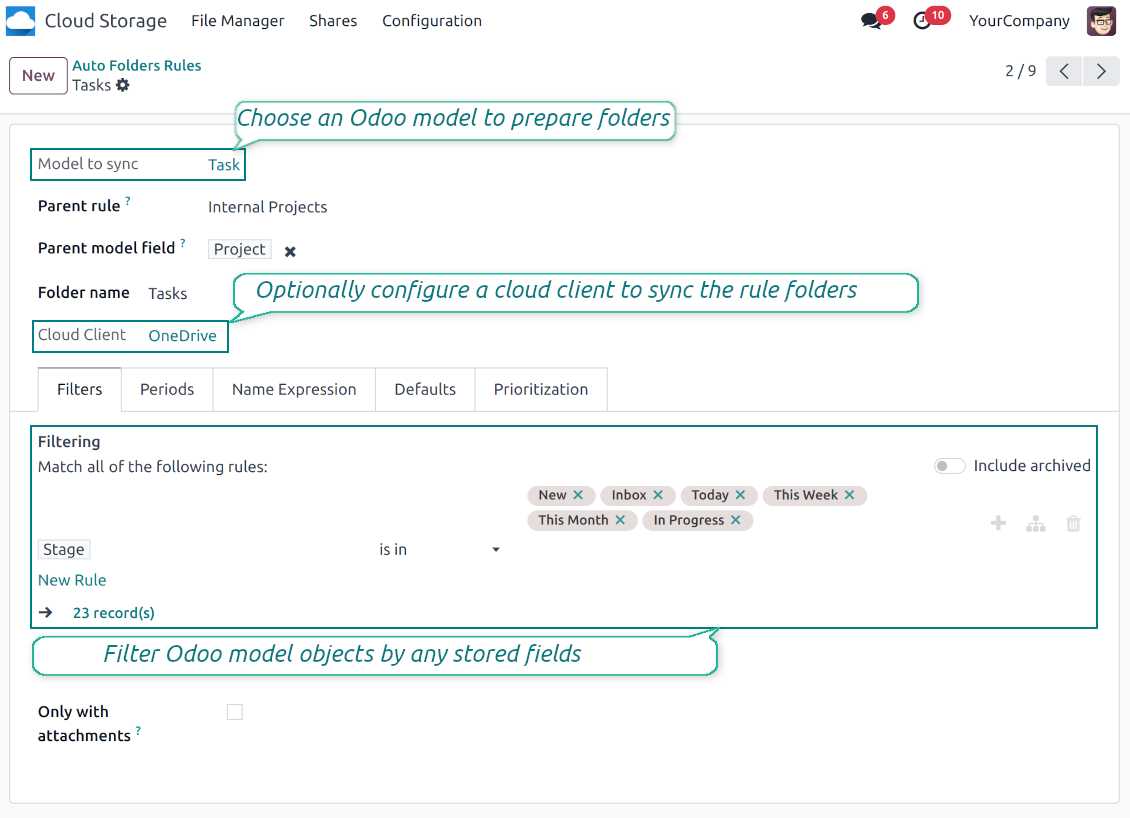
To configure a particular Odoo document type to generate a folder, you should just prepare a new folder rule (Cloud Storage > Configuration > Folder rules). For example, select the model 'Task' to make Odoo add a folder for each project task, so Tasks > Task 1, Task 2, ...
-
Automatically created directories would contain all attachments their linked objects have
-
Folders are updated regularly based on the scheduled job
Multi directories for each model
-
Each Odoo model might have a few linked folders
-
Apply any model storable field to filter Odoo objects and, in this way, split objects into a few super directories. For example, have own folders for individuals and companies, for European and American opportunities, for quotations and confirmed orders, for each project
-
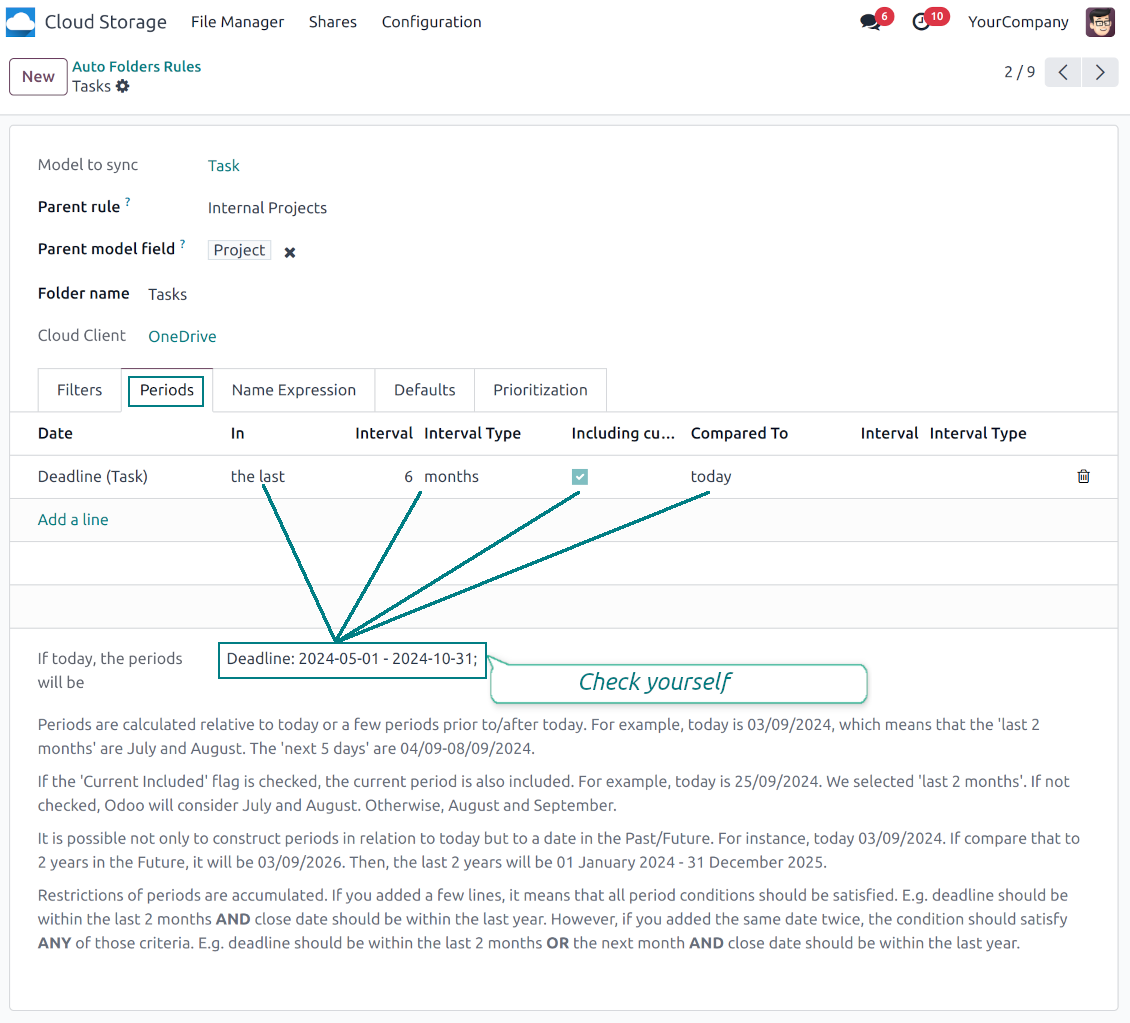
Filter Odoo objects by relative periods by applying date fields of linked documents. For example, leads registered in the last 3 months or invoices updated in the last week
-
As a result, the app lets have paths like 'Odoo > Quotations Europe > SO-001' or ' Odoo > the last year posted invoices (America) > SO-001'
Flexible folders' tree
-
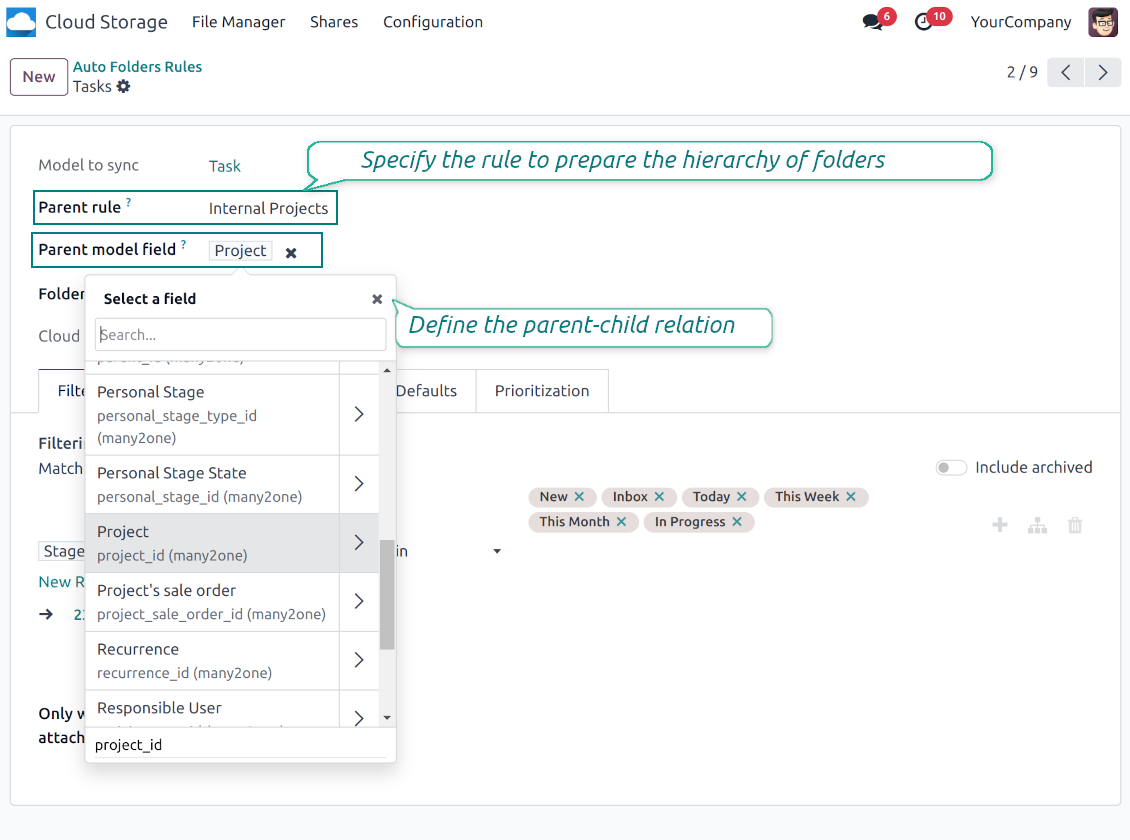
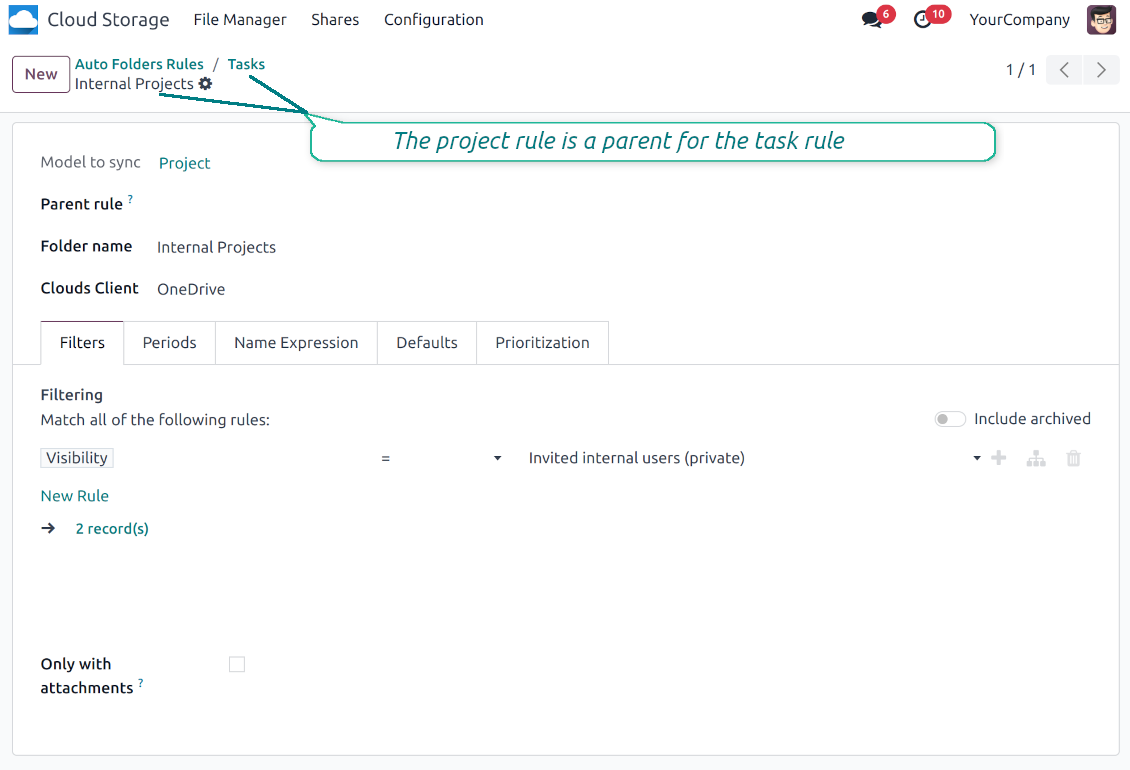
It is possible to set up a hierarchy of folder rules to prepare a more flexible directories structure
-
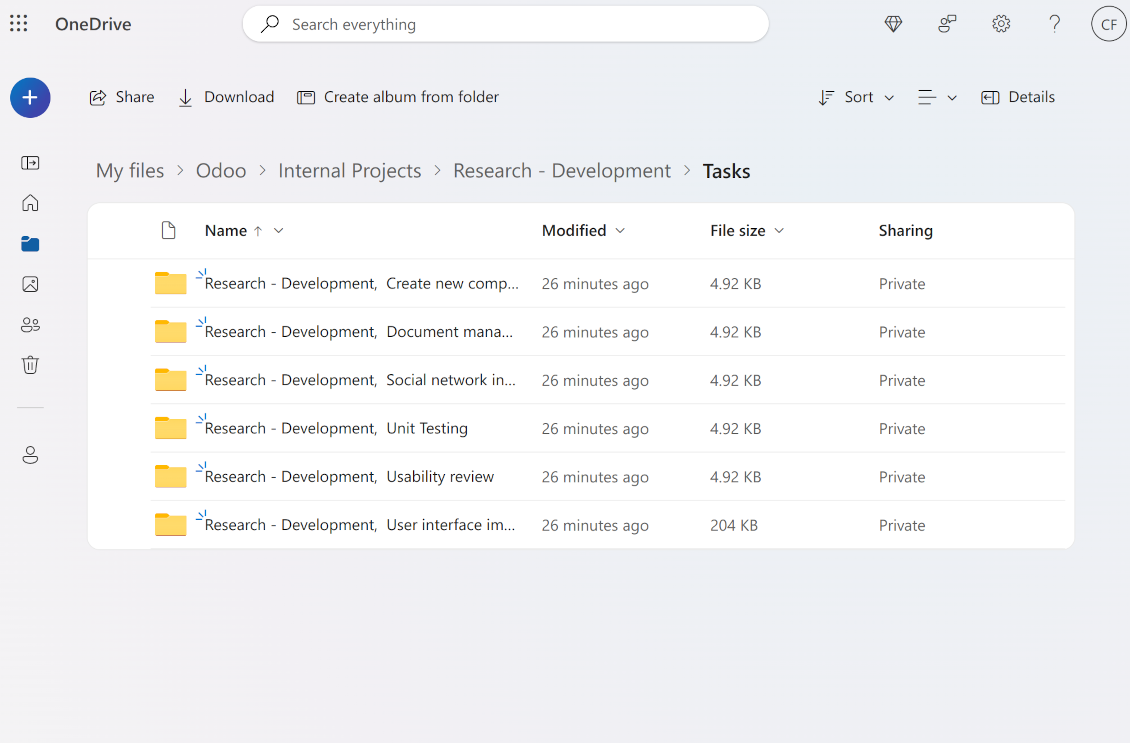
To that goal define a parent rule for a required folder configuration. For example, use a project-related rule as a parent for a task-related rule, a customer-related rule - for invoices-related rules
-
In order for folder relations to work correctly, it is also needed to enter a parent model field. So, it is the field that links models between each other (many2one relation). For example, 'Project' of a task, 'Customer' of a sales order, or 'Sales Team' of an opportunity
-
As a result, the tool allows reflecting your Odoo workflow logic and have paths like 'Odoo > Customers > Azure Interior > Projects > Software Design > Prepare Specification' and 'Odoo > Customers > Azure Interior > Quotations > SO-001'
Subfolders, default folders, and default files
-
The app lets add an unlimited number of manual subfolders for each folder. In particular, you may have a directories tree right in each object attachment box
-
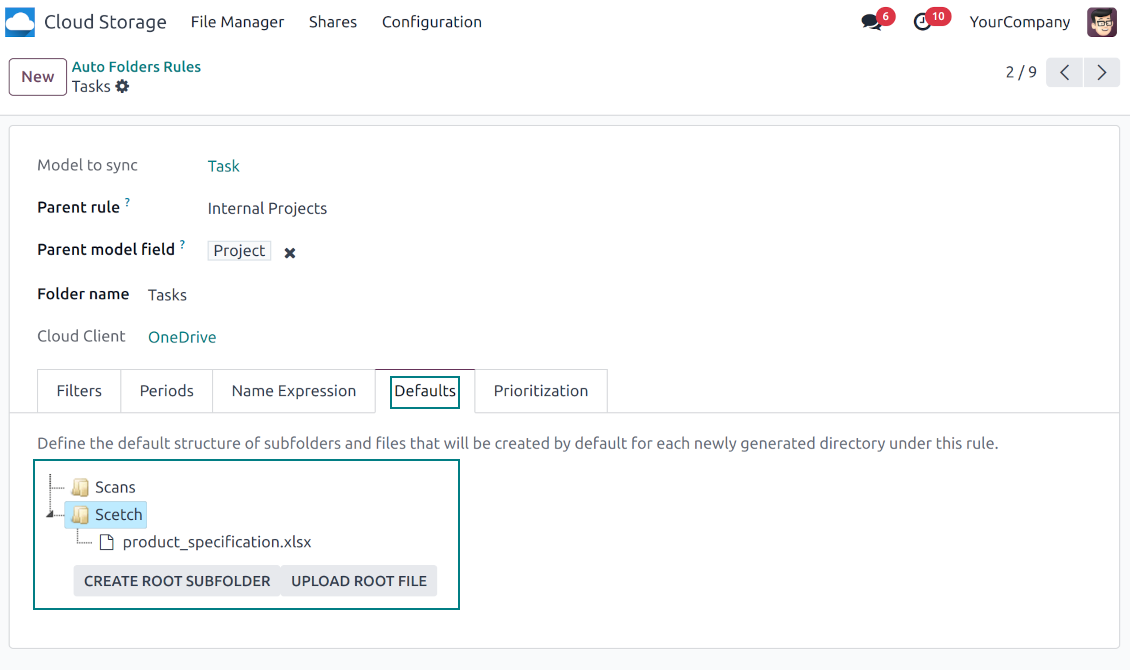
For the first generation, it is possible to define default folders, so subdirectories would be auto-generated for a specific Odoo object folder. Afterward, you may add delete/edit those or add new ones
-
The same mechanics are applied to prepare default files. For example, to have contract/personal card templates which then are assumed to be filled with real data
Configurable folder titles
-
Each folder rule assumes to generate a directory. Names for such directories are assigned right on a rule form. For example, introduce 'Jobs' for a task-related rule or 'HR' for employees' folders. By default, the Odoo model name would be used
-
For object-related folders, the names are generated based on the Odoo standard display names. So, if not defined the opposite, it would be the same title as you see in the Odoo form view header
-
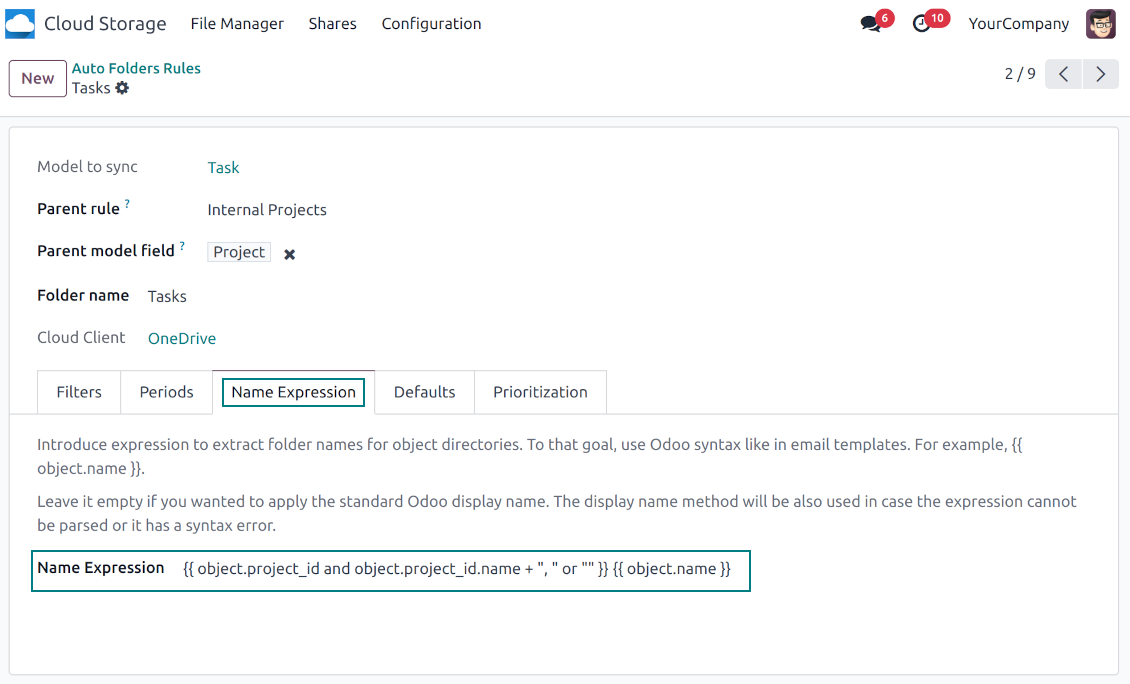
The app lets define complex name expressions for object-related folders (the tab 'Name Expression' on a folder rule form). To that goal, apply the syntax used in Odoo email templates. For example, {{ object.project_id.name }}, {{ object.name }} to reflect a project name in tasks folders
-
Avoid the following symbols in folders' and files' names: *, ?, ", ', :, <, >, /, +, %, !, @, \, /,. Direct sync will replace such symbols with '-'. It is done to avoid conflicts with file systems. Avoid also too long names: e.g. more than 100 symbols
Enterprise Documents
-
The app allows generating folders for workspaces introduced by the Odoo Enterprise apps 'Documents'
-
To force Odoo to prepare workspace-related directories, define folder rule(s) of the type 'Workspace-Related rule'. The tool would automatically create linked folders and sync those for chosen cloud storage with one of the next jobs
-
It is not obligatory to reflect the whole DMS structure. Thus, it is possible to filter workspaces by any storable field. For example, to add a folder only for workspaces that contain the keyword 'Internal'. Take into account: if a workspace was synced, all its child workspaces would be also synced
-
If you generated a subfolder for any workspace-related folder, the app would also create such a Documents workspace
Typical use cases
-
Customers: add all partner files in a single super directory. Optionally distinguish companies and individuals. For example, Odoo > Customers > Azure Interior > Contacts > John Brown
-
Sales orders and invoices: keep all sale-related printings and contracts in your own quotation directories for each customer. For example, Odoo > Customers > Azure Interior > Orders > SO-001 and Odoo > Customers > Azure Interior > Invoices > INV-00001
-
Opportunities: store all specifications, requirements, and any files which would let you make a good offer carefully structured by each sales team and case. For example, Odoo > Sale teams > Europe > Leads > Interest in 50 chairs
-
Project and tasks: prepare a folder for each customer project and task. For example, Odoo > Customers > Azure Interior > Projects > Software design > Tasks > Specification
-
Human resources: gather all files by each employee in a single folder: photos, document scans, contracts. Structure employees by department. For example, Odoo > Departments > Accounting department > Employees > Anita Olivier.
文件和文件夹共享
-
Share particular attachments, whole directories, or even all files of specific tags
-
Grant access to chosen Odoo contacts. Send an invitation to any Odoo portal users at any moment
-
Generate a special access link for public use (even without a user). Change it to make the previous one outdated
-
Make shares for temporary use or available constantly until archived
-
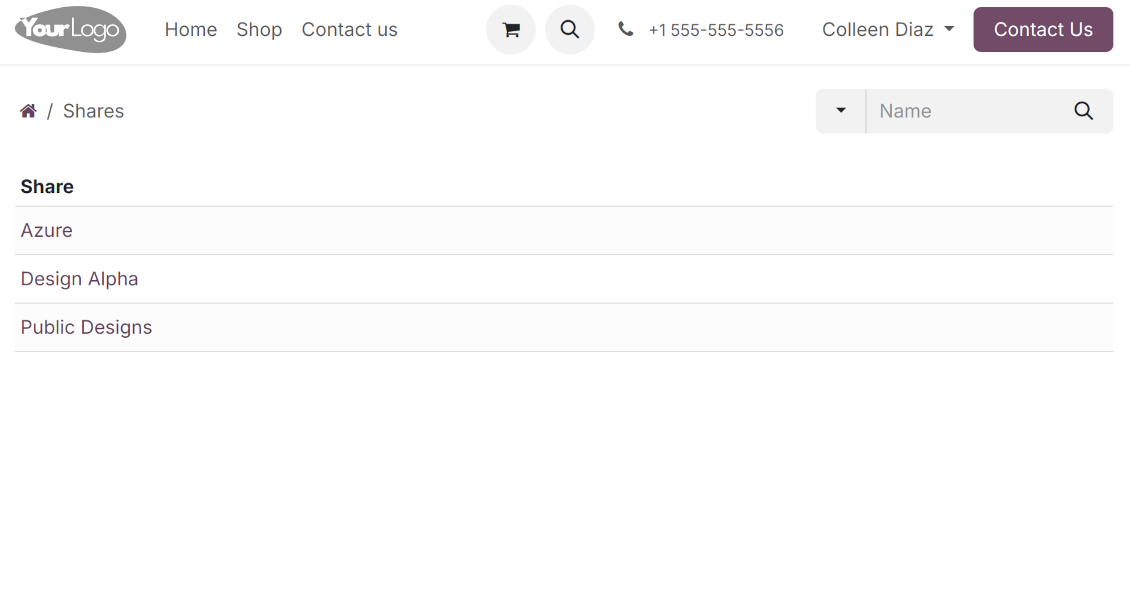
Create an unlimited number of shares with any setups and attachments involved. Portal users might access those through the special entry "Shares" in the Odoo's portal
-
For single-view purposes, shares support hierarchy so as to make comfortable navigation by those
-
Share users can download any shared file, a whole share, a particular directory, or a tag as a ZIP archive
-
Optionally let upload files to the selected or default folder. Files drag and drop is supported
-
Users are always allowed to search attachments by title, linked folder, and tags
-
Optionally allow navigation by folders and/or tags. Shared tags/folders, their children, and ones linked to shared attachments will be available
-
Let users add tags and folders by themselves. Show/hide searching items in tags/folders navigation trees
-
Turn on/off a chat per each share.
文档管理与同步访问权限
-
Access for each Odoo automatic folder is regulated based on a linked object. If such an Odoo object is available for a specific user, its directory would be also available for her/him. For example, if Anita Olivier is the task manager of 'Prepare specification', then she may access the folder 'Tasks' and 'Tasks > Prepare Specification'
-
Access to Odoo manual folders is regulated based on its user groups and users stated in those folders' settings. If nobody is specified, a manually created folder is available for everyone. For example, if Anita Oliver is a sales manager, she may access the quotation-related folder 'Odoo > Orders > SO-001'
-
To access any folder, a user should be able to access all its parents. For example, if Anita Oliver has rights for employees but does not have for departments, then she might not read 'Odoo > Departments > Administration > Employees > Mitchel Admin'. However, if the folder 'Employees' becomes a stand-alone folder without a parent, then Anita would be able to access 'Odoo > Employees > Mitchel Admin'
-
The app does not regulate access levels for cloud clients and their items. The tool regulates rights only for Odoo objects and synchronizes those to required storage. After the sync, if necessary, you should apply the settings for a target cloud client, folders, and files
-
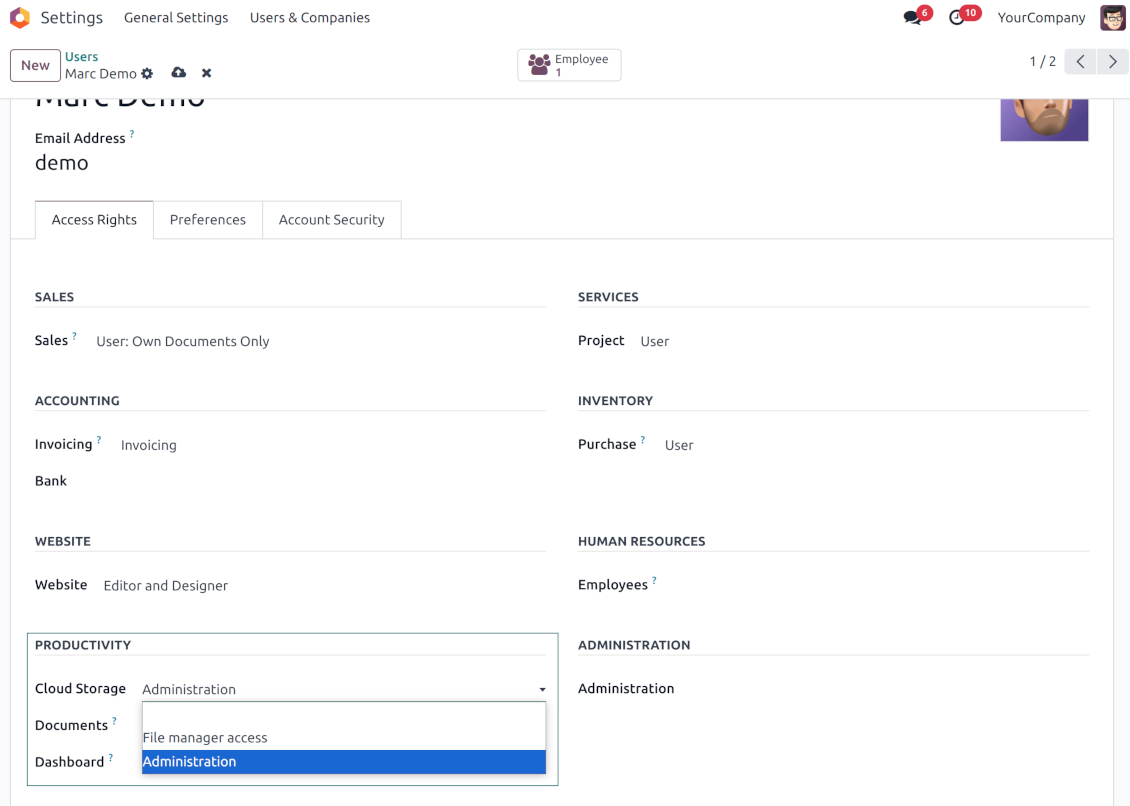
To observe the menu 'Cloud Storage' and the app file manager, a user should belong to the security group 'Cloud Storage > File Manager Access'
-
To configure automatic folder rules, establish connections with various cloud clients, control sync logs, and apply the app settings, a user should belong to the security group 'Cloud Storage > Administration'.
使用说明
-
The app assumes automatic regular synchronization with various cloud clients. Please take into account that synchronization is not real-time but is based on tasks queue and scheduled jobs. Depending on the number of folders and attachments, it might take time for the app to check all directories and do the jobs. That's why, until the sync is done, Odoo attachment interfaces work as in standard Odoo.
-
Cloud connections rely upon the API of the related cloud clients. Such communication between systems is risky by concept due to possible disconnections, API updates, and unsolvable conflicts. The app is designed to cope with such risks by carefully processing failures and checking cloud client states. Simultaneously, make sure that you have configured a proper backup strategy for both Odoo and cloud clients.
-
The special factors of risks are sync scope and reverse operations. The higher the sync scope is, the more it would take Odoo to finish integrations. Hence, more space for errors exists. Try to decrease sync scope logically by choosing only required folders. Reverse operations might be risky since assume reflecting cloud clients' features which might be absent in Odoo. For example, Google Sheets cannot be opened outside Google Docs. The app would try to solve the scenarios by applying similar features (e.g. by converting a file to simple electronic tables). However, that is not always possible, and in this way, manual interactions would be required.
配置与安装提示: Cloud Storage Solutions Odoo v.18
Odoo 服务器配置
为确保同步正常,请在 Odoo 配置文件中设置足够的 timeout:LIMIT_TIME_CPU、LIMIT_TIME_REAL、LIMIT_TIME_REAL_CRON 应大于 900 秒。
在 Odoo.sh 上不应这样做,因为超时已预定义且不可配置。
也不要更改应用所假定的 cron 作业频率:“[Cloud Storage] Prepare Cloud Folders”、“[Cloud Storage] Run / Prepare sync queue”。这些作业配置为每 15 分钟运行一次,该频率用于算法以避免中断和数据丢失。如果需要暂时停止同步,请改为暂停特定的 cloud client。
通用 Python 依赖
该工具依赖外部库 'sortedcontainers'。请用以下命令为 Odoo 服务器安装:
pip3 install sortedcontainers设置 OneDrive 或/和 SharePoint 集成
Python 依赖
该工具依赖外部库 'microsoftgraph'。请用以下命令为 Odoo 服务器安装:
pip3 install microsoftgraph-python
配置与登录
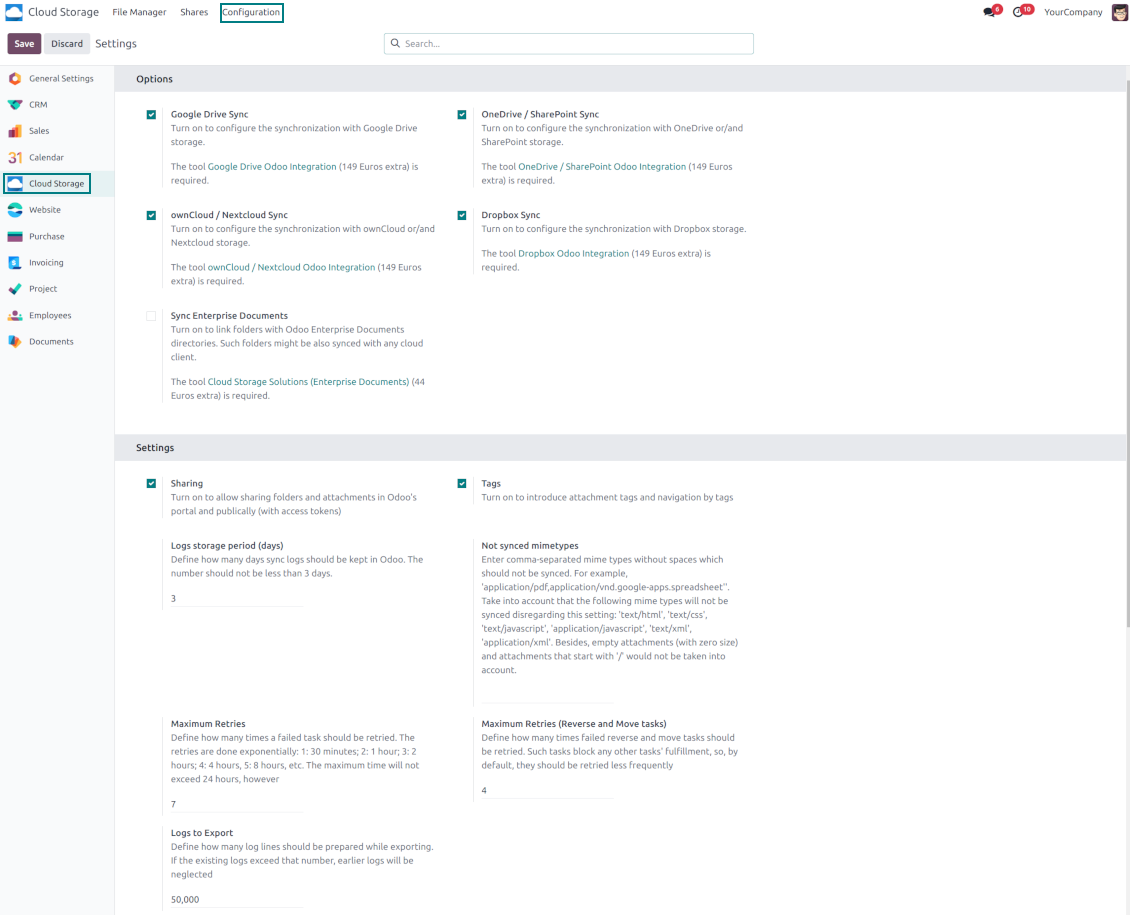
- 打开选项 'OneDrive / SharePoint Sync'(cloud Storage > Configuration > Configuration)。需要可选插件 OneDrive / SharePoint Odoo Integration
- 请确认你的 Microsoft 用户对要连接到 Odoo 的 OneDrive / SharePoint 拥有完整管理员权限。该用户仅用于授予权限,其数据不会保存在 Odoo 中,之后也不会被使用。另外,请确认你使用的某个 Microsoft 电子邮件地址没有重定向(通常发生在你配置了域名,而主地址仍是 @outlook.com、@office365 等 Microsoft 域时)。
- 转到您的 Azure Portal: https://portal.azure.com/#blade/Microsoft_AAD_RegisteredApps/ApplicationsListBlade
应用必须注册在目录 (tenant) 内。Microsoft 不再允许在目录外创建新应用。
- 如果已有公司 Microsoft 365 / Azure 目录,请将门户(右上角)切换到该目录后继续。
- 如果只有个人帐户(@outlook.com、@hotmail.com、@live.com)并看到 "these applications are associated with the account ... but are not contained within any directory",说明还没有目录。请用同一 Microsoft 帐户注册免费 Azure 帐户: https://azure.microsoft.com/free/ - 免费试用 Azure。这会免费为你创建 Default Directory。
- Microsoft 仅出于身份验证要求银行卡;会暂扣约 1 USD 随后退回。目录和应用注册均不收费。
- 目录(Microsoft Entra ID Free)及其中注册的应用可独立于 30 天 / 200 美元的 Azure 试用额度继续运行。该额度用于你在此未使用的付费 Azure 资源。我们的应用无需付费。
- 如果整个目录长时间完全未使用(Microsoft 的阈值约为 200 天无活动),Microsoft 可能会发警告邮件并最终停用它。由于 Odoo 每次同步都会调用此应用,有效连接会保持目录处于活动状态——只有在连续数月完全停止同步时才需要担心。
- 进入真实目录(不是 "Microsoft Services")后,在其中打开 App registrations。
- 点击“New registration”
- Introduce a new name for the application and assign the redirect URI as [YOURODOOSITENAME]/one_drive_token (e.g. https://odootools.com/one_drive_token). As the supported account types choose 'Accounts in any organizational directory (Any Azure AD directory - Multitenant) and personal Microsoft accounts (e.g. Skype, Xbox)'.
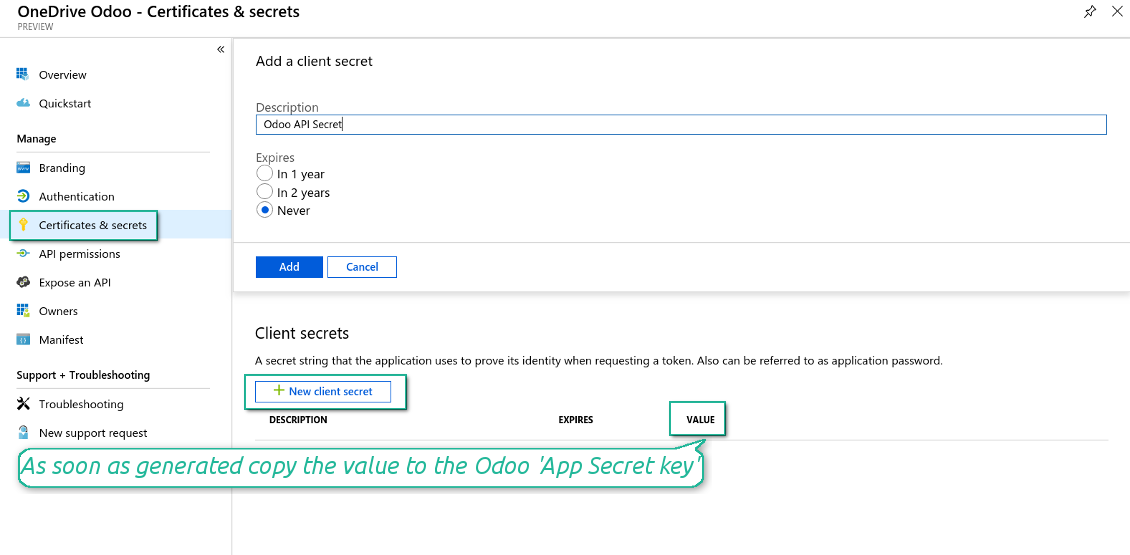
- 转到 Certificates & secrets — 点击 'New Client Secret'。把 secret 值保存在某处
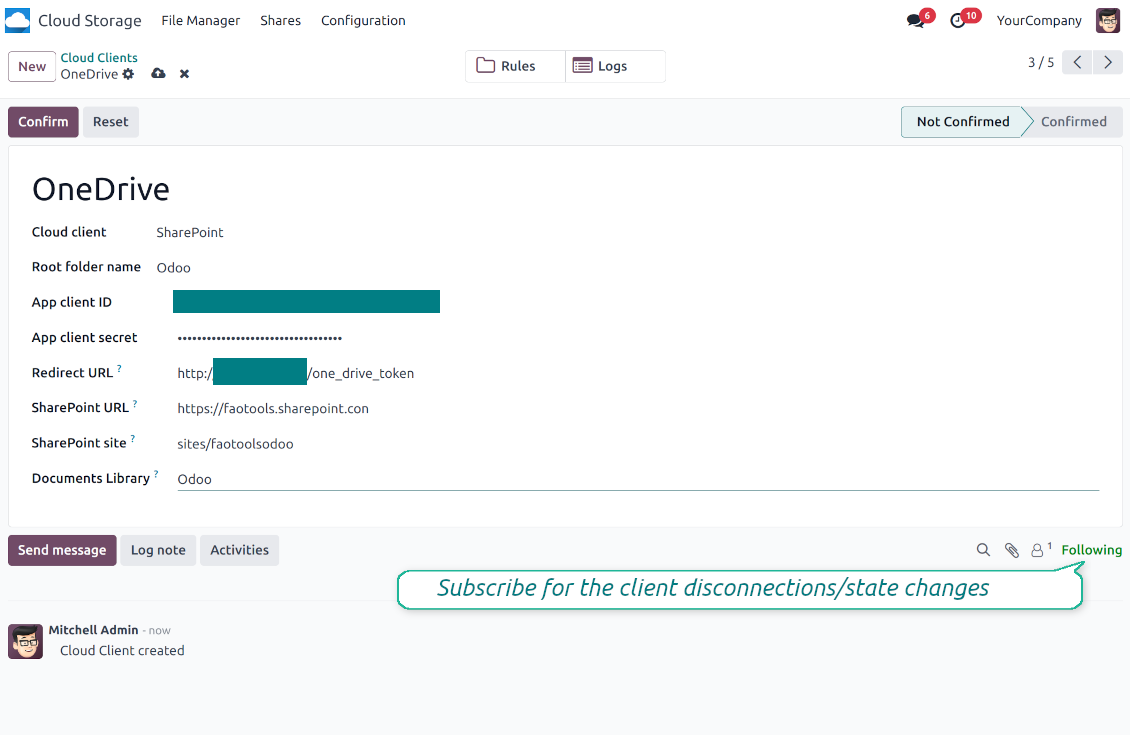
- 转到 Odoo Cloud Storage > 配置 > Cloud Clients 并按下“Create”
- 参考名请填写所有用户都能看懂的名称
- 作为 Cloud client,根据所用软件选择 'OneDrive' 或 'SharePoint'
- 在 Root folder 名称中输入标题,作为所有同步文件夹的父级OneDrive directory。例如 'Odoo' 或 'OdooERP'
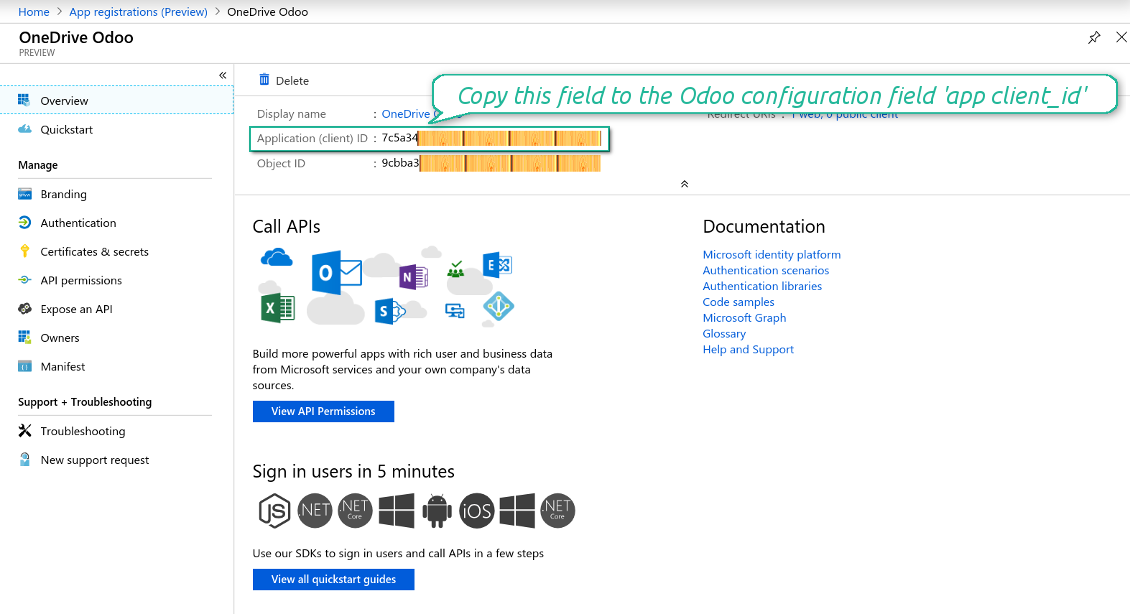
- 将“Application Client ID”复制到“App client ID”
- 将密钥值复制到“App client secret”字段
- 插入先前生成的重定向 URL
- 如果使用 SharePoint:
- 转到您的 SharePoint 站点并准备一个新的文档库(驱动器)。可以使用现有库,例如 'Documents'。之后 Odoo 文件夹会放在那里,并且无法再移到另一个库
- SharePoint URL 应为 https://[URL]/ 形式。最后的 “/” 必填——不要包含站点名称。例如 https://odootools.sharepoint.com/
- SharePoint 站点应为 root(SharePoint 根站点本身)、my_site_name(此时视为 sites/my_site_name)或 sites/my_site_name(“sites”也可能是 “teams” 等)。开头和结尾都不要有 “/”。例如 sites/odootools
- Documents Library 请使用在 SharePoint 中创建的库
- 点击 “Confirm”。Odoo 将你转到 Microsoft 登录页。在系统中核对、同意全部条件,并授予所请求的全部权限. If Microsoft shows an account already signed in and says it does not exist in tenant 'Microsoft Services' (or any other unrelated tenant), do not click that row. Click 'Use another account' and sign in with the Microsoft account that owns the app's directory
- 登录后,OneDrive 会将您重定向回 Odoo。OneDrive - Odoo 同步已就绪
- 将新创建的 cloud client 应用到应同步到该 OneDrive 或 SharePoint 实例的文件夹规则和/或手动文件夹
- 等待同步计划作业启动。仅供测试:从 Cloud Storage > 配置 > 配置 > “Launch sync”按钮手动触发集成。
另请观看 配置视频
创建Azure应用程序
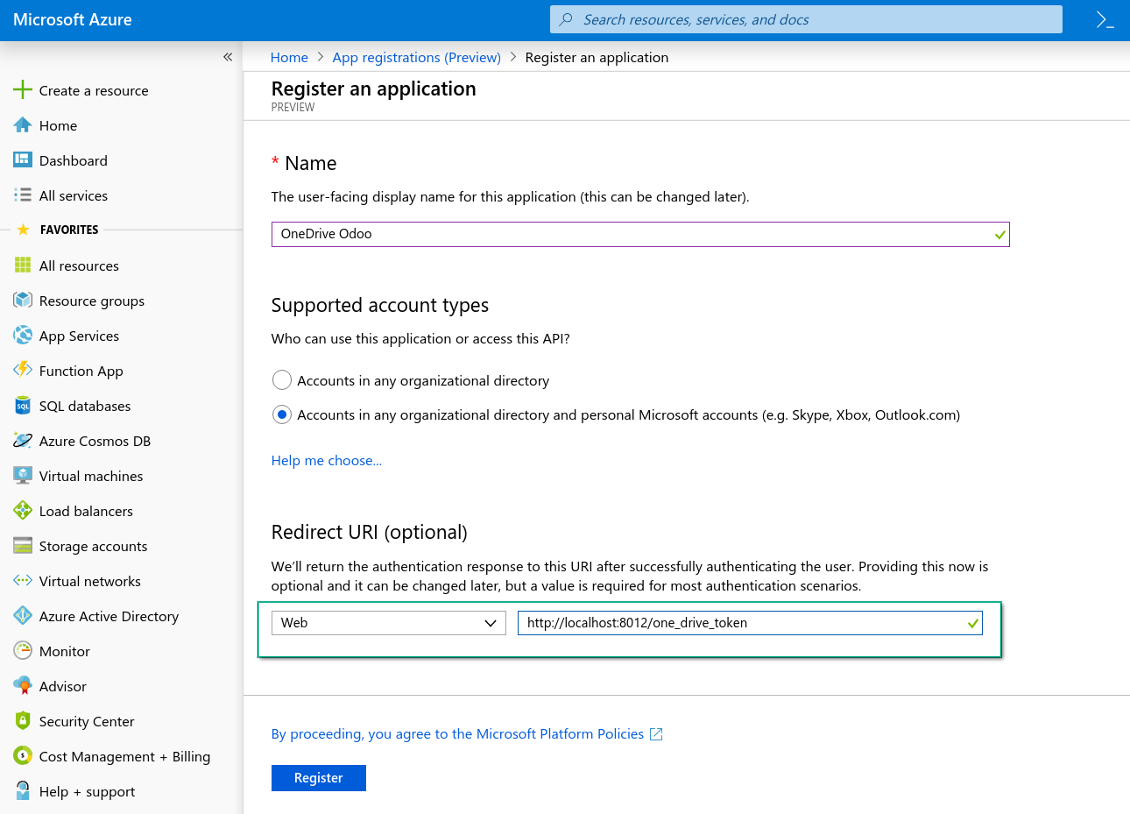
新的 OneDrive Web 平台和重定向 URL
为 Azure 应用程序生成新机密
在 Odoo 中输入配置密钥
设置 Google Drive 集成
- 打开选项 'Google Drive Sync'(cloud Storage > Configuration > Configuration)。需要可选插件 Google Drive Odoo Integration
- 通过 URL 打开 Google Cloud Console https://console.cloud.google.com
- 选择或创建项目
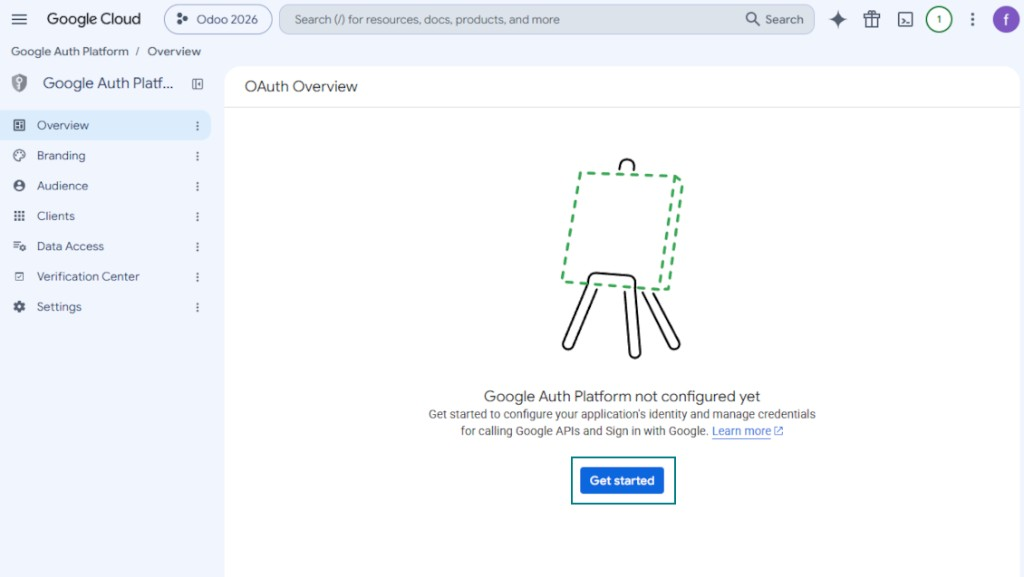
- 选择项目后,控制台会打开 Google Auth Platform。请按 'Get Started'
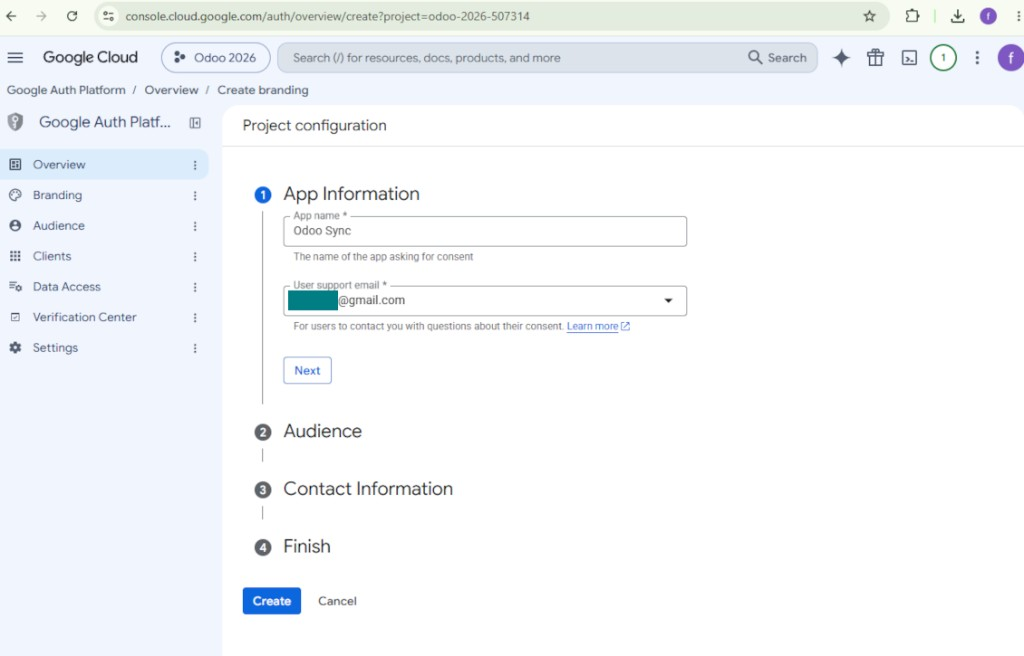
- 添加应用信息
- 应用名称请选择任意合适的
- 用户支持邮箱请选择您的电子邮件地址
- 按下 'Next'
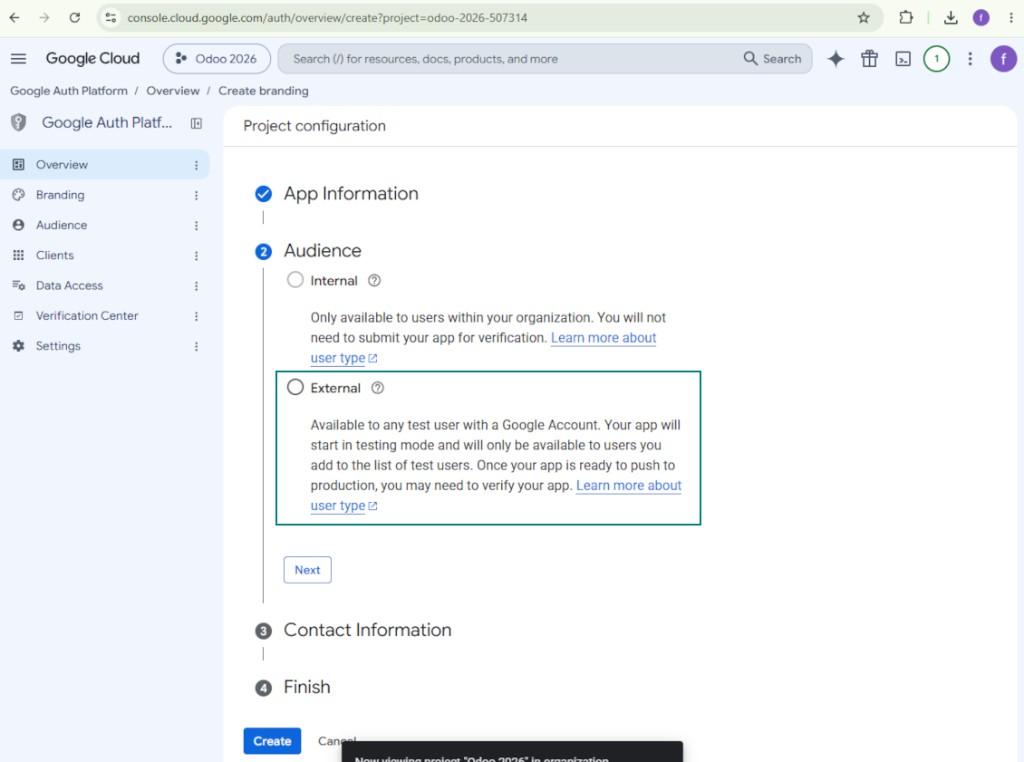
- 受众请选择 'External' 并按 'Next'。注意:此应用反正只用于您自己的 Odoo 连接
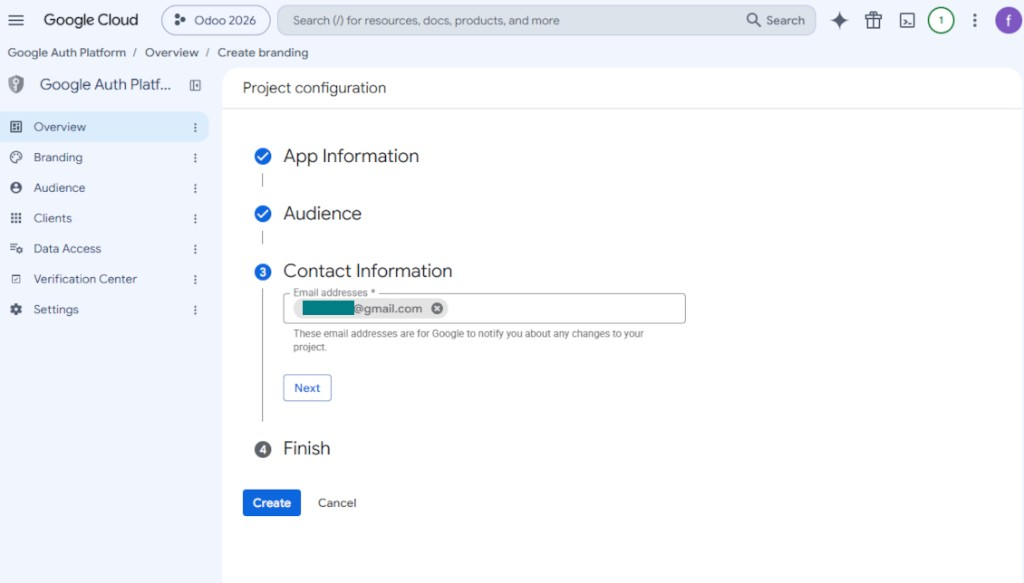
- 联系信息请输入您的 Google 或 Google Workspace 电子邮箱,然后按 'Next'
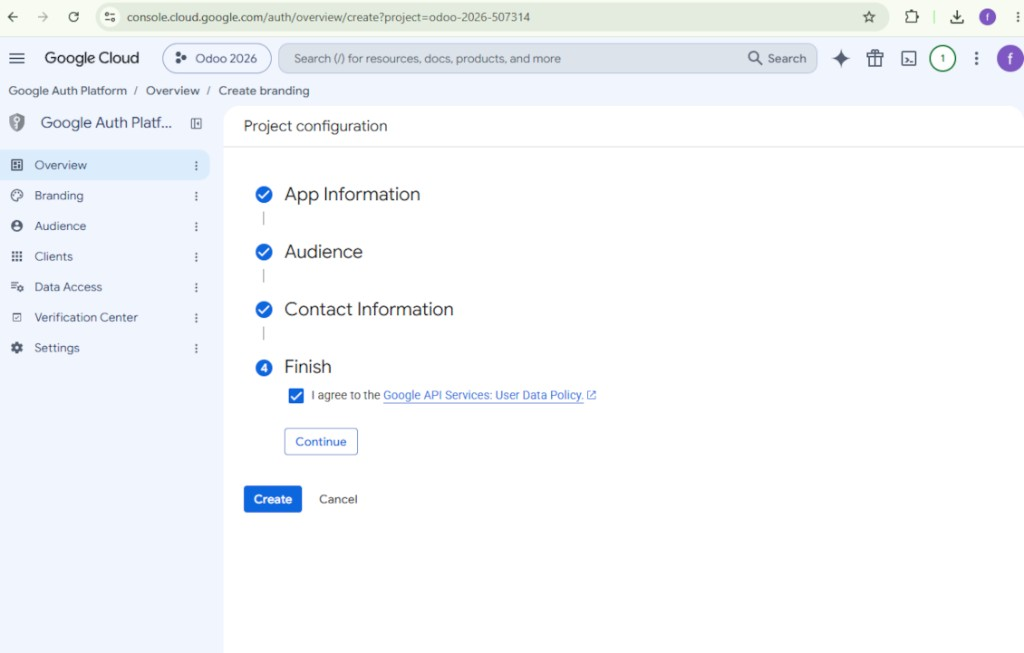
- 同意 Google API Services User Data Policy,按 'Continue',再按 'Create'
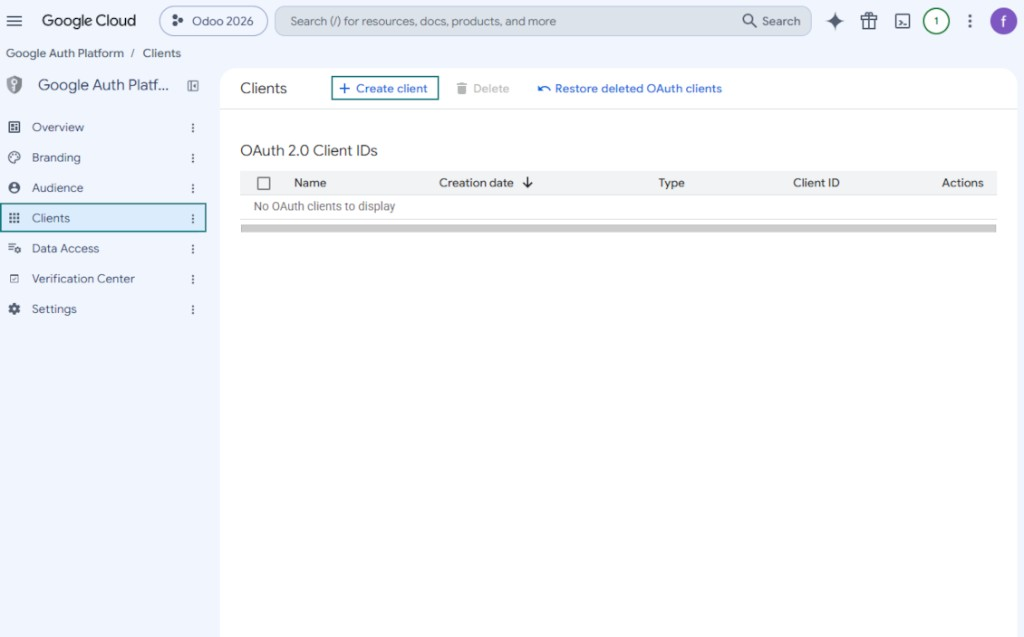
- 转到“Clients”并按下“Create client”
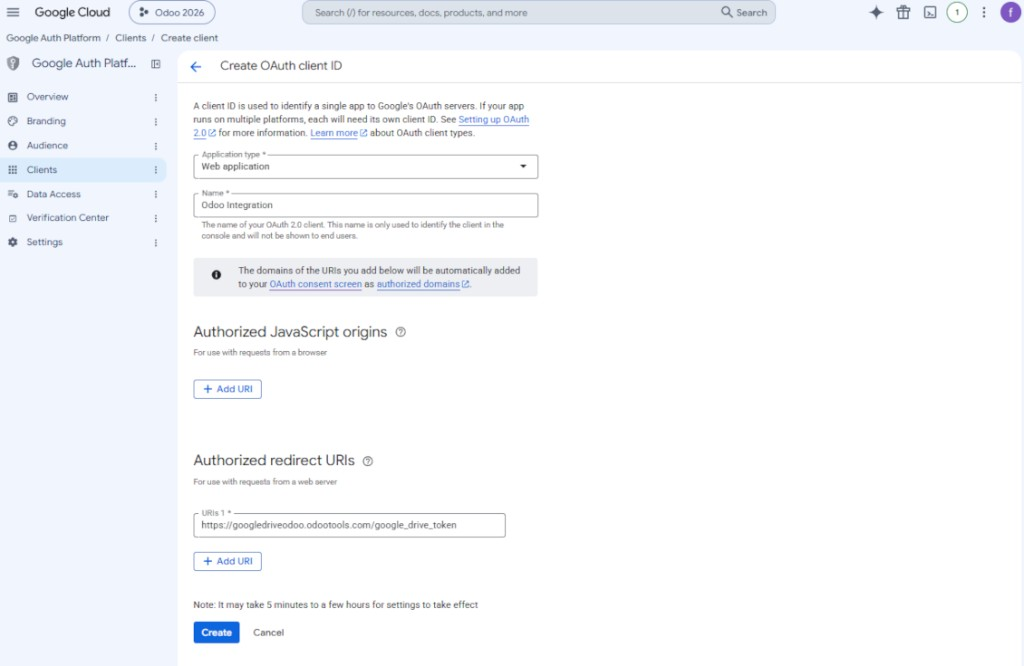
- 应用程序类型请选择“Web application”
- 名称请选择任意合适的
- 作为已授权重定向 URI,按 [YOURODOOSITENAME]/google_drive_token 格式添加链接(例如 https://odootools.com/google_drive_token)。
- 按下 'Create'
- 复制并妥善保存“Client ID”和“Client secret”。Client secret 只显示一次
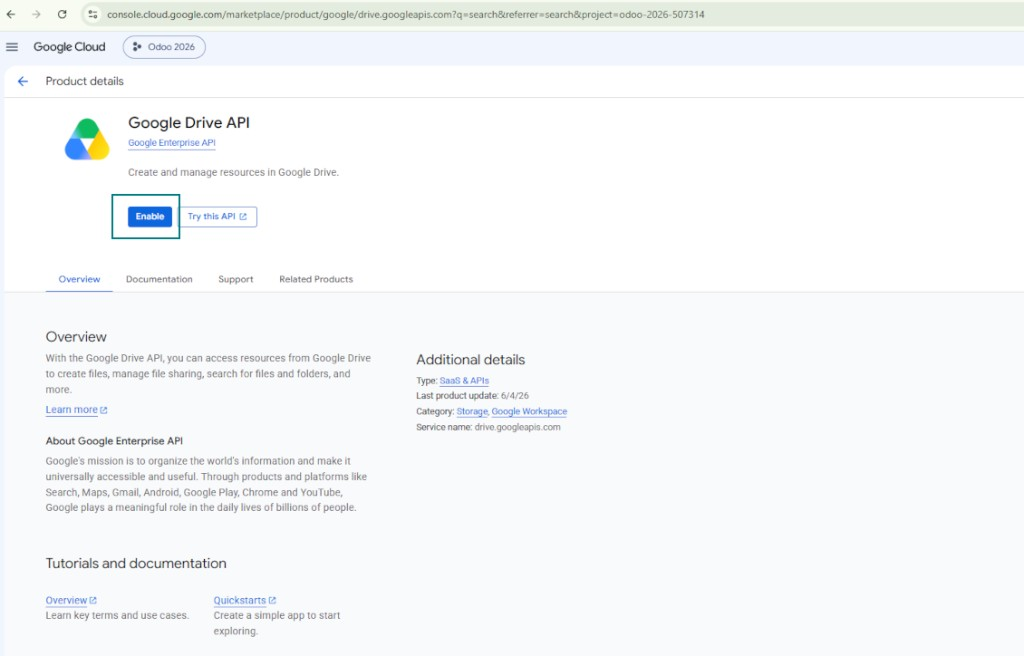
- 为此项目启用 Google Drive API:在顶部搜索框输入 'Google Drive API',打开找到的产品,然后按 'Enable'
- 转到“Audience”并将您的电子邮件地址添加为测试用户
- 发布该应用。否则应用保持测试状态,令牌每 7 天过期
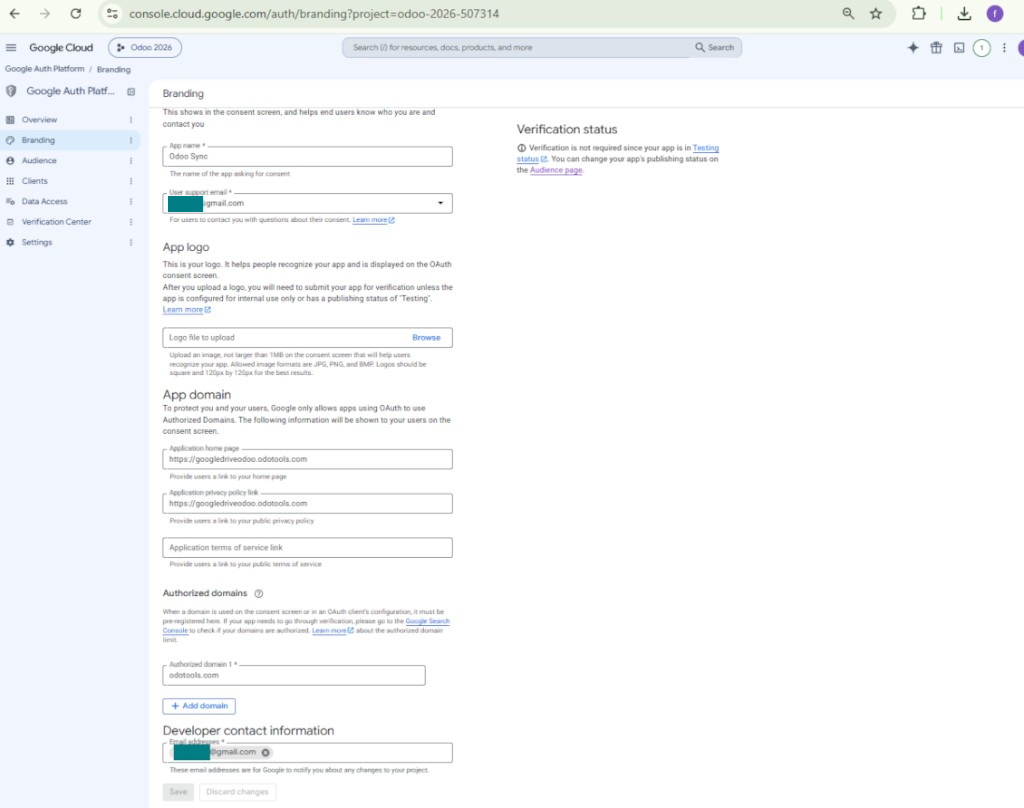
- 打开 'Branding',填写应用主页和应用隐私政策链接(例如指向您的 Odoo 网站的链接)。将这些链接的域名加入 authorized domains
- 打开“Audience”并按“Publish app”
- 请勿上传应用徽标。这会触发漫长而复杂的 Google 验证流程,而您实际上并不需要
- 转到 Odoo Cloud Storage > 配置 > Cloud Clients 并按下“Create”
- 参考名请填写所有用户都能看懂的名称
- 作为 Cloud 客户端选择“Google Drive”
- 在 Root folder 名称中输入标题,作为所有同步文件夹的父级Google Drive directory。例如 'Odoo' 或 'OdooERP'
- 将第9步的“Client ID”复制到“App client ID”字段
- 将第9步的“Client secret”复制到“App client secret”字段
- 插入您在第 9 步输入的重定向 URL
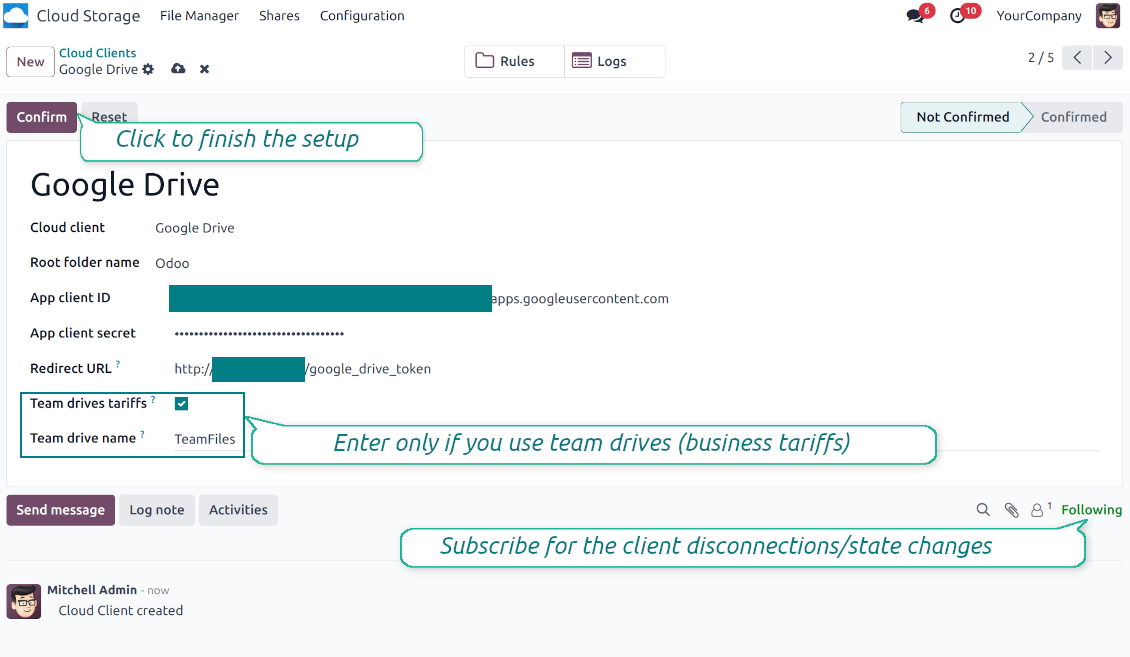
- 若使用团队云端硬盘,请勾选相关框。确保你确实在用团队云端硬盘。在 Google Drive 左侧边栏应能看到 'Team Drives'。此功能仅适用于商务和 enterprise 套餐
- 若启用选项 'Team Drive',请填写其名称。必须与你在 Google Drive 中看到的完全一致。确保你的用户对所有 Google 云端硬盘拥有完整权限(通常是配置团队 Google Drive 的同一用户)
- 点击 “Confirm”。Odoo 将你转到 Google 登录页。在系统中核对、同意全部条件,并授予所请求的全部权限
- 登录后,Google 会将您重定向回 Odoo。Google Drive - Odoo 同步已就绪
- 将新创建的 cloud client 应用到应同步到该 Google Drive的文件夹规则和/或手动文件夹
- 等待同步计划作业启动。仅供测试:从 Cloud Storage > 配置 > 配置 > “Launch sync”按钮手动触发集成。
另请观看 配置视频,注意:视频中的 Google console 部分已过时;请改按上方步骤操作
打开 Google Auth Platform
添加应用信息
选择外部受众
添加联系人信息
同意政策并创建应用
创建OAuth客户端
配置Web应用程序客户端
复制客户端ID和客户端密钥
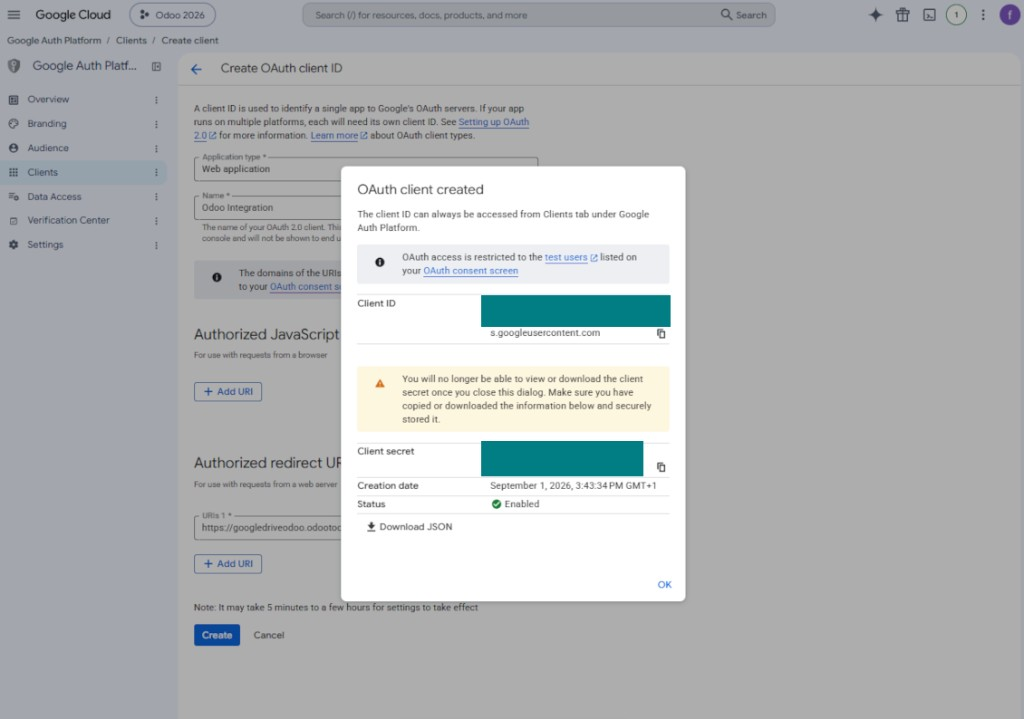
找到 Google Drive API
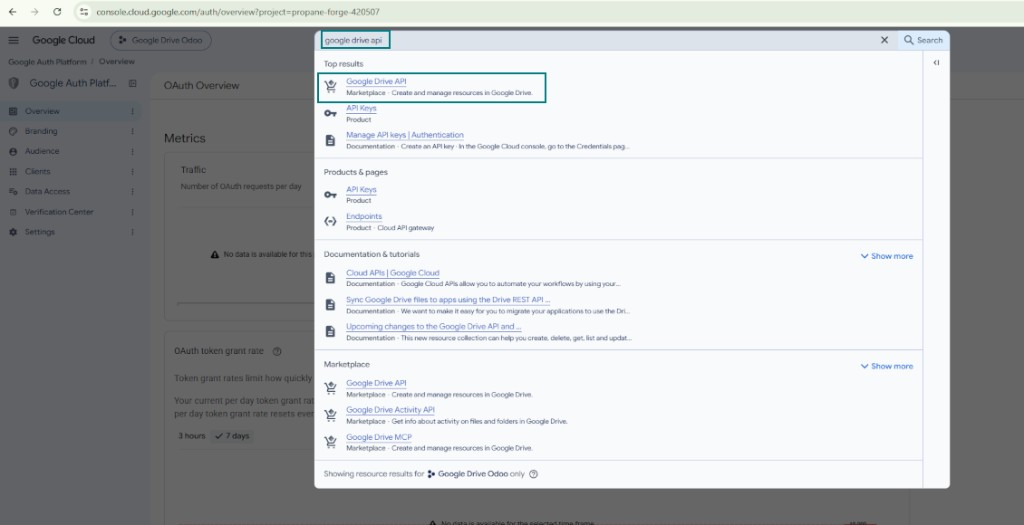
启用Google Drive API
填写品牌信息以发布应用
将 Google 应用凭证输入到 Odoo
设置 Amazon S3
- 打开选项 'Amazon S3 Sync'(Cloud Storage > 配置 > 配置)。需要可选插件 Amazon S3 Odoo Integration
- 打开 Amazon S3 控制台: https://console.aws.amazon.com/s3/
- 创建新存储桶或选择现有存储桶。复制准确的存储桶名称:应填入 Odoo 的“Bucket”字段
- 打开存储桶详情并复制其 AWS Region。填入 Odoo 的 'Region' 字段(例如 eu-west-1 或 us-east-1)
- 打开 AWS IAM 控制台: https://console.aws.amazon.com/iam/
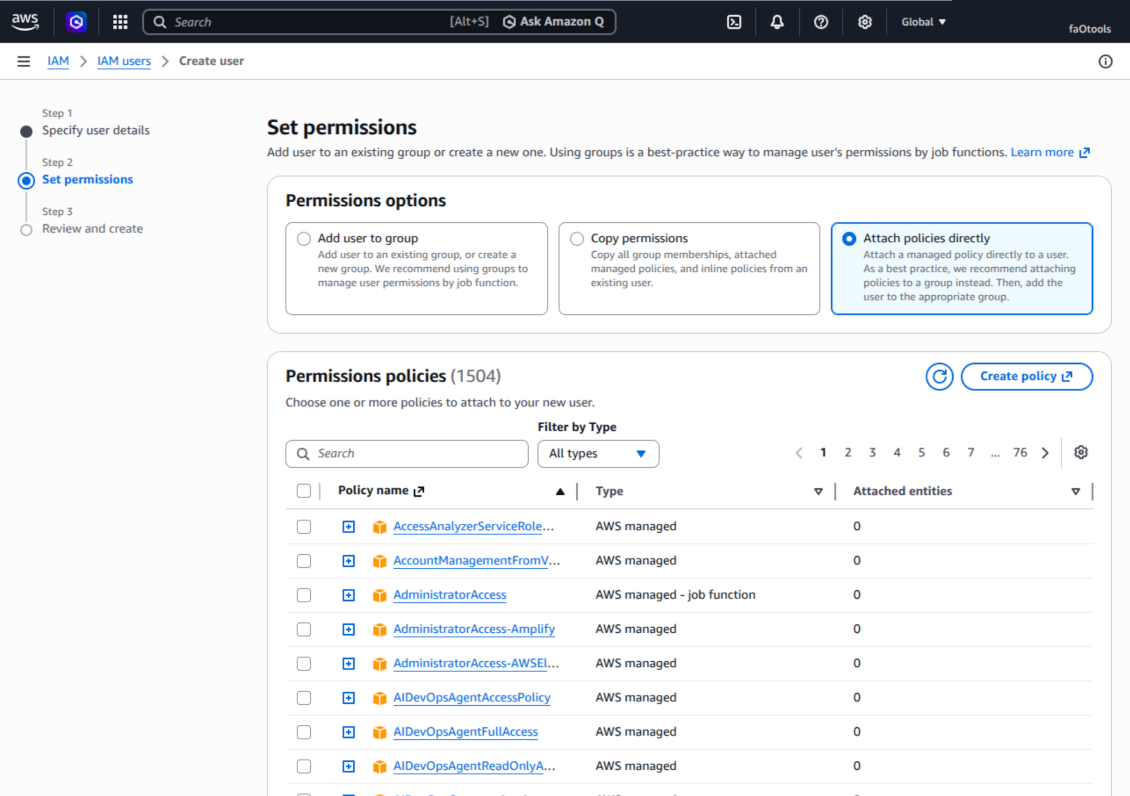
- 创建新的 IAM 用户或选择现有技术用户。该用户应对所选存储桶内的对象拥有列出、读取、创建、写入、复制和删除的完整权限。你可以选择完全权限管理员,或新建策略(见下方)
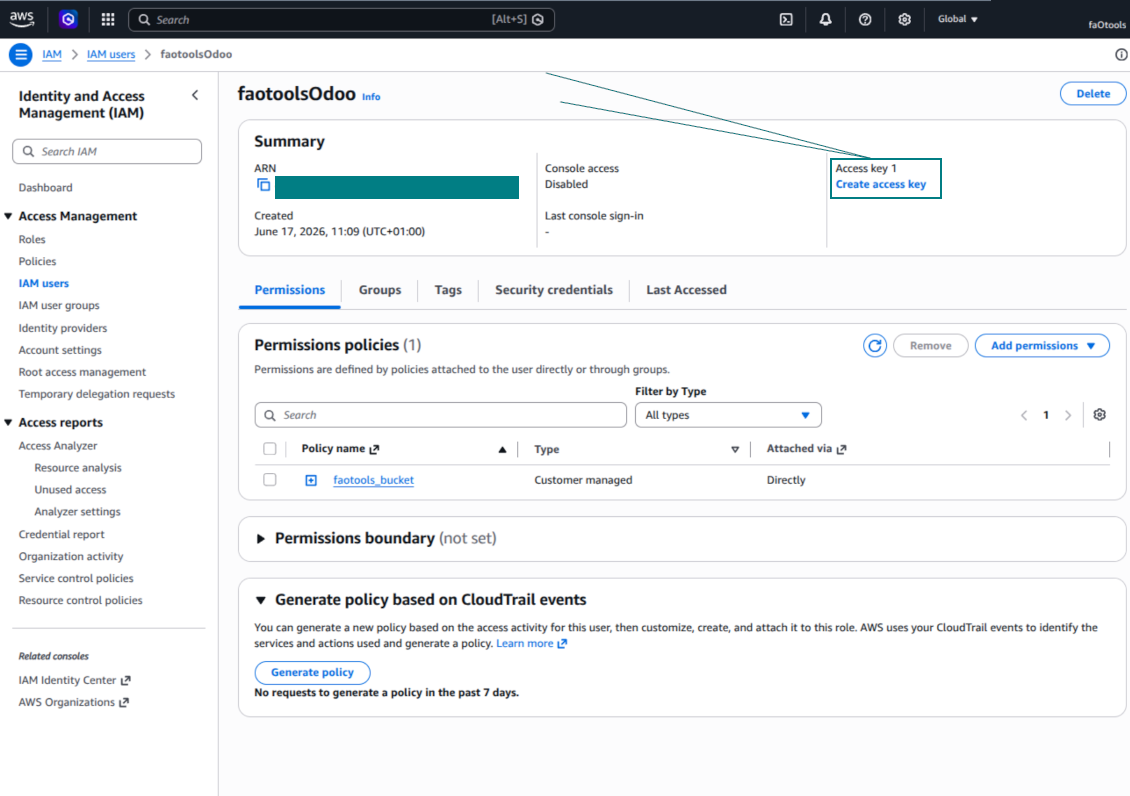
- 在 IAM 用户表单中,打开选项卡 'Security credentials' 并按 'Create access key'
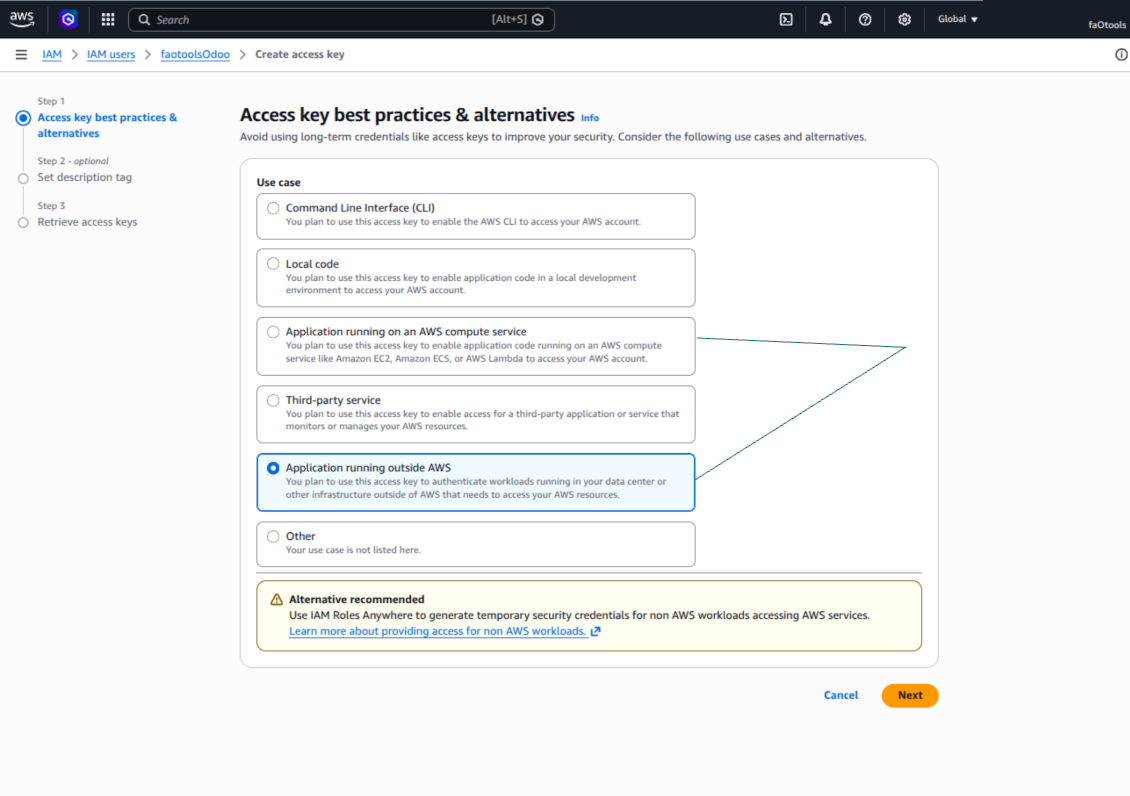
- 在 'Access key best practices & alternatives' 页面选择 Application running outside AWS。当 Odoo 服务器从 AWS 外部、Odoo.sh、自有服务器或其他托管通过访问密钥连接 S3 时,应选此项。若 Odoo 安装在 AWS EC2 实例上,可改选 Application running on an AWS compute service,复制到 Odoo 的字段相同
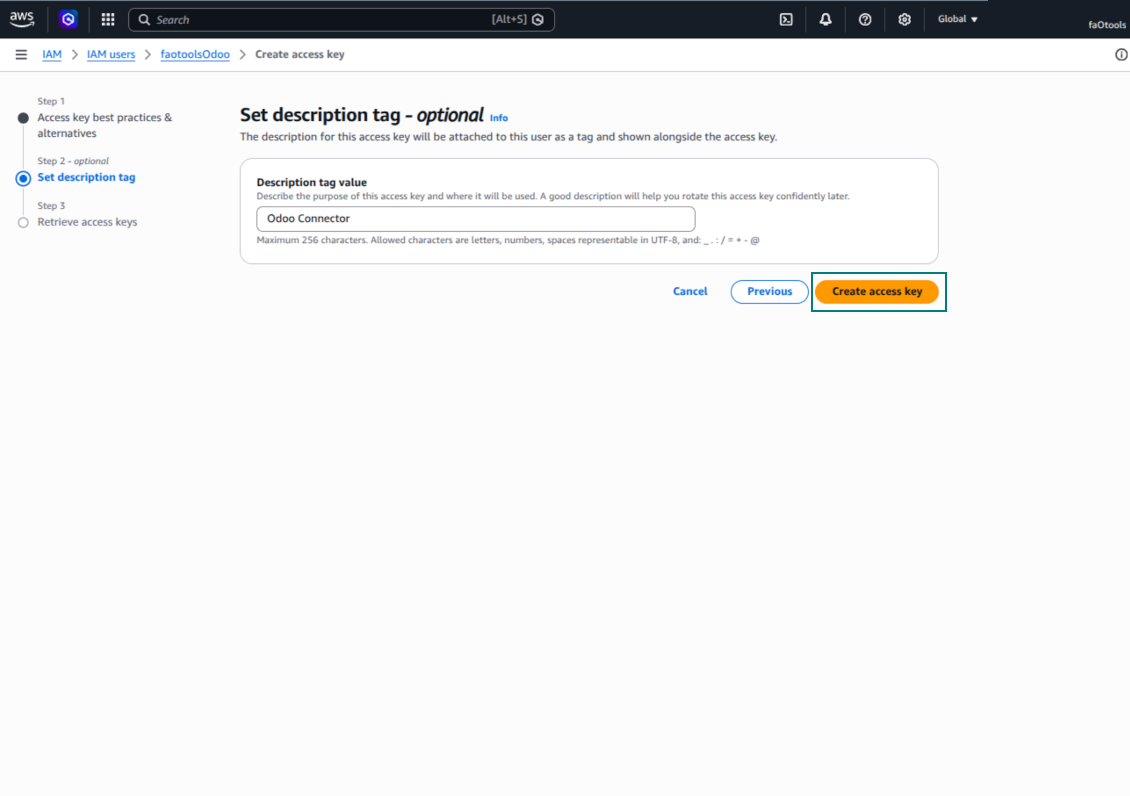
- 按 'Next'。下一步可选择输入说明标签,例如 Odoo S3 Sync,然后按 'Create access key'
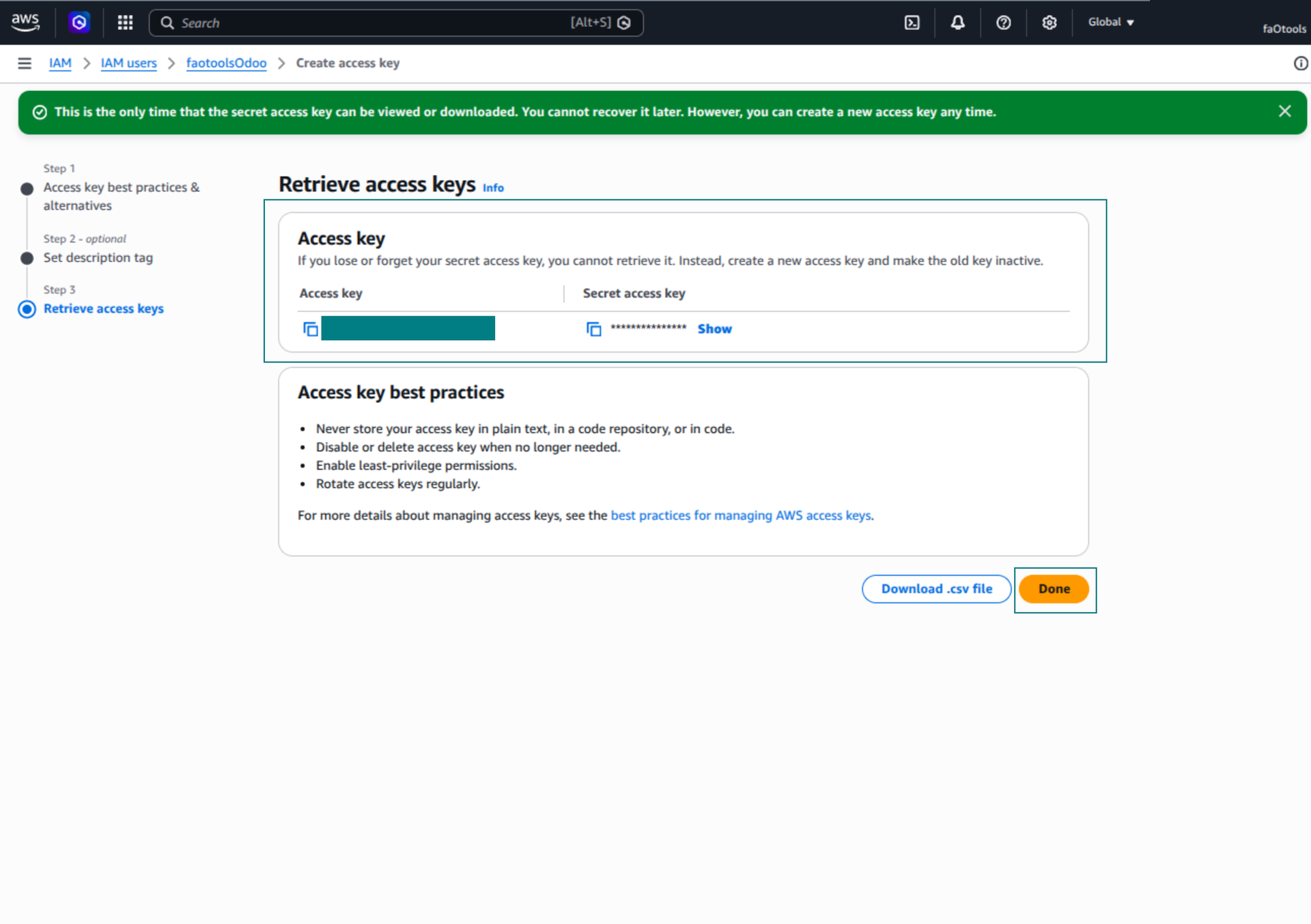
- 在最后的 AWS 页面,将 Access key 或 Access key ID 复制到 Odoo 字段 'Access Key'
- 将 Secret access key 复制到 Odoo 字段“Secret Key”。重要:AWS 只显示一次密钥,请在关闭窗口前保存
- 若使用兼容 S3 的提供商而非 AWS S3,从该提供商管理面板复制端点 URL,填入 Odoo 的 'Amazon S3 endpoint URL'。例如 MinIO 常用 https://minio.example.com 或 http://localhost:9000;LocalStack 通常用 http://localhost:4566
- 转到 Odoo Cloud Storage > Configuration > Cloud Clients 并按 'Create'
- 作为参考,请填写所有用户都能看懂的名称
- 作为 Cloud 客户端,选择“Amazon S3”
- 在 Root folder 名称中输入标题,作为所有同步文件夹的父级S3 prefix。例如 'Odoo' 或 'OdooERP'
- 填写字段 'Bucket'、'Region'、'Access Key'、'Secret Key',如需再填 'Amazon S3 endpoint URL' 和寻址样式
- 选择 Odoo 使用临时 presigned URL 还是公开的存储桶/CDN URL。私有存储桶请保持 presigned URL 开启,并以秒设置有效期
- 点击 “Confirm”。Odoo 检查 bucket 访问并创建或验证根文件夹前缀。Amazon S3 - Odoo 同步已可执行
- 将新创建的 cloud client 应用到应同步到该 Amazon S3 存储桶的文件夹规则和/或手动文件夹
- 等待同步计划作业启动。仅供测试:从 Cloud Storage > 配置 > 配置 > “Launch sync”按钮手动触发集成。
有用的 AWS 文档:创建 S3 存储桶: https://docs.aws.amazon.com/AmazonS3/latest/userguide/creating-bucket.html,管理 IAM 访问密钥: https://docs.aws.amazon.com/IAM/latest/UserGuide/id_credentials_access-keys.html.
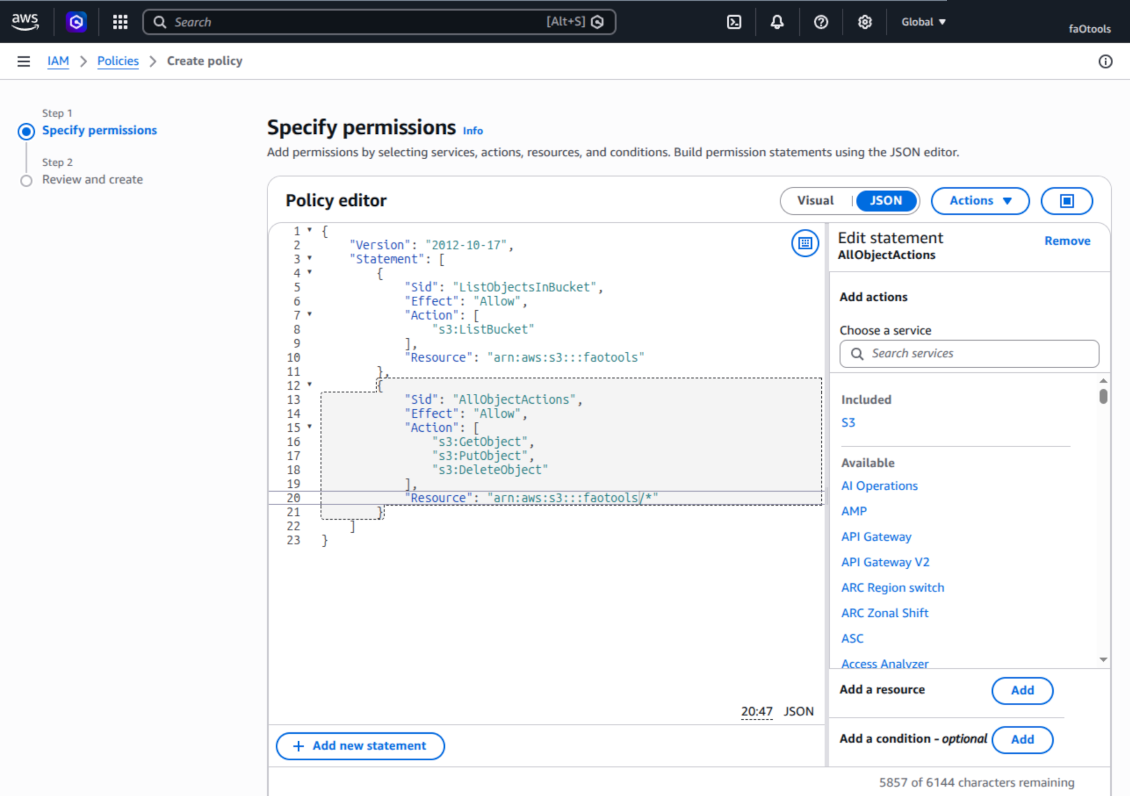
存储桶策略示例
    {
    "Version": "2012-10-17",
    "Statement": [
        {
            "Sid": "ListObjectsInBucket",
            "Effect": "Allow",
            "Action": [
                "s3:ListBucket"
            ],
            "Resource": "arn:aws:s3:::NAME_OF_YOUR_BUCKET"
        },
        {
            "Sid": "AllObjectActions",
            "Effect": "Allow",
            "Action": [
                "s3:GetObject",
                "s3:PutObject",
                "s3:DeleteObject"
            ],
            "Resource": "arn:aws:s3:::NAME_OF_YOUR_BUCKET/*"
        }
    ]
}
创建新的AWS IAM用户
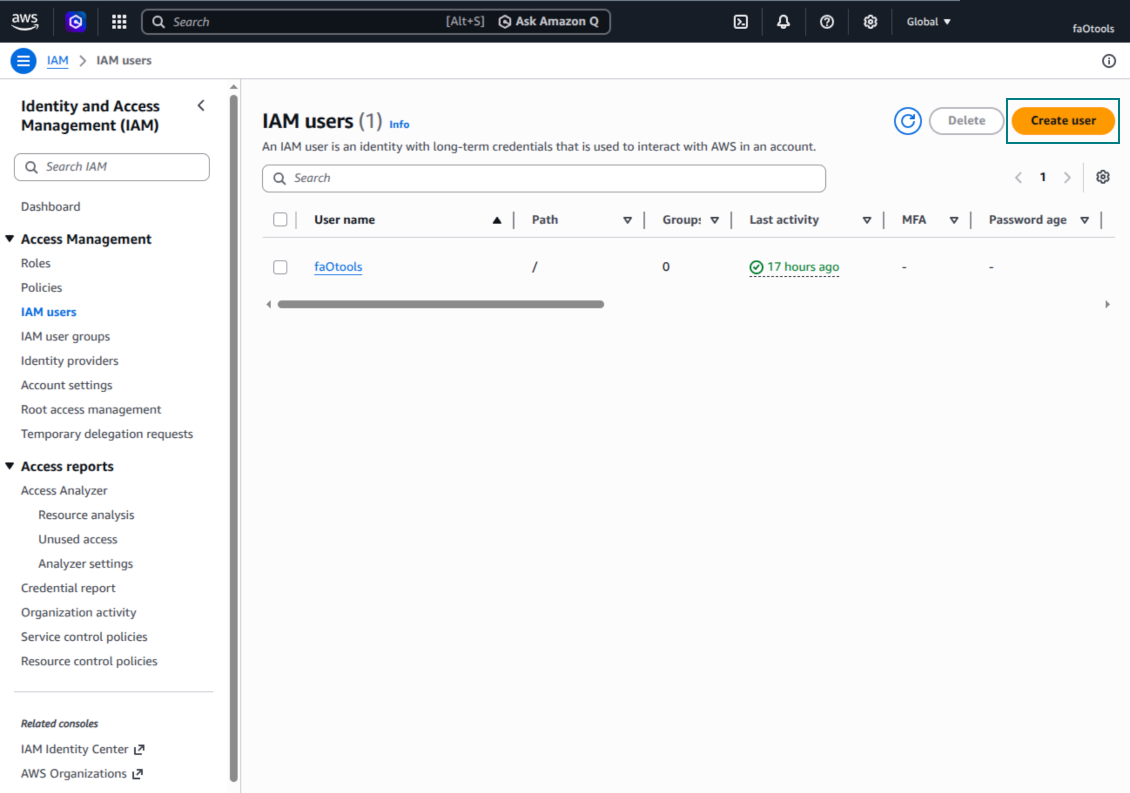
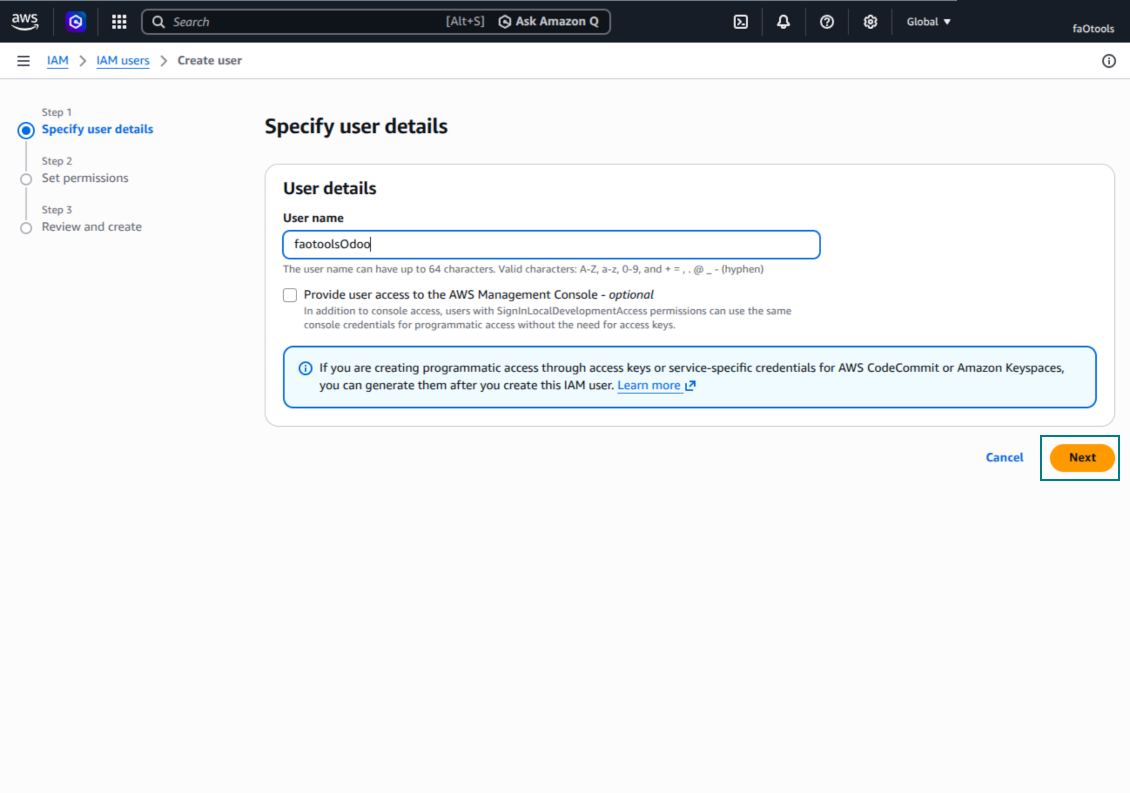
指定 IAM 用户名
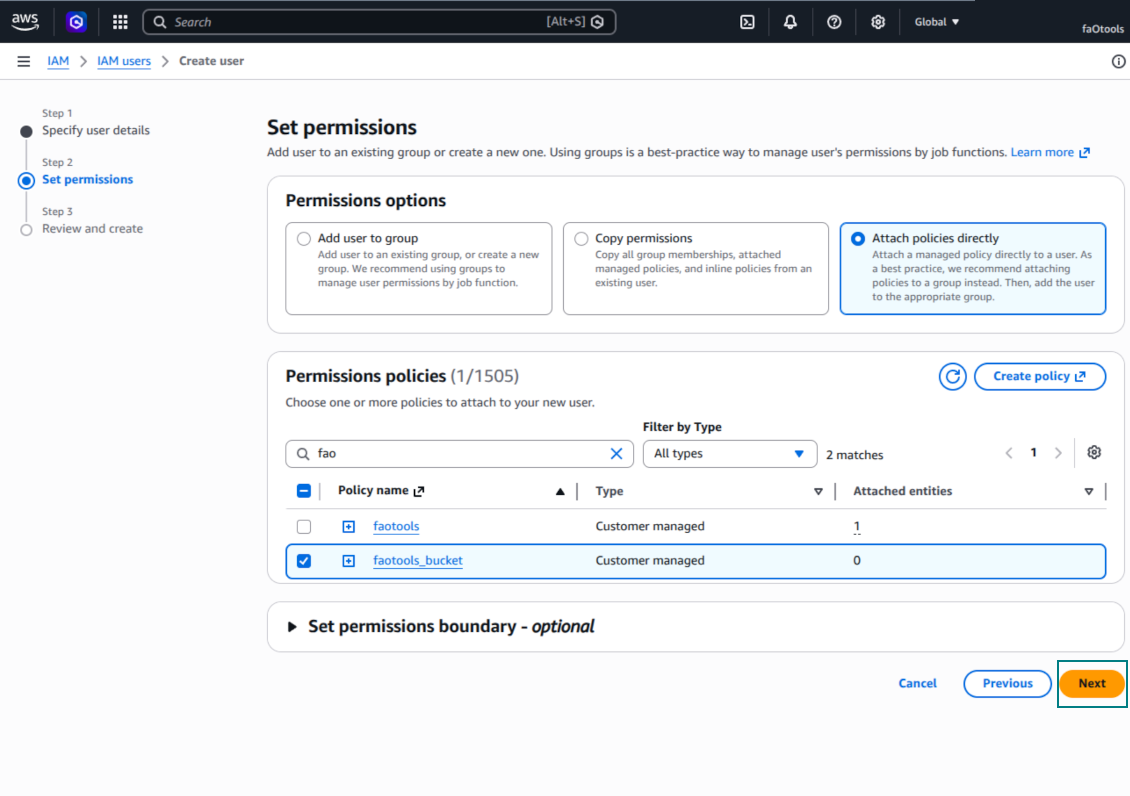
直接附加权限策略
Amazon S3 存储桶策略 JSON 示例
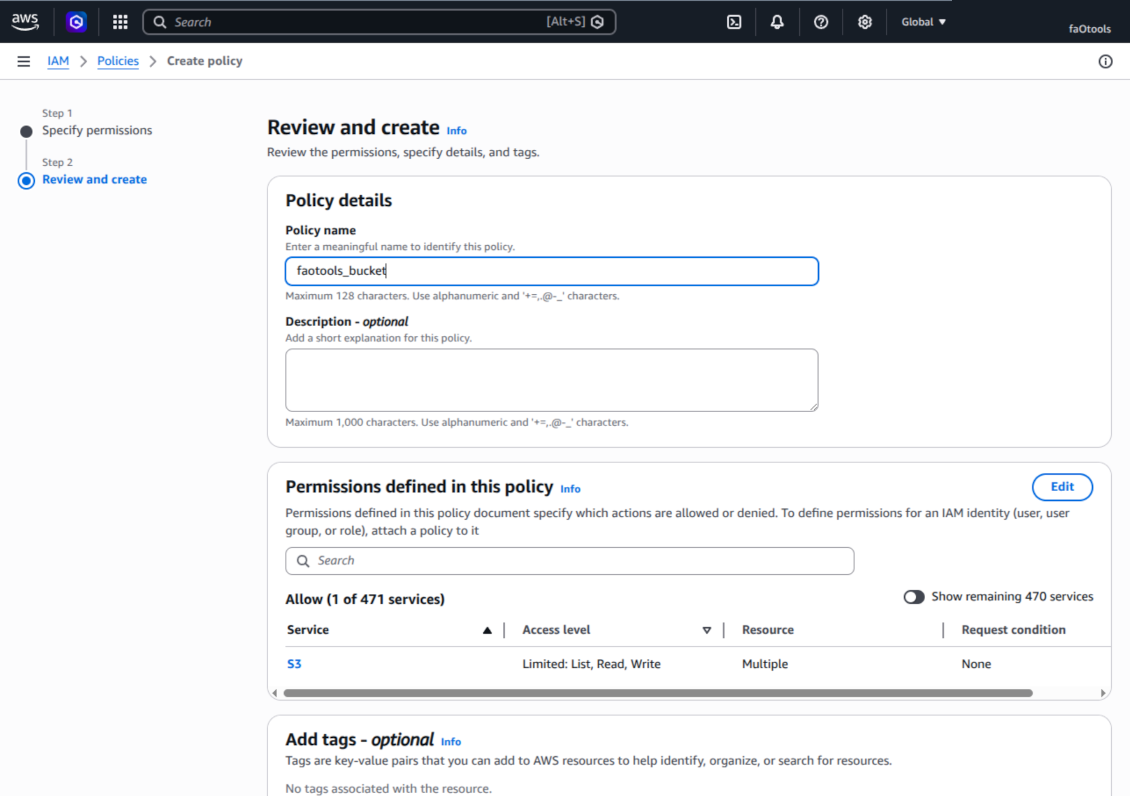
审核并为 S3 策略命名
为用户选择存储桶策略
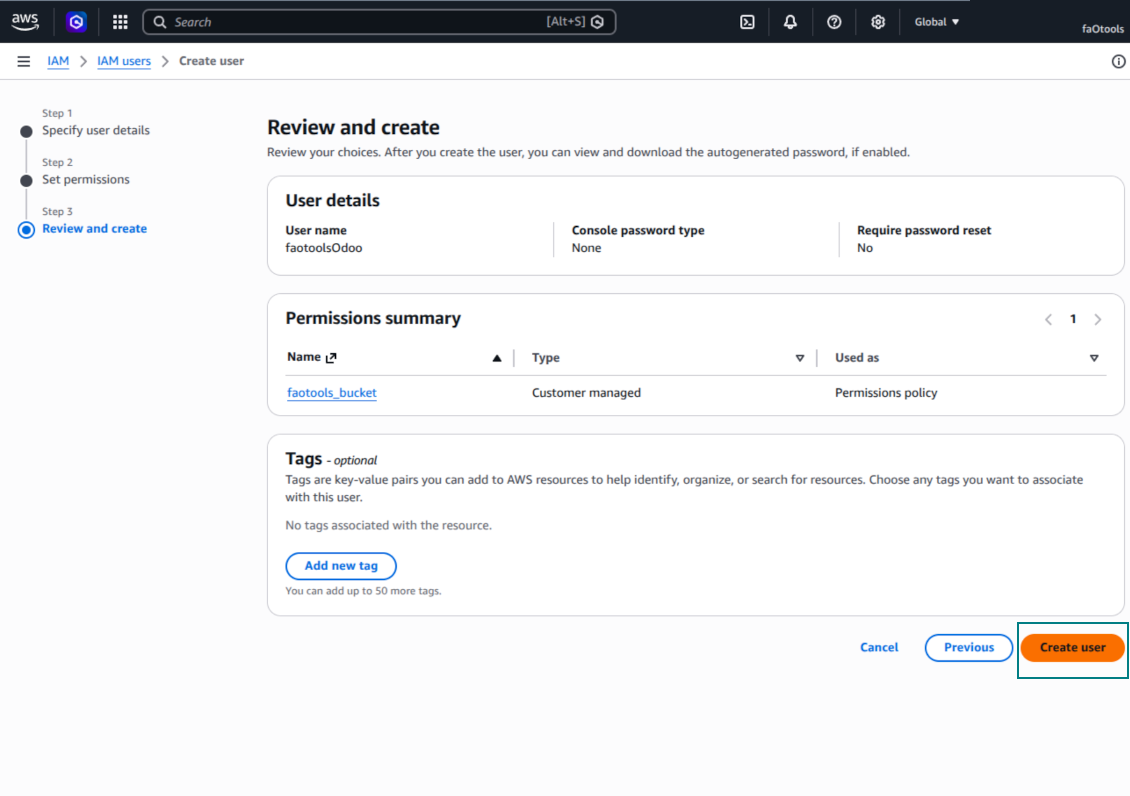
审核并创建 IAM 用户
为用户创建访问密钥
选择访问密钥使用场景
设置访问密钥描述标签
获取访问密钥和密钥
在Odoo中配置Amazon S3客户端
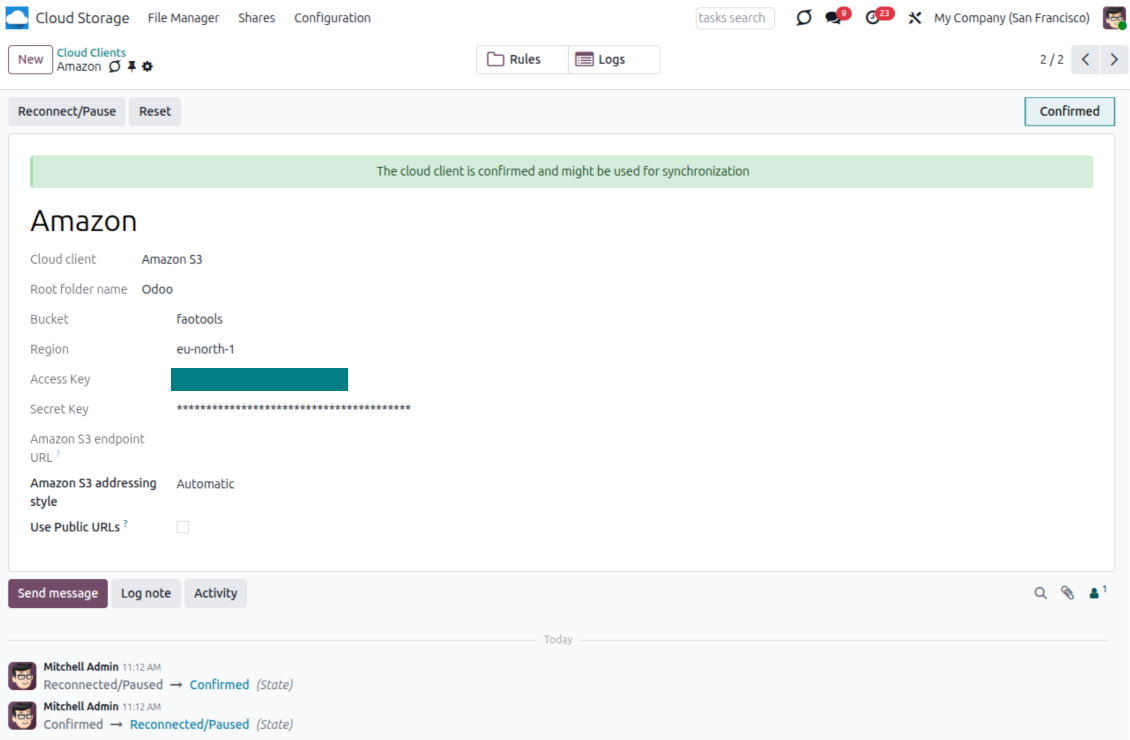
设置 Nextcloud 或/和 ownCloud 集成
配置与登录
- 打开选项 'onwCloud / Nextcloud Sync'(cloud Storage > Configuration > Configuration)。需要可选插件 ownCloud / Nextcloud Odoo Integration
- 转到 Odoo Cloud Storage > 配置 > Cloud Clients 并按下“Create”
- 参考名请填写所有用户都能看懂的名称
- 作为 Cloud client,根据所用软件选择 'Nextcloud' 或 'ownCloud'
- 在 Root folder 名称中输入标题,作为所有同步文件夹的父级directory。例如 'Odoo' 或 'OdooERP'
- 输入您的 ownCloud / Nextcloud 完整 URL
- 选择一名对根目录内文件和文件夹拥有读取、创建、写入和删除完整权限的 ownCloud / Nextcloud 用户
- 将此用户的登录名和密码填入“登录”和“密码”字段
- 选择应用公开 URL 还是内部 URL(见下方)
- 按下“确认”。Odoo 同步已就绪
- 将新创建的 cloud client 应用到应同步到该 Nextcloud 或 ownCloud 实例的文件夹规则和/或手动文件夹
- 等待同步计划作业启动。仅供测试:从 Cloud Storage > 配置 > 配置 > “Launch sync”按钮手动触发集成。
内部与公开 URL
默认情况下,从 Odoo 到 ownCloud / Nextcloud 的链接是内部的:只有授权用户可以访问。可选择将链接设为公开(设置“Use Public URLs”)。然后 URL 将是“共享”的,任何人都能通过直接链接访问项目。
如果决定使用共享(公开)URL,请谨慎。虽然外部用户很难知道这些链接,但仍有可能因某些用户操作而变为可用。此外,生成共享链接并不快,可能会让同步变慢。
另请观看 配置视频
输入 ownCloud / Nextcloud 凭证
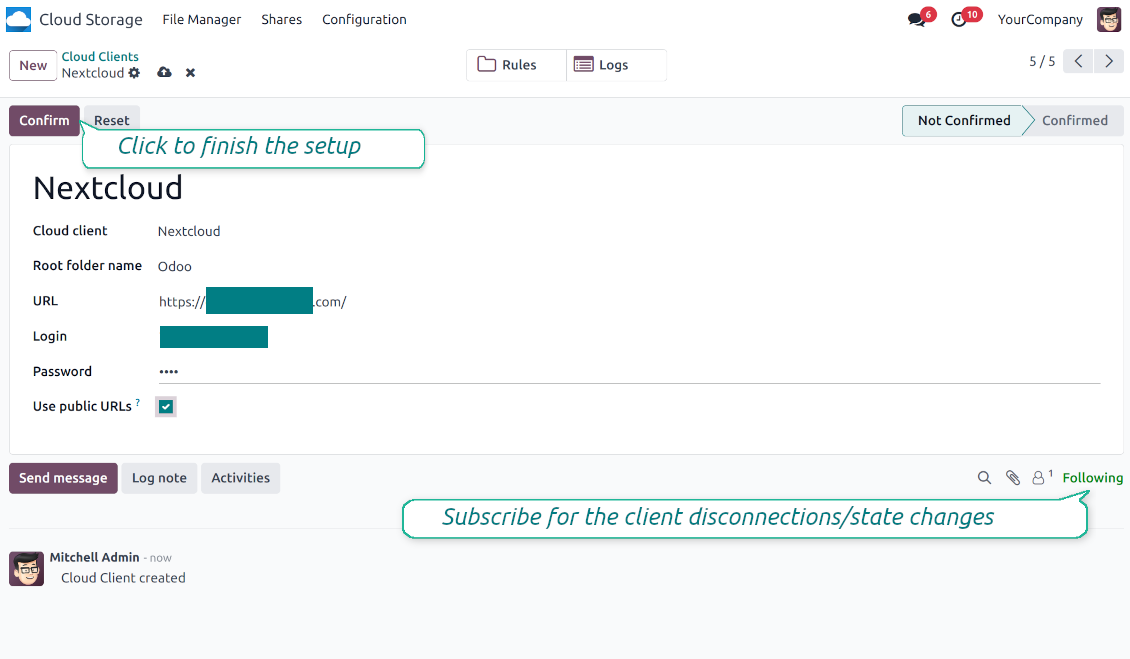
设置 NAS(Synology、QNAP、TrueNAS 等)
- 打开选项 'NAS Sync'(Cloud Storage > Configuration > Configuration)。需要可选插件 NAS Odoo Integration
- 准备 NAS 的 WebDAV 端点:
- Synology:在 DSM 中安装并启用 WebDAV Server,并尽可能选择 HTTPS
- QNAP:为目标共享文件夹启用 WebDAV,并尽可能使用 HTTPS
- TrueNAS CORE:启用 WebDAV 服务;TrueNAS SCALE:安装并配置 WebDAV 应用,因为新版 SCALE 已去掉内置 WebDAV
- 通用 WebDAV:确保 PROPFIND、MKCOL、PUT、GET、MOVE 和 DELETE 可用
- 若 Odoo 托管在本地 NAS 网络之外,请让 WebDAV 端点可安全访问。优先使用带有效 TLS 证书的反向代理,WireGuard、Tailscale 或 Cloudflare Tunnel 等 VPN/安全隧道,或 Synology QuickConnect、QNAP myQNAPcloud 等厂商中继。避免把管理员界面暴露到 Internet
- 创建专用 NAS 用户,仅在目标共享文件夹内拥有读取、创建、写入、移动和删除的全部权限。不要使用管理员帐户
- 转到 Odoo Cloud Storage > Configuration > Cloud Clients 并按 'Create'
- 作为参考,请填写所有用户都能看懂的名称
- 作为 Cloud 客户端,选择“Synology NAS”、“QNAP NAS”、“TrueNAS”或“WebDAV NAS”
- 在 Root folder 名称中输入标题,作为所有同步文件夹的父级NAS directory。例如 'Odoo' 或 'OdooERP'
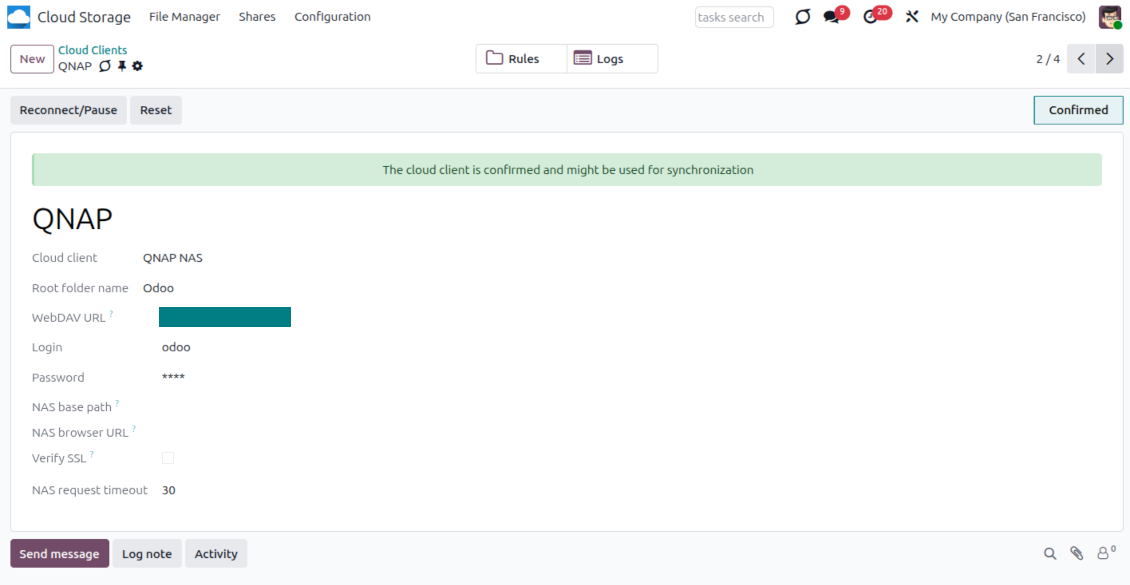
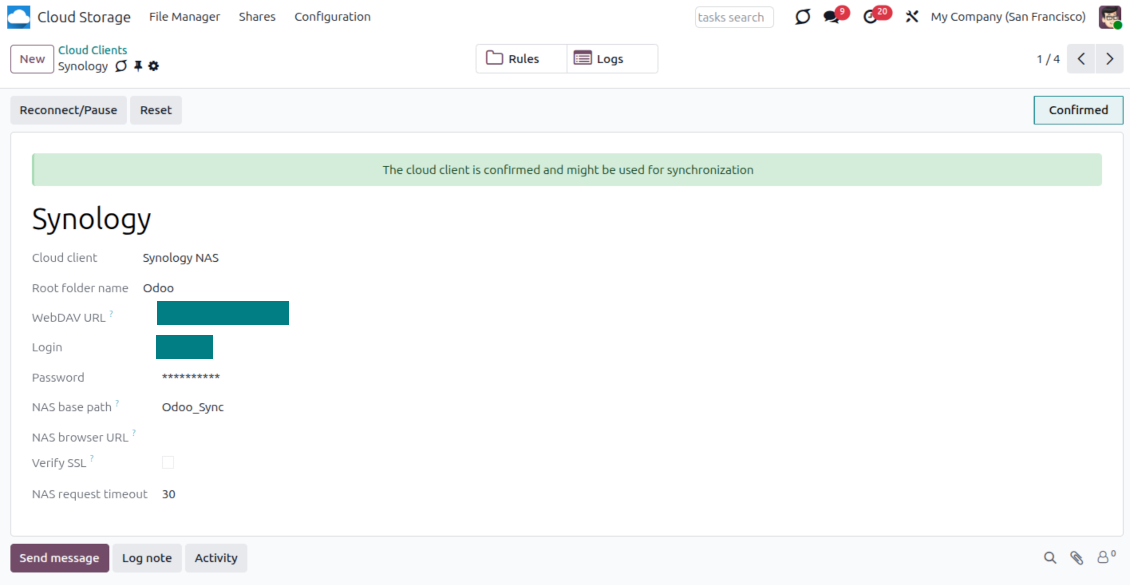
- 输入完整的 WebDAV URL、登录名和密码。若 Odoo 需在现有共享或目录内创建根文件夹,可选择定义基础路径
- 对公开 HTTPS 端点保持启用“Verify SSL”。仅对带自签名证书的可信私有端点关闭它
- 若 NAS 文件应通过供应商文件站 URL 而非原始 WebDAV URL 打开,可选择定义浏览器基础 URL
- 点击 “Confirm”。Odoo 检查 WebDAV 连接并创建或查找根目录。NAS - Odoo 同步已可执行
- 将新创建的 cloud client 应用到应同步到该 NAS 存储的文件夹规则和/或手动文件夹
- 等待同步计划作业启动。仅供测试:从 Cloud Storage > 配置 > 配置 > “Launch sync”按钮手动触发集成。
NAS 预配置
NAS 系统通常通过本地网络暴露文件。若您的 Odoo 服务器托管在该网络之外,则 WebDAV 端点应通过安全通道从 Odoo 可达。推荐选项是带有效 HTTPS 证书的反向代理、VPN 或安全隧道(如 WireGuard、Tailscale 或 Cloudflare Tunnel),或厂商中继(如 Synology QuickConnect 或 QNAP myQNAPcloud)。普通端口转发可行,但应视为最不推荐的选项。
使用专用 NAS 用户,仅对一个共享文件夹授予最低权限:读取、创建、更新、移动和删除。 避免管理员账户。对外公开的端点应始终使用 HTTPS 和有效 TLS 证书。连接器 有用于受信任自签名证书的 "Verify SSL" 选项,但通常应保持开启。
输入 QNAP 凭证
输入 Synology 凭证
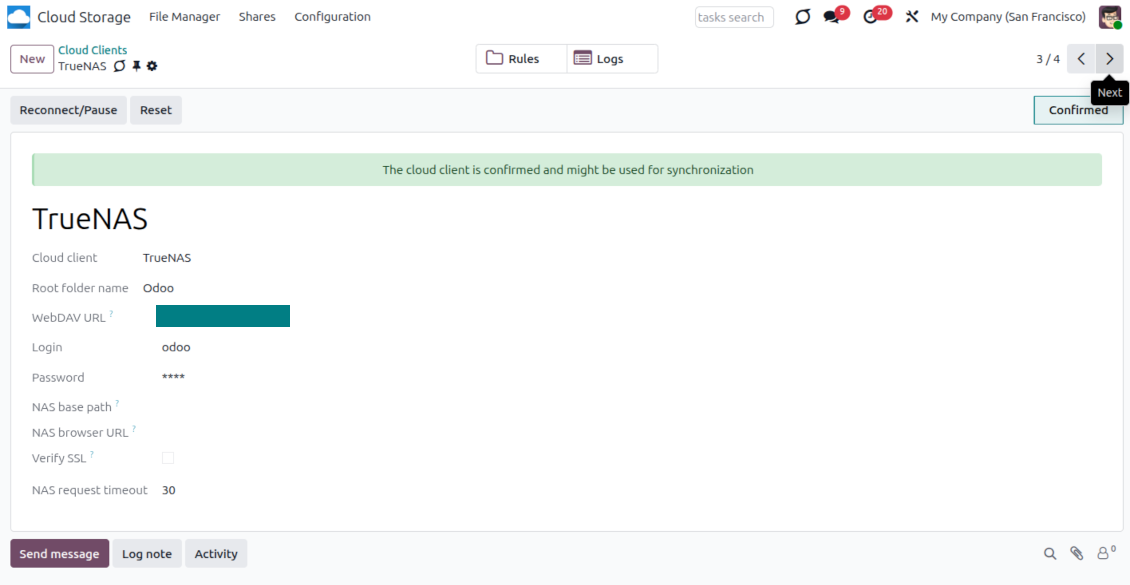
输入 TrueNAS 凭证
设置 Box
- 打开选项 'Box Sync'(cloud Storage > 配置 > 配置)。需要可选插件 Box Odoo Integration
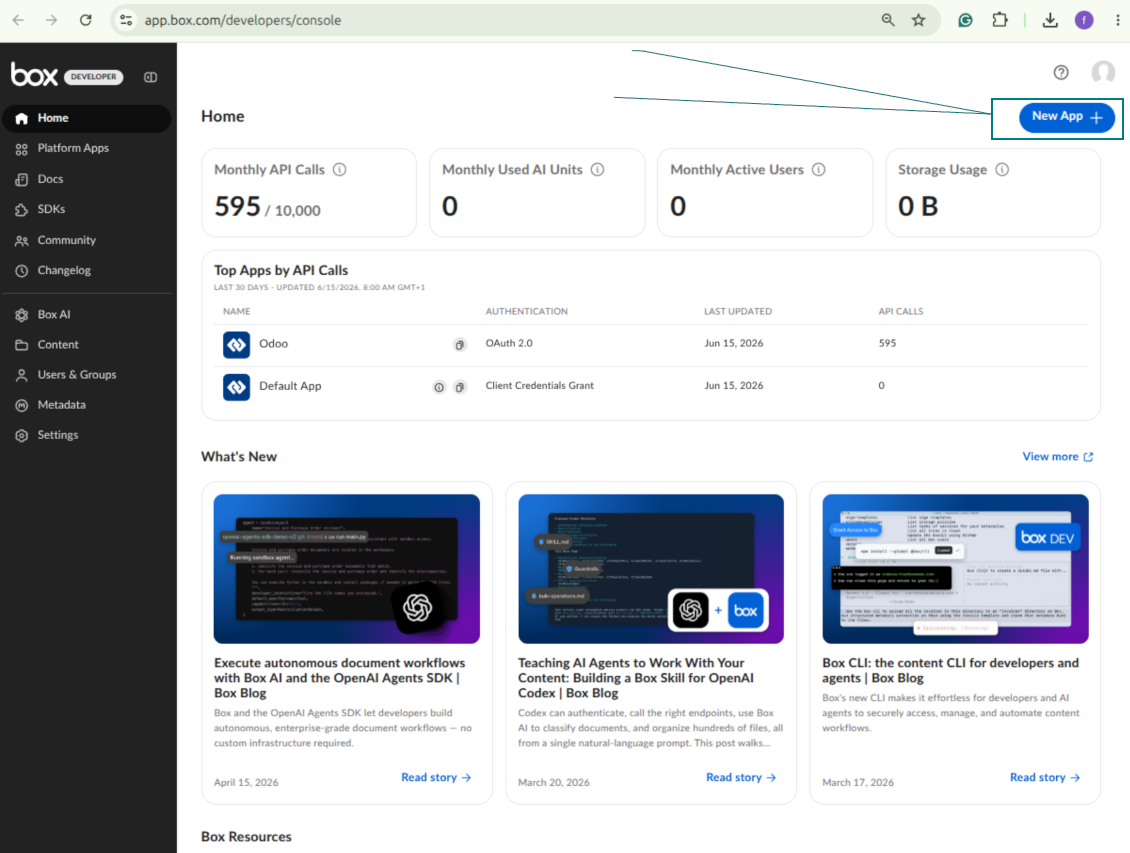
- 创建或打开Box开发者帐户并转到Box Developer Console: https://app.box.com/developers/console
- 创建 Custom App,并将身份验证方法选为 OAuth 2.0 (Authorization Code Grant)
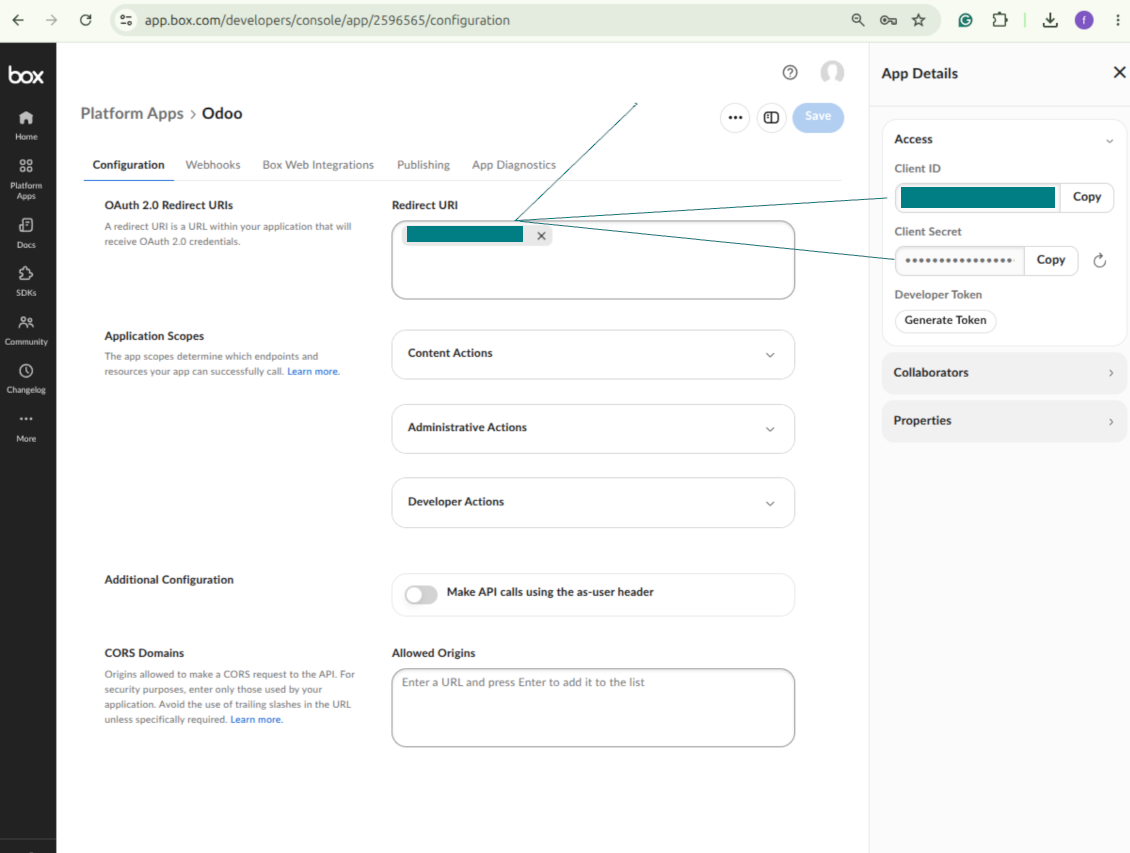
- Add the redirect URI as [YOURODOOSITENAME]/box_token (e.g. https://faotools.com/box_token). A valid SSL certificate (https) is required
- 授予应用读写文件和文件夹的权限。避免分配无关权限
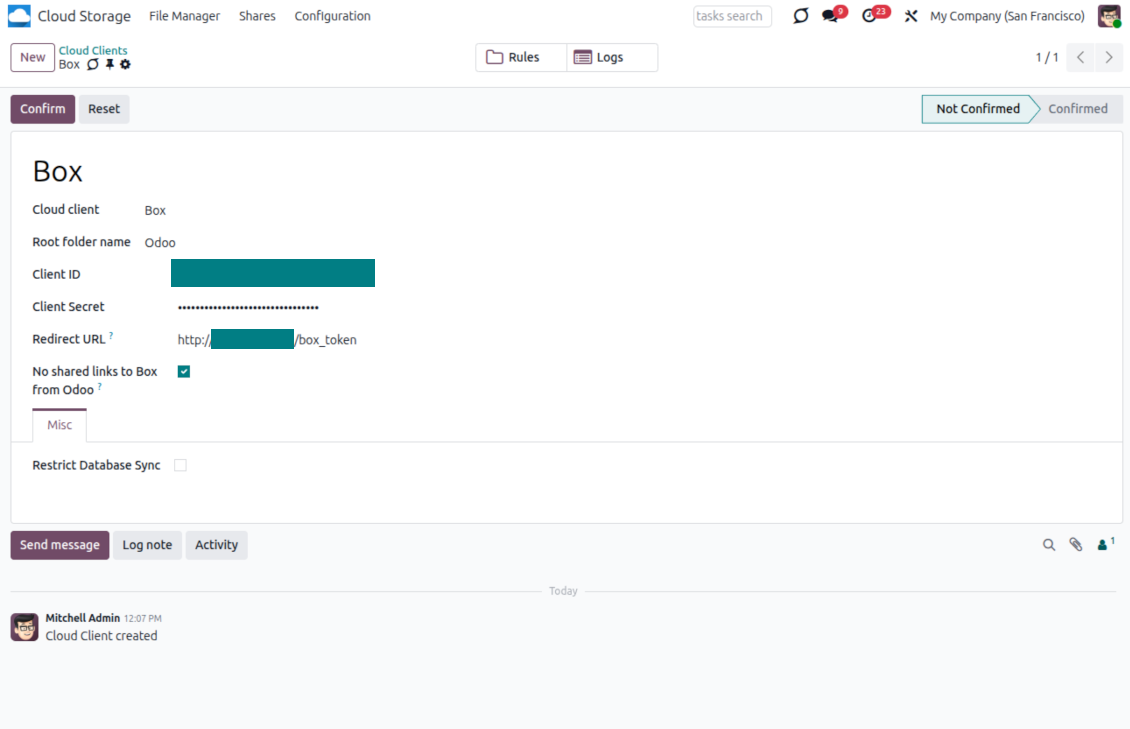
- 转到 Odoo Cloud Storage > Configuration > Cloud Clients 并按 'Create'
- 作为参考,请填写所有用户都能看懂的名称
- 作为 Cloud 客户端,选择“Box”
- 在 Root folder 名称中输入标题,作为所有同步文件夹的父级Box directory。例如 'Odoo' 或 'OdooERP'
- 将Box Client ID复制到“Client ID”字段
- 将Box Client Secret复制到“Client Secret”字段
- 插入先前生成的重定向 URL
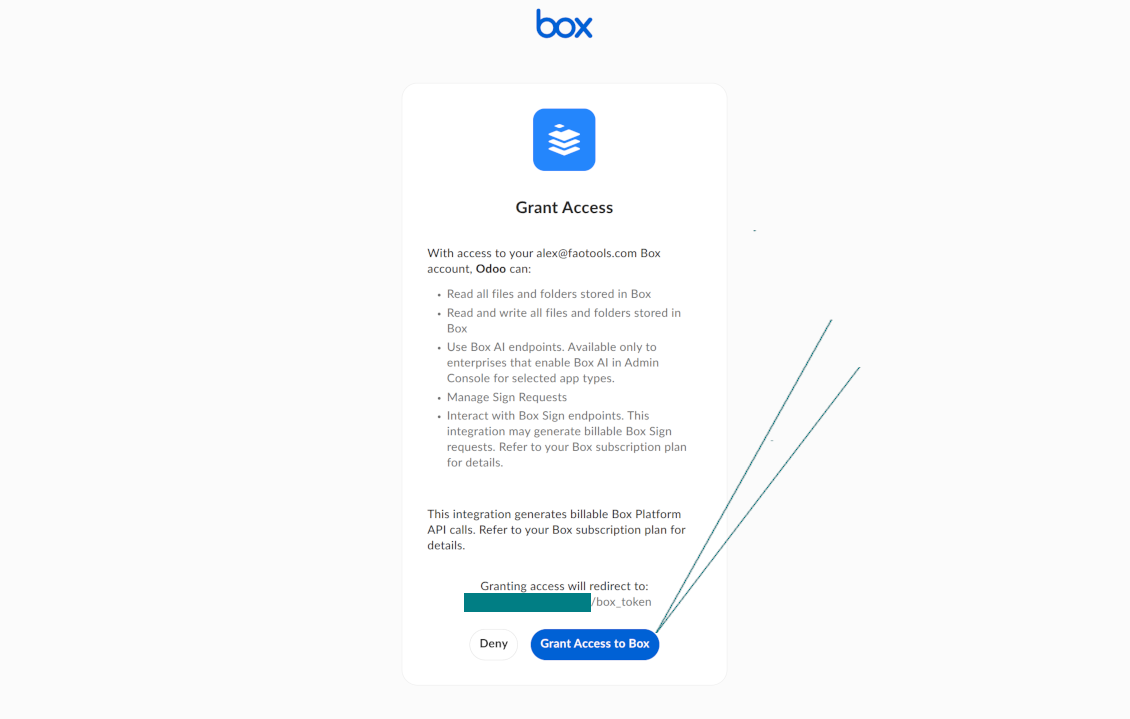
- 点击 “Confirm”。Odoo 将你转到 Box 登录页。在系统中核对、同意全部条件,并授予所请求的全部权限
- 登录后,Box 会将您重定向回 Odoo。Box - Odoo 同步已就绪
- 将新创建的 cloud client 应用到应同步到该 Box 账户的文件夹规则和/或手动文件夹
- 等待同步计划作业启动。仅供测试:从 Cloud Storage > 配置 > 配置 > “Launch sync”按钮手动触发集成。
创建新的Box开发者应用
复制Box OAuth凭据
在Odoo中配置Box云客户端
向 Odoo 授予 Box 访问权限
设置 MinIO
- 准备一台正在运行的 MinIO 服务器
- 打开 MinIO 控制台
- 创建新存储桶或选择现有存储桶。复制准确的存储桶名称:应填入 Odoo 的“Bucket”字段
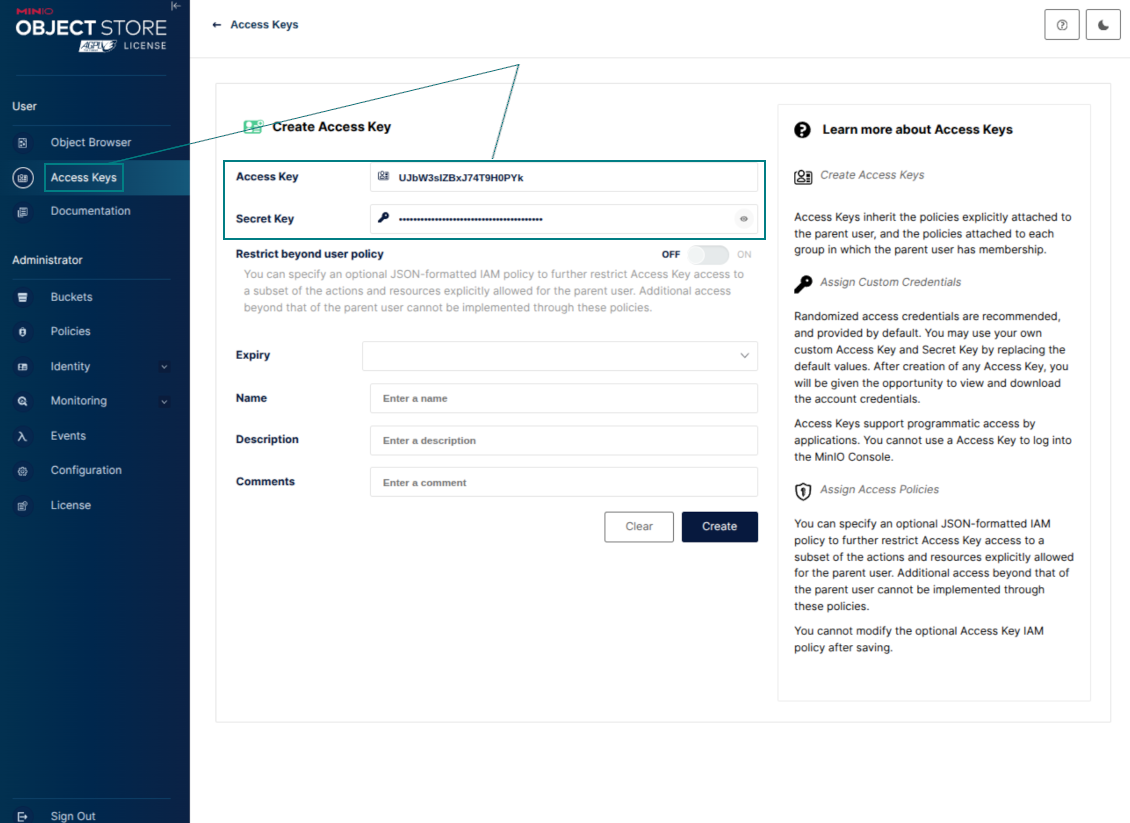
- 为 Odoo 创建访问凭据。在 MinIO 中,使用 access key / secret key 对,或使用有权在所选存储桶中列出、读取、创建、写入、复制和删除对象的服务帐户
- 将 MinIO Access Key 复制到 Odoo 字段“Access Key”
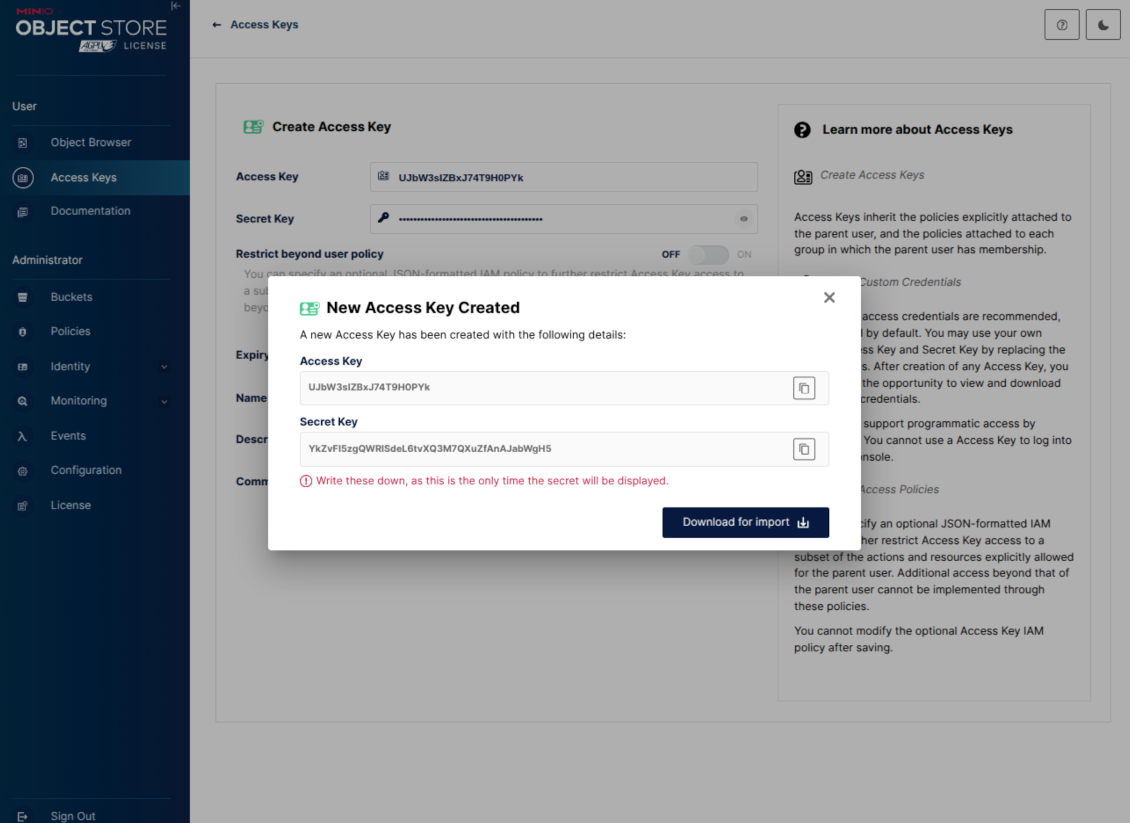
- 将 MinIO Secret Key 复制到 Odoo 字段“Secret Key”。重要:若 MinIO 只显示一次,请在关闭 MinIO 页面之前保存密钥
- 将 MinIO S3 API 端点 URL 复制到 Odoo 字段“Amazon S3 endpoint URL”。例如,本地服务器通常使用 http://localhost:9000,生产服务器可能使用 https://minio.example.com
- 转到 Odoo Cloud Storage > Configuration > Cloud Clients 并按 'Create'
- 作为参考,请填写所有用户都能看懂的名称
- 作为 Cloud 客户端,选择“MinIO”
- 在 Root folder 名称中输入标题,作为所有同步文件夹的父级MinIO object prefix。例如 'Odoo' 或 'OdooERP'
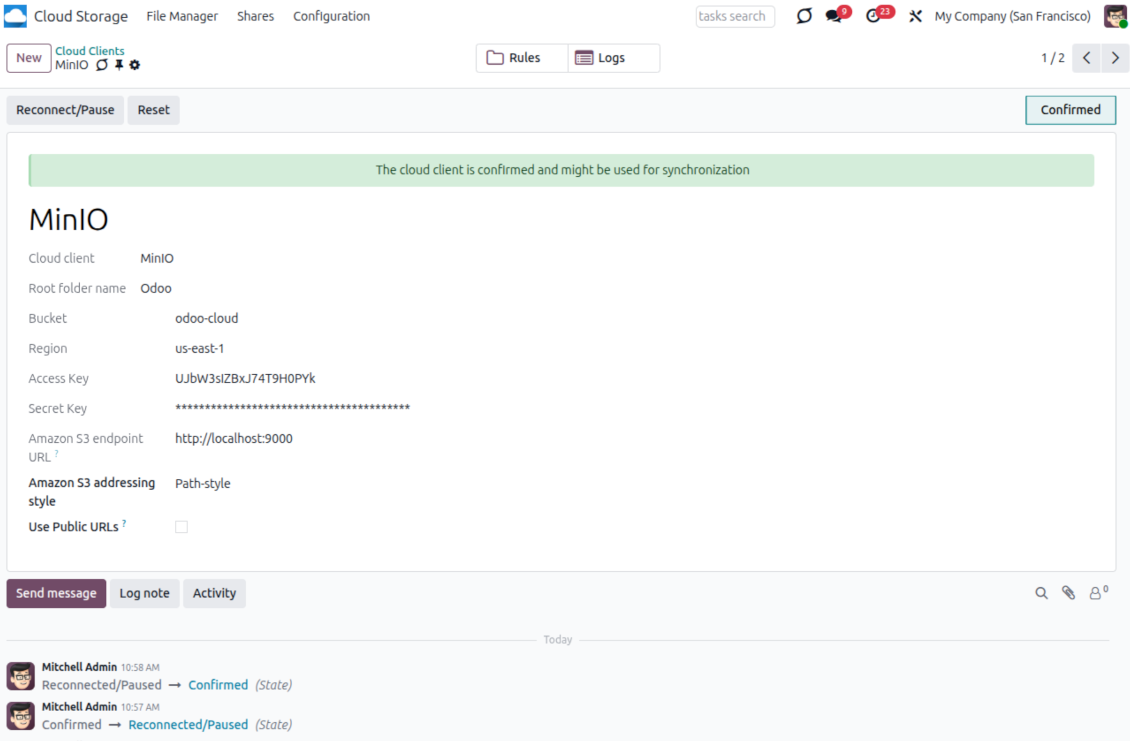
- 填写 'Bucket'、'Access Key'、'Secret Key' 和 'Amazon S3 endpoint URL'。'Region' 对 MinIO 可选;若为空,Odoo 使用 us-east-1 进行 S3 兼容签名
- 将寻址方式保持为 Path-style。这是 MinIO 端点的推荐选项,尤其当 MinIO 主机不提供按存储桶的 DNS 名称时
- 选择 Odoo 是否使用直接的公开 MinIO URL。仅当存储桶、前缀、反向代理或 CDN 可公开读取时,才启用“Use Public URLs”。私有 MinIO 存储桶请保持关闭
- 点击 “Confirm”。Odoo 检查 bucket 访问并创建或验证根文件夹前缀。MinIO - Odoo 同步已可执行
- 将新创建的 cloud client 应用到应同步到该 MinIO 存储桶的文件夹规则和/或手动文件夹
- 等待同步计划作业启动。仅供测试:从 Cloud Storage > 配置 > 配置 > “Launch sync”按钮手动触发集成。
Useful MinIO documentation: https://min.io/docs/minio/linux/administration/identity-access-management.html, https://min.io/docs/minio/linux/reference/minio-server/minio-server.html.
创建MinIO访问密钥
复制新的MinIO凭据
在Odoo中配置MinIO云客户端
设置 Dropbox 集成
Python 依赖
该工具依赖外部库 'dropbox'。请用以下命令为 Odoo 服务器安装:
pip3 install dropbox
配置与登录
- 打开选项 'Dropbox Sync'(cloud Storage > 配置 > 配置)。需要可选插件 Dropbox Odoo Integration
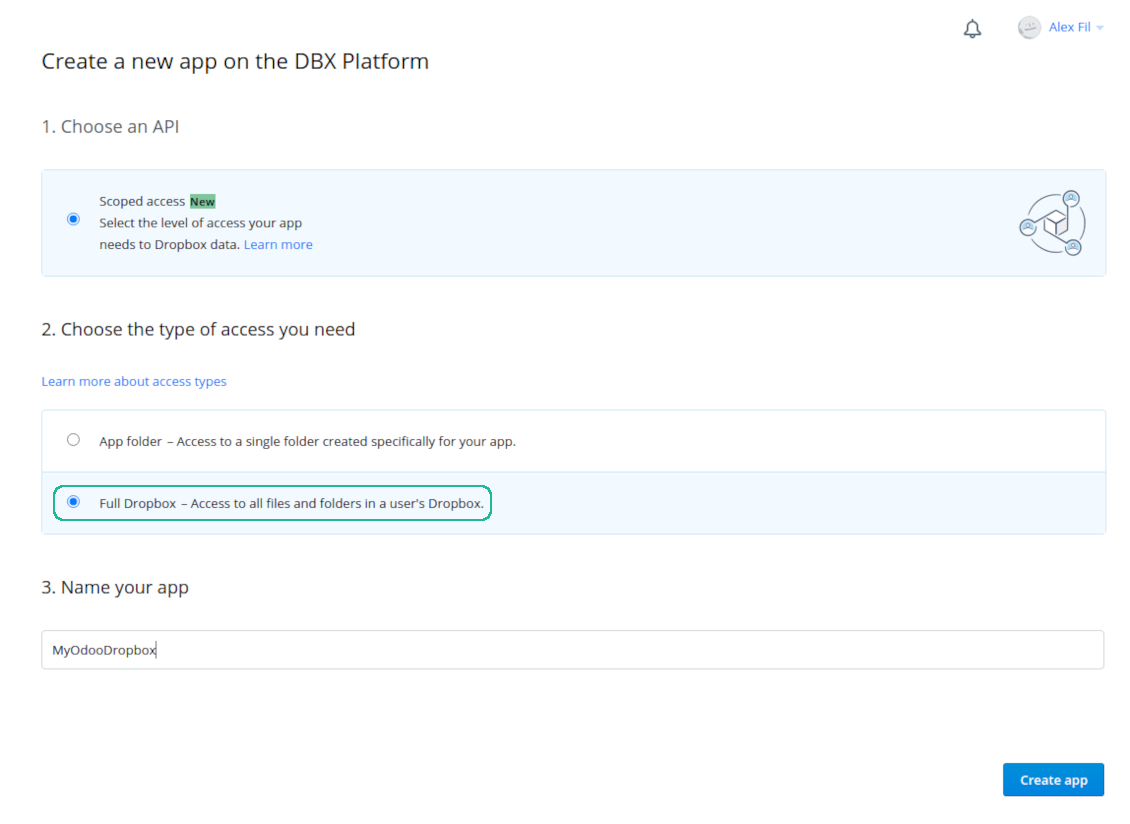
- Follow the URL https://www.dropbox.com/developers/apps/create
- 将 API 选为“Scoped access”
- 将访问类型选为“Full Dropbox”
- 为应用选择合适的名称并按下“Create app”按钮
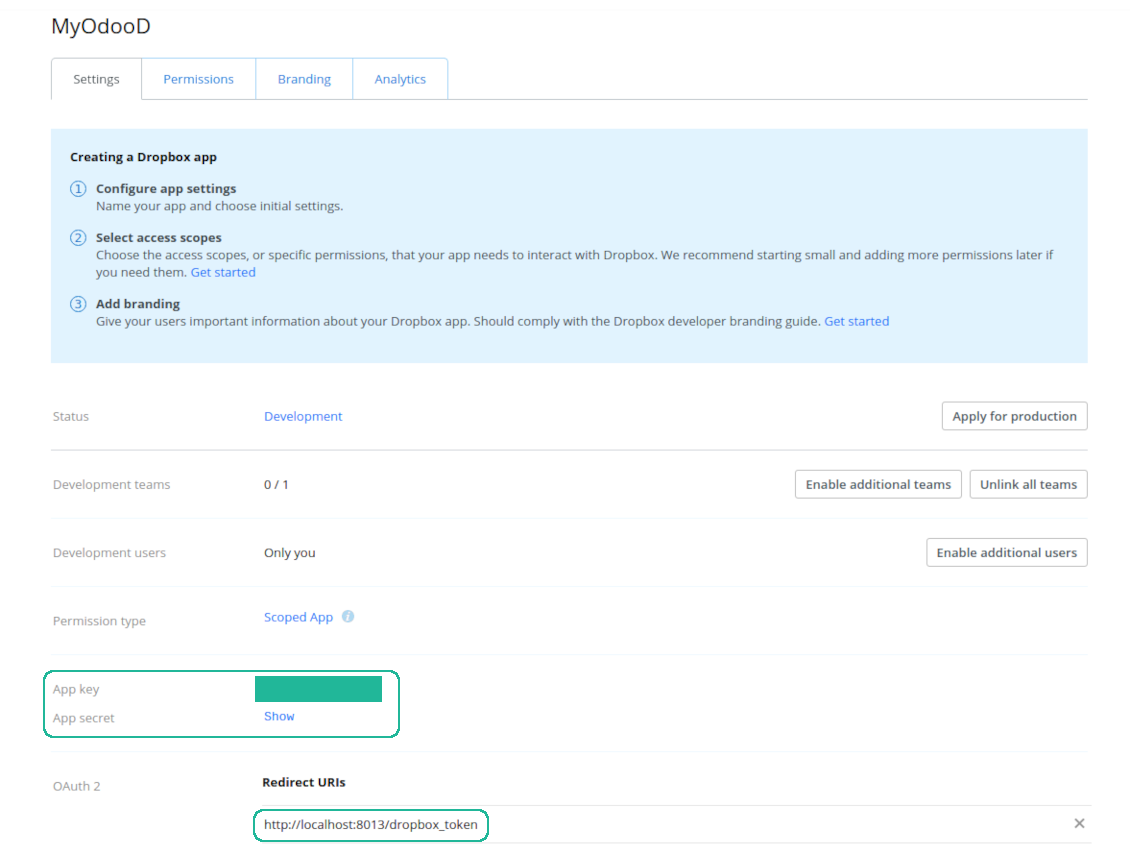
- Add the redirect URI as [YOURODOOSITENAME]/dropbox_token (e.g. https://faotools.com/dropbox_token). A valid SSL certificate (https) is required
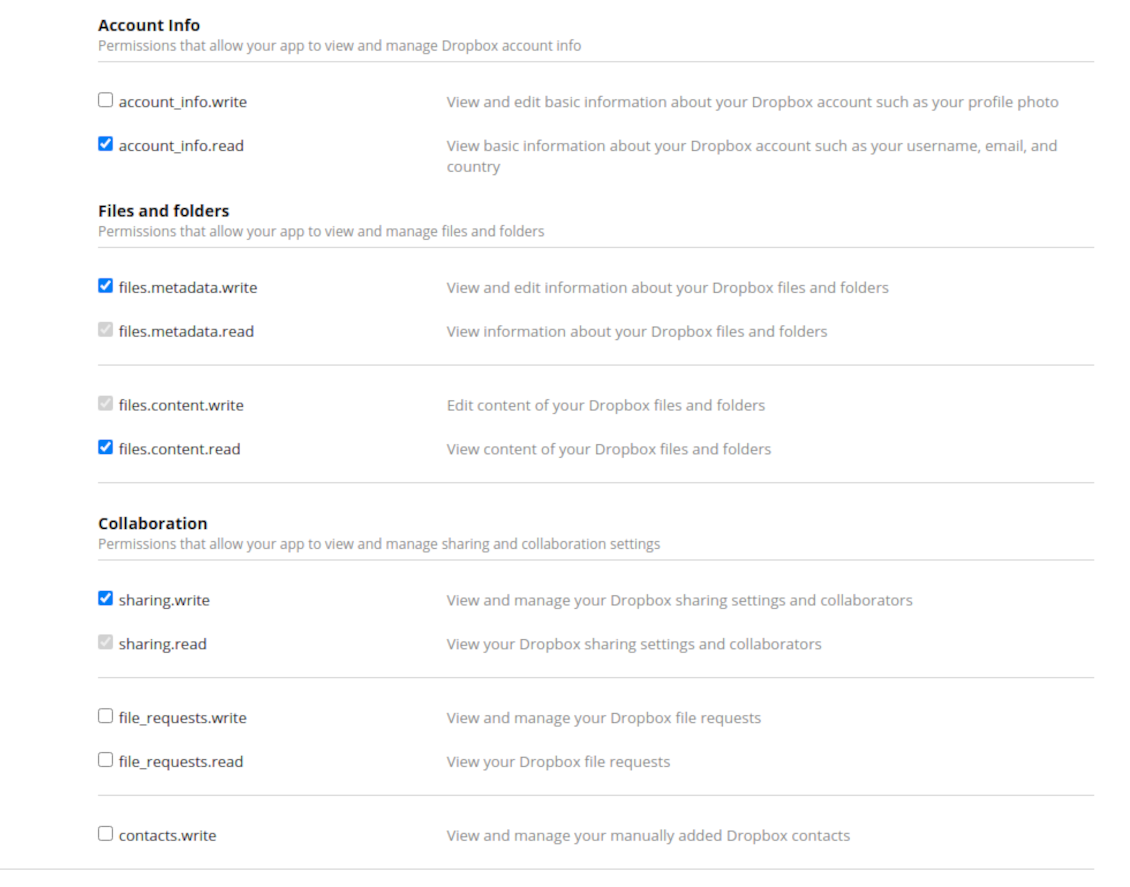
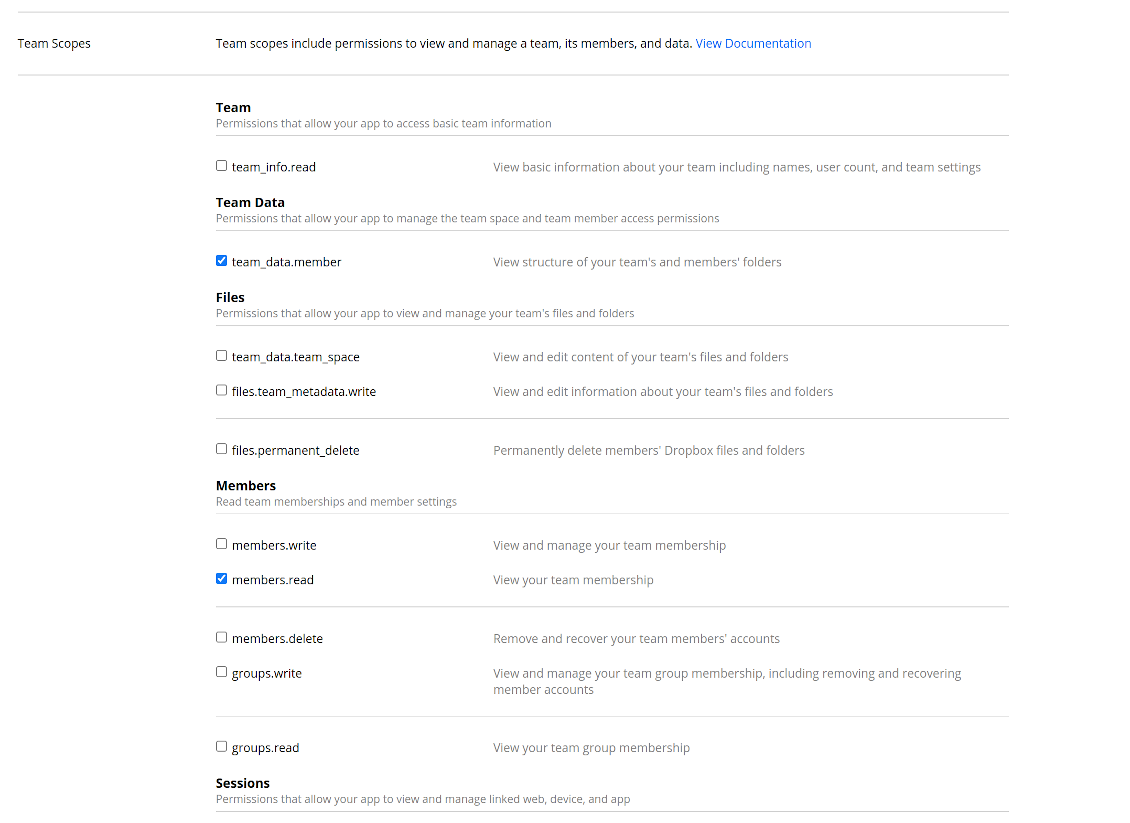
- 向应用授予权限:'Account Info (Read)'、'Files and folders Metadata (Write)'、'Files Content (Write)'、'Collaboration (Write)'。团队 DropBox 还需分配 'Team Data Members'、'Members (Read)'。确保未分配其他权限。
- 提交应用
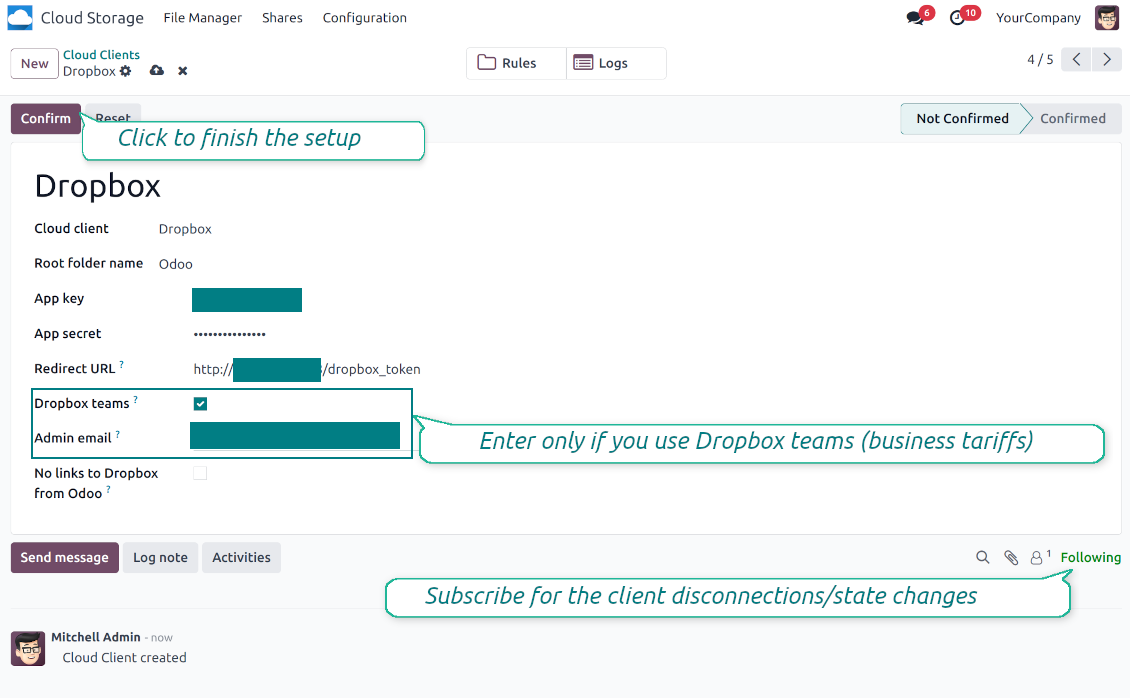
- 转到 Odoo Cloud Storage > 配置 > Cloud Clients 并按下“Create”
- 参考名请填写所有用户都能看懂的名称
- 作为 Cloud 客户端选择“Dropbox”
- 在 Root folder 名称中输入标题,作为所有同步文件夹的父级Google Drive directory。例如 'Odoo' 或 'OdooERP'
- 将“App key”复制到“App key”
- 将“App Secret”复制到“App secret”字段
- 插入先前生成的重定向 URL
- 如果使用 Dropbox 团队云端硬盘
- 勾选相关框
- 设置该 Dropbox 用户的邮箱。所有与 Odoo 相关的项目会在该用户文件夹内创建,之后才与其他用户共享。在此用户下创建、更改、移动和删除所有文件和文件夹
- 点击 “Confirm”。Odoo 将你转到 Dropbox 登录页。在系统中核对、同意全部条件,并授予所请求的全部权限
- 登录后,Dropbox 会将您重定向回 Odoo。Dropbox - Odoo 同步已就绪
- 将新创建的 cloud client 应用到应同步到该 Dropbox 实例的文件夹规则和/或手动文件夹
- 等待同步计划作业启动。仅供测试:从 Cloud Storage > 配置 > 配置 > “Launch sync”按钮手动触发集成。
Dropbox URL
Dropbox 为现有文件和文件夹生成链接的方式是固定的。尤其没有内部或私有 URL 的概念。每个 Dropbox 项目可能会获得所谓的共享 URL。此类共享链接要么公开,要么仅限团队。而且后一功能仅适用于 Dropbox business 帐户。
本工具依赖共享链接机制。即每个附件链接要么公开(所有个人 Dropbox 账户),要么仅限团队(所有商务 Dropbox 账户)。
有时被认为不完全安全。虽然外部用户几乎不知道网站 URL,但仍可能因某些操作而暴露。此外,生成共享链接并不很快,可能拖慢同步。因此提供了关闭共享 URL 的功能。
If checked, all Dropbox URLs in Odoo will be of type https://www.dropbox.com/home/Odoo/[PATH]. Such links will not work in many cases. Thus, if you need to open Dropbox files/folders from Odoo, be careful with the setting 'No links to Dropbox from Odoo'.
另请观看 配置视频
创建Dropbox应用
设置 Dropbox 应用:重定向 URL
个人帐户的Dropbox权限
企业帐户的Dropbox权限
为 Dropbox 集成设置 Odoo
相关常见问题 Cloud Storage Solutions Odoo v.18
同步字段存储在哪里?会复制到 Odoo 和云端吗?
本应用假定附件的二进制内容保存在 Cloud Client 中,而不是 Odoo 服务器上。因此,Odoo 中的此类附件变为 URL 类型,您可随时从附件框或 Cloud Client 访问它们。
设置完成后无需手动操作,同步完全自动。只需决定要同步哪些 Odoo 单据类型,并为每一种设置关联模型(客户、销售或采购订单、任务、项目等)。
同一单据类型可以有多个文件夹吗?例如内部项目和客户项目?
可以。请为每一种准备规则,然后应用筛选:例如按项目类型。
尽量让筛选互斥,以便单据能被明确归类。例如“是客户但不是供应商”、“是供应商但不是客户”。否则某个单据文件夹会在模型之间跳动。
可以将同步做成实时的吗?
不可以。我们有充分理由避免实时同步:
性能问题。若同步是实时的,每次上传文件都会出现加载屏幕。
冲突问题。若 2 位用户同时更改一项,可能出现无法解决的情况。定期作业可以事后修复;实时同步则必须存成队列,对用户更加费解。
功能问题。尤其是重命名和调整结构。反向同步严格依赖目录逻辑,每次同步都会检查 100% 的项目。若每次更新都做,将是每秒数千次请求。若不做:更改会丢失。
我可以更改云中默认文件夹的名称吗?
可为任何单据类型给模型目录(销售订单、商机、供应商等)指定自己的名称。
对象文件夹(SO-001、John Smith 等)依赖 Odoo 为该单据类型构造显示名称的方法。不过可通过定义名称表达式来更改。使用的正是 Odoo 电子邮件模板的语法。
我可以更改同步作业的频率吗?
不可以。从版本 15 起不应再改计划作业。它们已优化为每 15 分钟运行,以保证最稳定、最快的连接。
请确保 Odoo 服务器超时至少为 15 分钟(900 秒)。
若需暂时停止同步,请在相应的 cloud client 表单上进行。
我可以将附件同步到几个云客户端吗
可以,从版本 15 起可设置多个连接。这样一部分文件夹同步到一个 cloud client,另一部分同步到另一个。
请注意,同一文件夹无法同时同步到多个 cloud storages。
我们在云中使用专用编辑器(例如 OnlyOffice、Office 365 等)。文件会在该编辑器中打开吗?
可以,取决于您的 cloud client 配置。
我是否只需要Cloud Storage Solution应用?
从版本 15 起,应用可单独用来把附件按文件夹整理,并提供文件管理器界面。
不过,若要与某个云客户端建立连接,则需要 至少安装一个可选的客户端相关应用。
更改文件夹规则时会发生什么?
文件夹规则一变,文件夹列表也会变。不再符合规则条件的文件夹会被移除。若文件已同步,反向同步会将其退回 Odoo 并从 Cloud Client 删除。
若文档对象不符合文件夹规则的条件,则不会创建其文件夹。之后若符合条件,将生成相关文件夹。
可以只保留正向同步,或关闭来自云端的同步吗?
可以。在云客户端打开设置页面并打开关闭来自云端的同步。
同步保持单向。在 Odoo 中所做的更改仍会推送到云存储。在云存储中创建、重命名或删除的文件和文件夹不会反映到 Odoo,在那里删除的文件夹也不会被恢复。
再次关闭该选项,这些累积的更改(包括删除)会在下次同步时应用。
此设置从版本 18 起可用。取消关联、重置或停用客户端仍会运行反向同步,除非你也关闭反向同步。
您的工具的更新政策是什么?
根据当前 Odoo Apps Store 政策:
- 为 12.0 及更早版本购买的每个模块,均可使用直至 12.0 的所有版本。
- 从 13.0 起,每个模块版本需单独购买。
- 无论版本如何,购买工具即获得该主版本内的 全部更新和缺陷修复权利。
请注意,faOtools 团队不控制这些政策。如有疑问,请直接联系 Odoo Apps Store 代表。
如何在 Odoo.sh 上安装您的应用?
最直接的做法是使用 Odoo 商店的内置流程:
1. 打开模块页面并点击 Deploy on odoo.sh 按钮
2. 之后会跳转到 GitHub 页面。登录帐户,然后点击 'Create a new repo' 或使用现有仓库。请确保仓库为私有。不得以 OPL-1 许可公开发布应用。如有需要,为 Odoo.sh 项目新建 repo
3. 然后转到 odoo.sh 并点击 Deploy 按钮。在弹出窗口中提交决定并点击 'Continue.' 这将触发安装过程。
这些步骤会将应用安装到项目的生产分支。若要部署到其他分支或更新模块,请执行以下操作:
1. 从 Odoo 商店上传应用的源代码
2. 将模块提交到所需的 GitHub 仓库。确保没有任何应用文件夹/文件被忽略(即未列入 repo 的 .gitignore)。仓库由 odoo.sh 自动创建,默认可能包含关键项(例如 /lib)。应上传模块的全部目录、子目录和文件,不得遗漏
3. 部署 odoo.sh 项目的目标分支,或在设置如此假定时 等待其自动构建。
应如何在自己的服务器上安装您的应用?
2. 重新启动 Odoo 服务器;
3. 打开开发者模式(技术设置);
4. 更新应用列表(应用菜单);
5. 找到应用并点击“Activate”/“Install”;
6. 如应用页面有指南,请按指南操作。
我注意到您的应用有额外附加模块。可以之后再购买吗?
可以。同时 Odoo 会自动把所有依赖加入购物车,因此应排除已购买的工具以免重复付款。
我在 Odoo.sh 上部署了您的应用,测试中出现警告/错误
红/橙色警告不影响应用功能。遗憾的是,标准自动测试有时假定与本应用目标冲突的行为,因此我们的模块会未通过。例如我们改了价格计算,而标准 Odoo 模块测试把最终价格与标准算法比较。
请先检查已部署数据库的功能。是否都正常?
若仍认为该警告影响真实功能,请联系我们并转发完整安装日志以及已部署模块的完整清单(含核心与第三方)。
我可以直接向贵公司购买应用吗?
不,我们只通过 官方 Odoo 应用商店.
希望获得折扣
很遗憾,我们没有技术手段 提供单独报价。
我可以在 Odoo Online (SaaS) 数据库上安装该应用吗?
不能,第三方应用无法在 Odoo Online 上使用。遗憾的是 Odoo SaaS 会阻止这种可能。
您的工具依赖其他应用。我需要购买那些应用吗?
是的,工具需要依赖中列出的全部模块才能正常工作。应用页上的价格已包含所有必要依赖。
该模块的美元价格是多少?为什么变了?
我们的模块价格以欧元标价。Odoo 商店按内部汇率换成其他货币。因此美元价格可能随汇率更新而变化。
非英语的应用和网站措辞由 AI 辅助 并与官方 Odoo 翻译对齐。若发现错误, 发送翻译正确性工单 我们会修好。
Odoo 演示数据库(在线预览)
对于此应用,我们可能提供免费个性化演示数据库。
联系我们无需电话号码或信用卡。只需完成不超过 30 秒的简短电子邮件注册。
按您的申请,我们将准备独立的在线预览数据库,约两周内可进行任意测试并核验假设。
缺陷反馈
如遇缺陷或不一致行为,请随时联系我们。我们保证在购买后 60 天内提供修复,并在此期限后仍积极改进工具。
联系我们无需电话号码或信用卡。只需完成不超过 30 秒的简短电子邮件注册。
请在请求中尽可能提供详细信息:截图、Odoo 服务器日志、完整的问题复现说明等。通常需要几个工作日来准备问题的工作计划(若确认是缺陷)或提供应采取的指引(否则)。
公开功能请求与模块构想(免费开发)
我们非常希望改进工具,并感谢任何反馈。若您的需求具有普遍价值且能高效实现,团队会将其列入待办清单。
此类待办清单会定期处理,不产生额外费用。虽然我们无法承诺截止日期和最终设计,但这可能是在无投入、无风险的情况下获得所需功能的好办法。
联系我们无需电话号码或信用卡。只需完成不超过 30 秒的简短电子邮件注册。
18.0.1.4.54
- The issue of the sync queue stopping with a recursion error when a large number of tasks is planned at once has been fixed.
- Tasks of a paused or not connected cloud client now wait for the client instead of being failed and canceled.
18.0.1.4.53
- 已添加为云客户端关闭来自云端的同步的功能。
- 已添加为云客户端关闭反向同步的功能。
- 已修复反向同步客户端被删除后同步队列仍然保持阻塞的问题。
18.0.1.4.52
- The issue of folder lookup failing when the document id was a recordset has been fixed.
18.0.1.4.51
- Optimized folder sync by searching only attachments of updated records instead of all model attachments.
18.0.1.4.50
- The feature to requeue failed tasks has been added.
18.0.1.4.49
- Support for Amazon S3, MinIO S3, Synology, QNAP, TrueNAS, other NAS/WebDAB, and BOX has been added.
18.0.1.4.48
- The feature to control the maximum number of folders per rule has been added.
18.0.1.4.47
- The issue with attachments linked to documents disappearing from the attachment box has been fixed.
18.0.1.4.46
- The issue fix text break in folder titles has been fixed.
18.0.1.4.45
- The issue with the non-synced invoice report has been fixed.
18.0.1.4.44
- 异步文件夹检查已优化。
18.0.1.4.43
- 已修复新选文件夹搜索的问题。
18.0.1.4.42
- 已修复在记录之间切换时文件夹树不刷新的问题。
18.0.1.4.41
- 已修复移除所选附件需要双击的问题。
18.0.1.4.40
- 备份删除队列已改为 first-in, first-out。
18.0.1.4.39
- 应用已适配支持动态部分的新 domain 逻辑。
18.0.1.4.38
- 配置页已添加 filestore 评估。
- 已添加将 cloud client 同步限制为特定数据库名称的功能。
18.0.1.4.37
- 已添加锁定备份创建的功能。
18.0.1.4.36
- 已修复未翻译警告的问题。
18.0.1.4.35
- 已添加将当前数据库备份自动和手动同步到所选云客户端的功能。可配置备份计划和保留时间。备份可以带或不带 filestore 和 manifest。
18.0.1.4.34
- 已修复刷新文件夹时未能正确导入 Python 库的问题。
18.0.1.4.33
- domain 现在支持使用 Python 库,包括 datetime ('date', 'datetime', 'time', 'timedelta', 'timezone', 'tzinfo', 'MAXYEAR', 'MINYEAR')、time ('time', 'strptime', 'strftime')。也可以使用 context_today(datetime.now 的简写)和 relativedelta。
18.0.1.4.32
- 与 Email Marketing 模块的兼容性已按近期 Odoo 18 更新修复。
18.0.1.4.31
- 删除后附件会被取消选中。
18.0.1.4.30
- 已同步附件的 URL 可以预先计算。
18.0.1.4.29
- 基于云客户端创建的文件夹会获得更大的 sequence。
18.0.1.4.28
- Kanban 视图已适配新的 Odoo 18 XML 原则。
- 已为规则、文件夹、标签和共享的表单视图添加非活动记录的 Archived 功能条。
18.0.1.4.27
- 界面已更新以反映核心附件列表视图的变更。
18.0.1.4.26
- 已修复未向某些文件夹添加链接的问题。
18.0.1.4.25
- 该应用已发布到版本 18。
17.0.1.4.25
- 已修复未为与工作区相关的父级创建子文件夹的问题。
17.0.1.4.24
- 已修复先前已同步的子文件夹未更新的问题。
17.0.1.4.23
- 已引入清除规则相关文件夹阻止日期的功能。
17.0.1.4.22
- 撰写 Odoo 消息时可选择现有附件(包括已同步的)的功能已添加。
- 已在附件框和文件管理器界面添加添加 URL 附件的功能。
17.0.1.4.21
- 已修复记录备注后自动滚动的问题。
17.0.1.4.20
- 已添加按日期和时间筛选日志的功能。
- 现在可在配置页上定义导出日志的数量。
17.0.1.4.19
- 失败重试次数现在可配置,标准任务与 reverse/move 任务可以不同。
17.0.1.4.17
- 已优化任务的父级阻塞机制,优先处理优先级最高的任务。
17.0.1.4.15
- 已明确用于移动条目的同步操作的阻塞机制。
17.0.1.4.13
- 规则相关中间文件夹的访问按父文件夹访问确定,而不是按该规则模型。
17.0.1.4.12
- URL 的最大长度已增至 4096。
17.0.1.4.11
- 已优化反向同步。因相互阻塞而挂起的任务已移除。
17.0.1.4.10
- 已修复同时进行反向和回向同步的问题。
17.0.1.4.9
- 已优化处理重新排列和移动文件夹的算法。
17.0.1.4.8
- 已修复通过门户创建标签和文件夹的问题。
17.0.1.4.7
- 已修复按标签/文件夹标题进行的门户共享搜索。
17.0.1.4.6
- 已添加批量操作“Slideshow”。后台用户可为所选图像附件启动幻灯片。
- 共享设置中已添加选项“Allow slideshow”。开启后,门户/公开用户可在该共享的门户界面中为当前找到的图像附件触发幻灯片。
- 已优化反向同步算法。
17.0.1.4.5
- 已引入针对挂起任务的预失败检查。若任务完全停掉 cron(例如内存限制错误),下一次 cron 将继续处理另一项任务。
17.0.1.4.4
- 文件管理器界面的附件卡片已加入标准 Odoo 预览。要在 Kanban 视图中打开相关预览器,请点击缩略图。支持的文件类型和行为与附件框相同。
- 可通过 Kanban 三点菜单打开附件表单。也可在此更改附件颜色。
- 同步日志级别按消息级别着色。
- 已优化日志系统,即使作业失败并完全停止线程也会写入消息。
17.0.1.4.3
- 已修复文件管理器界面首次加载时选错文件夹的问题。
17.0.1.4.2
- 已添加按规则同步频率为文件夹排优先级的功能。
17.0.1.4.1
- 模块结构已更新为最新的文件管理器界面、drag-and-drop 和门户共享功能
17.0.1.3.14
- 已修复使用显式传入的 res_model 和 res_id 复制附件的问题(HR Expenses 兼容性已修复)。
17.0.1.3.13
- 现在可在文件管理器界面中多选文件夹。
- 上传附件的当前文件夹会显示在“上传”按钮的标题上。
- 已引入共享附件/文件夹的功能。可将任何文件、目录或标签共享给特定门户合作伙伴或公开共享。可选允许上传、树形导航以及创建标签和文件夹。
- 已添加下载特定标签全部附件的功能。按标签导航变为可选。
17.0.1.3.12
- 已引入从本地电脑拖放文件以上传的功能。
- 现在可通过将附件拖放到左侧导航面板来更新文件夹和标签。
17.0.1.3.11
- 已修复批量更新标签时的错误。
- 已修复新记录文件夹不正确的问题。
- 已修复导航面板中在尚无其他文件夹时无法创建文件夹的情况。
- 同步日志界面已调整为显示所收响应的 HTML 内容。
17.0.1.3.10
- 已覆盖文件夹初始设置失败 8 次但仍需同步的罕见情况。


The tool to build a deep and structured knowledge base for internal and external use. Knowledge System. KMS. Wiki-like revisions.
398€
The tool to set up KPI targets and control their fulfillment by periods. KPI dashboards. Dashboard designer. KPI charts

The tool for time-based service management from booking appointments to sales and reviews
398€
The tool to manage your Odoo from your favorite AI chats through MCP. Claude. Any MCP-supporting AI.

The tool to automatically synchronize Odoo attachments with OneDrive files in both ways
487€
The tool to automatically synchronize Odoo attachments with Google Drive files in both ways
487€
The tool to automatically synchronize Odoo attachments with ownCloud/Nextcloud files in both ways
487€
The tool to automatically synchronize Odoo attachments with NAS Solutions in both ways. Synology, QNAP, TrueNAS and any other WebDav-supporting NAS solutions
487€