OwnCloud / NextCloud Odoo Integration v.13
The tool to automatically synchronize Odoo attachments with OwnCloud / NextCloud files in both ways
- the technical core which provides basic mechanics of auto synchronization. This is a required module for integration. 価格は 398€.
- the connector itself which introduces links between Odoo and NextCloud / OwnCloud. 価格は 89€.
- an optional add-on to sync Odoo documents (introduced by the enterprise app 'Documents') with clouds. The features assumed by this add-on are marked by the icon . 価格は 44€.
Selectable documents types for sync
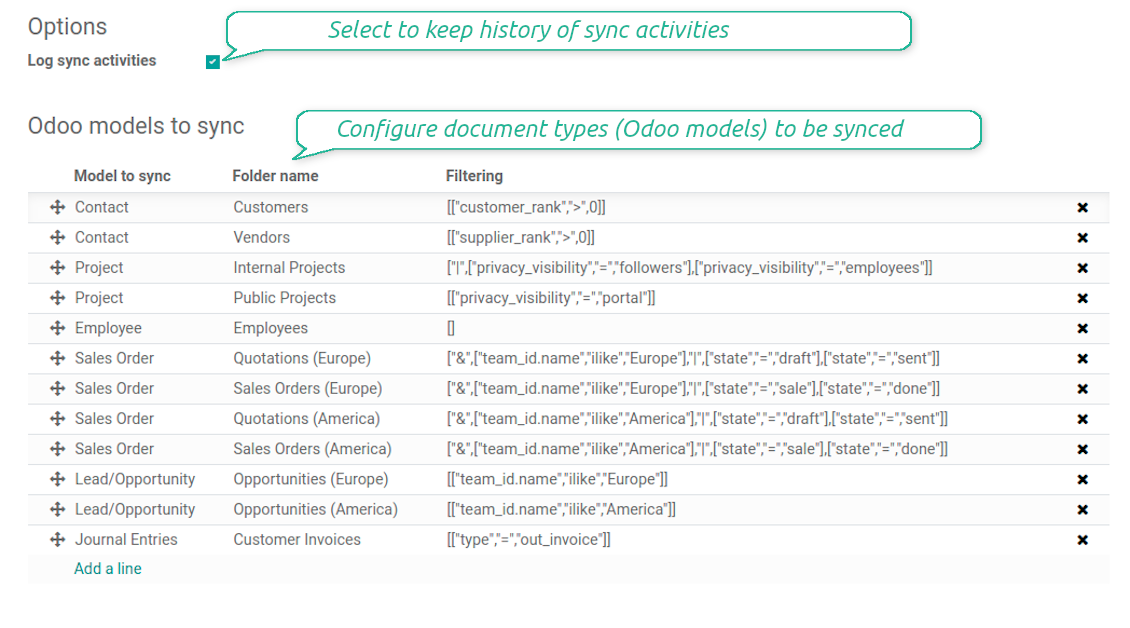
The tool let you split any business model into a few directories. Have a separate folder for individuals and companies, for European and American opportunities, for each project, etc.
Moreover, it is possible to guarantee that only topical documents are synced by using relative periods: leads registered in the last 3 months, invoices updated the last week, and so on.
Typical use cases
- Projects: have an own NextCloud / OwnCloud folder for each customer project.
- Customers: add all partner files in a single directory available both from Odoo and from NextCloud / OwnCloud. Modify those using default cloud editors and access them when working in Odoo.
- Employees: gather all files by this employee in a single cloud folder: photos, document scans, contracts. Access and upload those from Odoo and NextCloud / OwnCloud alternatively.
- Opportunities: carefully store all specifications, requirements, any files which would let you make a good offer.
- Orders: keep all printings and contracts in NextCloud / OwnCloud with simple availability from Odoo.
スクリーンショット
Choose document types to be synced
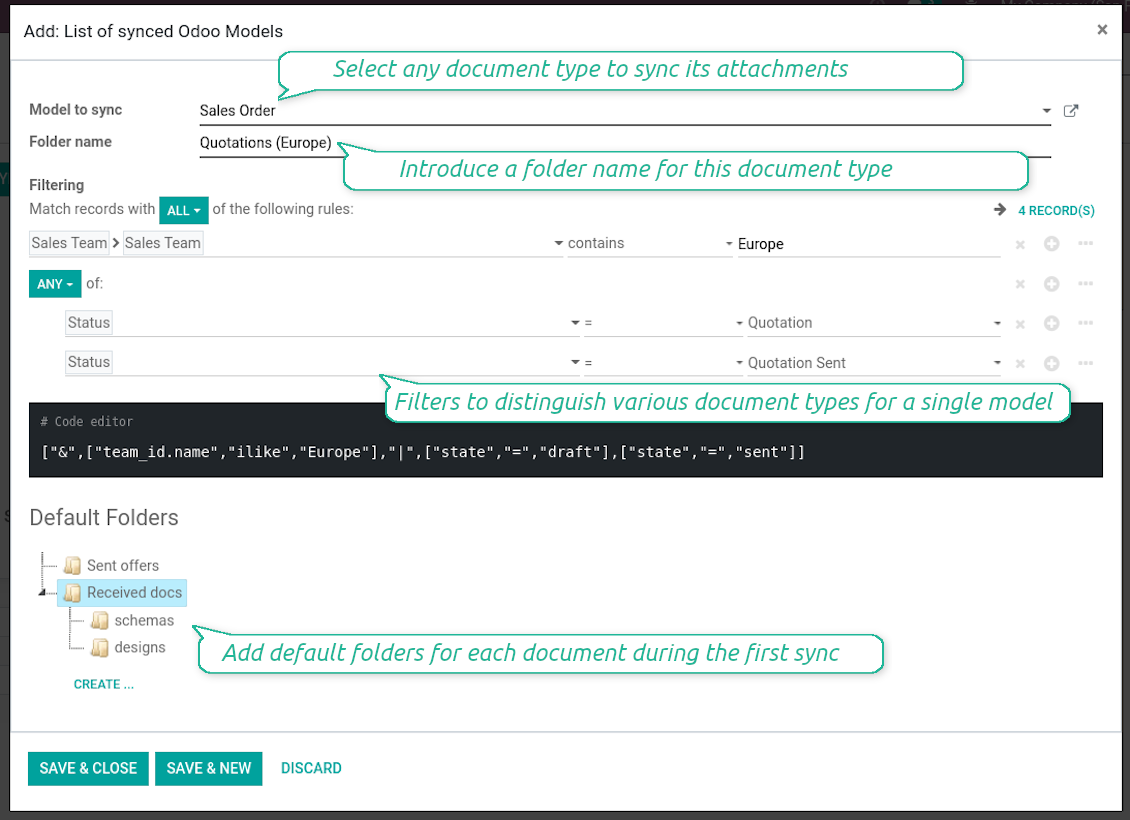
Document type might have a few folders based on filters
Automatic and bilateral integration
Synced attachments are physically kept only in a cloud storage, what increases Odoo interface performance. Simultaneously, you can open documents from Odoo or download those in a single click.
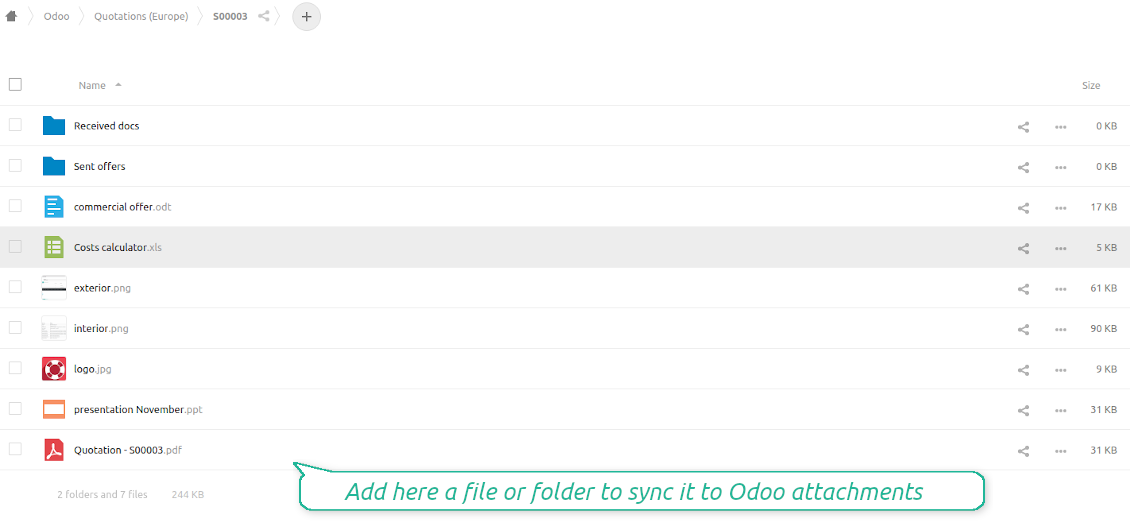
How files and folders are synced from Odoo to NextCloud / OwnCloud
Based on the scheduled job 'Synchronize attachments with cloud' Odoo regularly checks whether:
- Any new attachment should be forwarded to NextCloud / OwnCloud;
- Any new document type (e.g. Sale orders) is added / replaced / renamed as a sync model and, hence, whether a directory should be created / removed / renamed in NextCloud / OwnCloud;
- Any new document (e.g. Sale Order SO019) is generated / updated / unlinked and, hence, whether a NextCloud / OwnCloud folder should be created / moved or renamed / deleted.
- Any new attachment should be removed from NextCloud / OwnCloud if it has been deleted from Odoo.
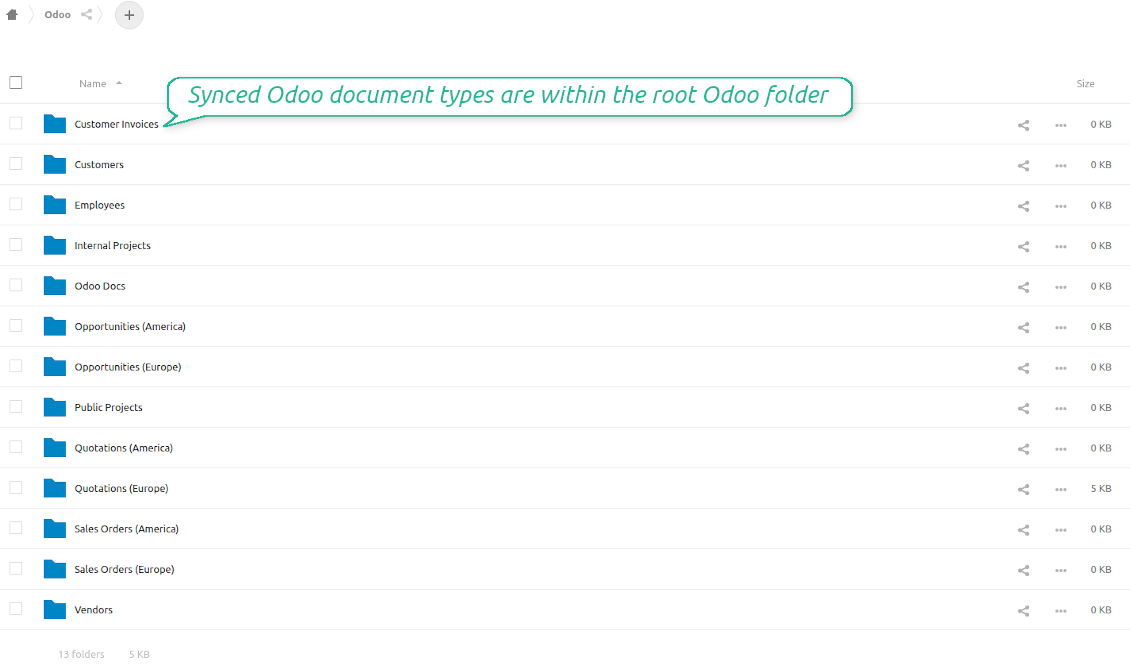
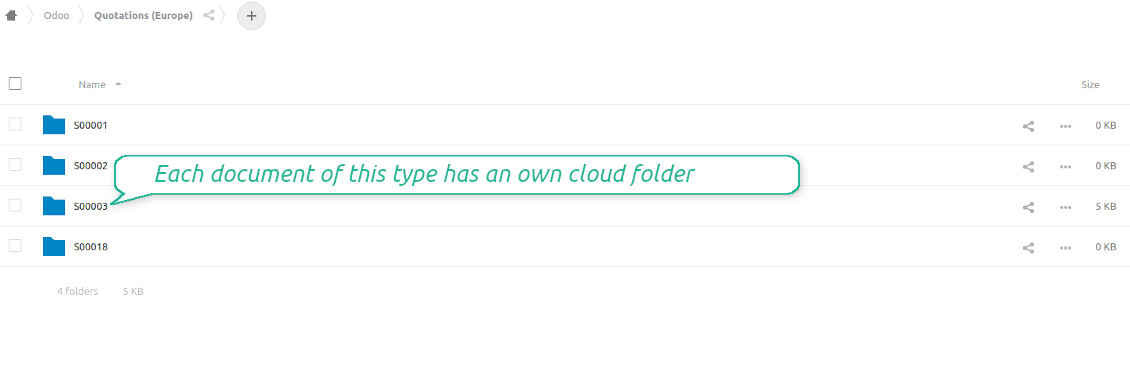
Based on results of that checks, Odoo starts processing queue of changes, and makes sure that all items are located correctly. The final goal is to have the structure 'Odoo / Document Types / Documents / Files. For example, 'Odoo / Quotations / SO019 / commercial offer.pdf'.
During the synchronization all synced Odoo attachments change their type to a link (URL), while binary content is removed with a next Odoo cleaner. So, no actual files would be stored on your Odoo server.
Please take into account:
- Each sync (especially the very first one) might take quite a long. It is not recommended to make sync too frequent: once an hour seems reasonable frequency.
- File names should be managed in NextCloud / OwnCloud: each backward sync would recover NextCloud / OwnCloud names, Odoo is here less important.
How items are retrieved from NextCloud / OwnCloud to Odoo
Based on the scheduled job 'Synchronize attachments from cloud' Odoo regularly checks whether:
- Any file is added / moved / removed in a NextCloud / OwnCloud document folder. If yes, Odoo would create a link to this file in a target object (e.g. a new attachment to SO019) or would move / delete such an attachment.
- Any file of a NextCloud / OwnCloud document folder is renamed. If yes, an attachment would be renamed in Odoo as well.
- In document folders you can put not only files but also child folders. In that case a link for this folder (not its content) would be kept in Odoo attachments.
- If you deleted a folder related to this document type or this document, their child files would be deleted as well. Thus, Odoo would remove related attachments. The folders, however, will be recovered with a next direct sync.
- Each backward sync might take quite a long. It is not recommended to make sync too frequent: once an hour seems safe enough.
スクリーンショット
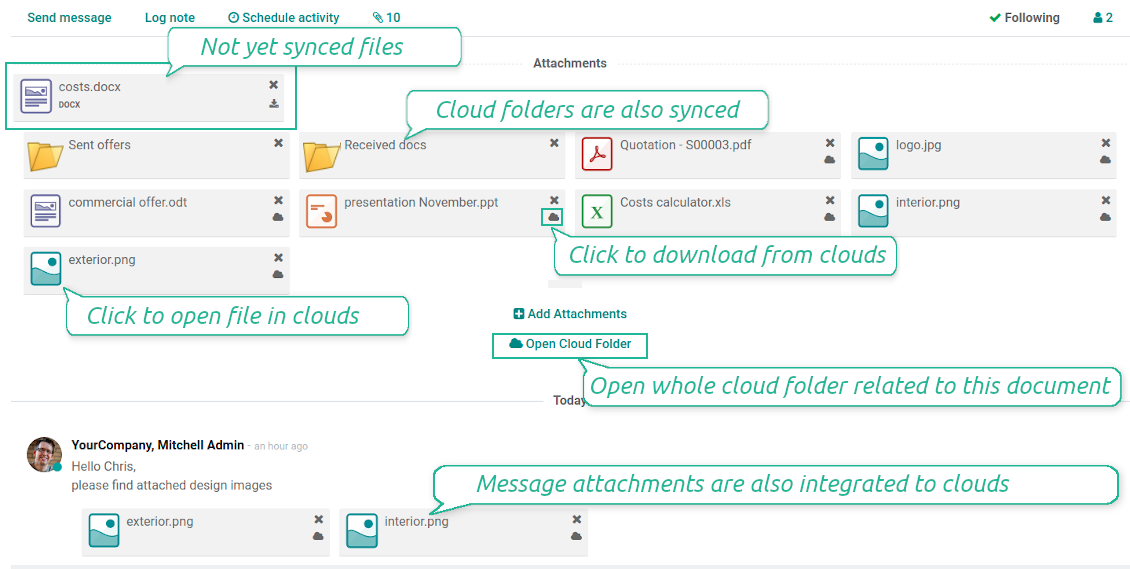
Synced files are simply found in NextCloud / OwnCloud. Add unlimited number of files or folders
Document types folders in NextCloud / OwnCloud
All document of this type has an own folder
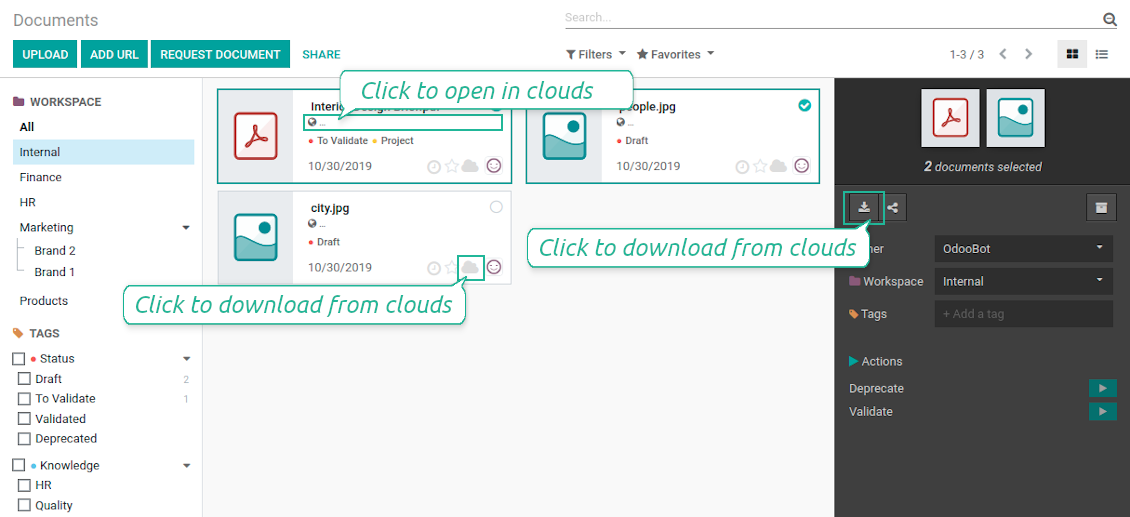
Direct access to NextCloud / OwnCloud items
- Click on attachment to open it in NextCloud / OwnCloud in a new tab (necessary to be logged in NextCloud / OwnCloud). Look also at the section 'Internal and Public URLs' below.
- Click the icon of cloud to start downloading file from NextCloud / OwnCloud (no extra check in is required)
- Push the button "Open cloud folder" to open all files related to this document.
Internal and public URLs
By default all links from Odoo to OwnCloud / NextCloud are internal. It means that only authorized users may access them and, after that, generate shared URLs for others.
It is possible to make them public using the option 'Use Public URLs'. In that case links will become 'shared', meaning that everybody may access those files by links. Although the links would be hardly known by external users, there is a slight chance that they become available as a result of some user actions. Besides, sharing links generation is not fast and might make the synchronization slower. Thus, be cautious if you decide to use shared links.
スクリーンショット
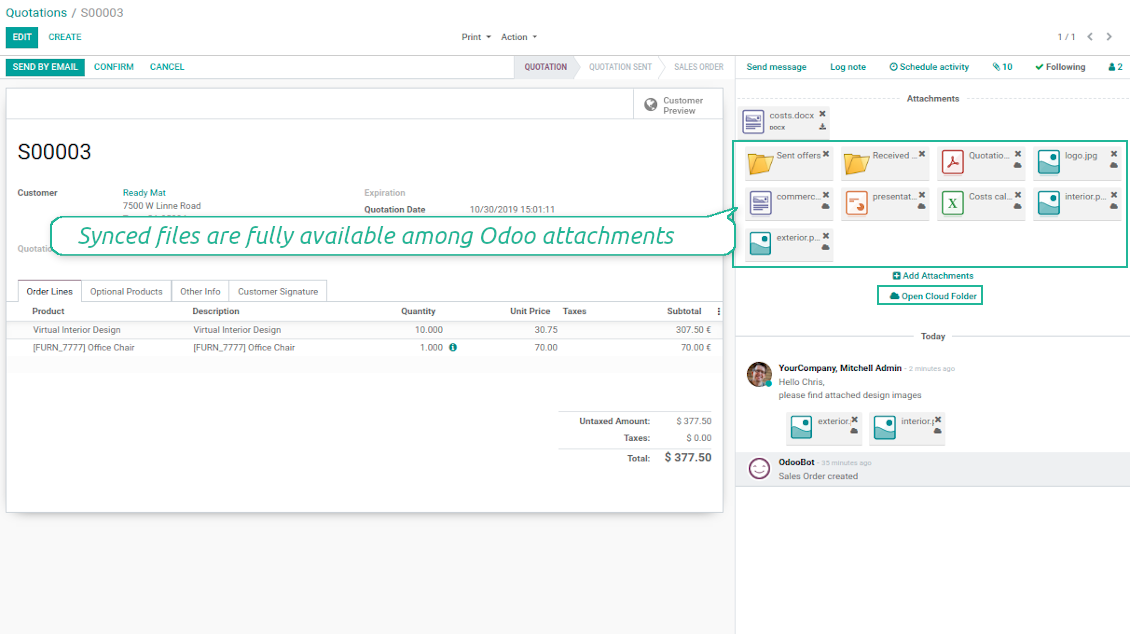
Quick access to NextCloud / OwnCloud files and folders
Apply to NextCloud / OwnCloud right from Odoo chatter
Fully integrated and compatible with Enterprise Documents
It does not contradict printing, mailing, or Enterprise documents features.
For the latter it is also possible to fully reflect directories structure, not only sync standard attachments.
How Odoo Enterprise Documents are synced
This tool is not in conflict with the 'documents' module provided under the Enterprise license. Attachments related to Enterprise folders would be synced as any other files: according to a document they relate to.
It is not always comfortable, and you might be interested in reflecting directories' structure introduced by the module 'Documents'. To this end the special extension is developed. This extension introduces the following features:
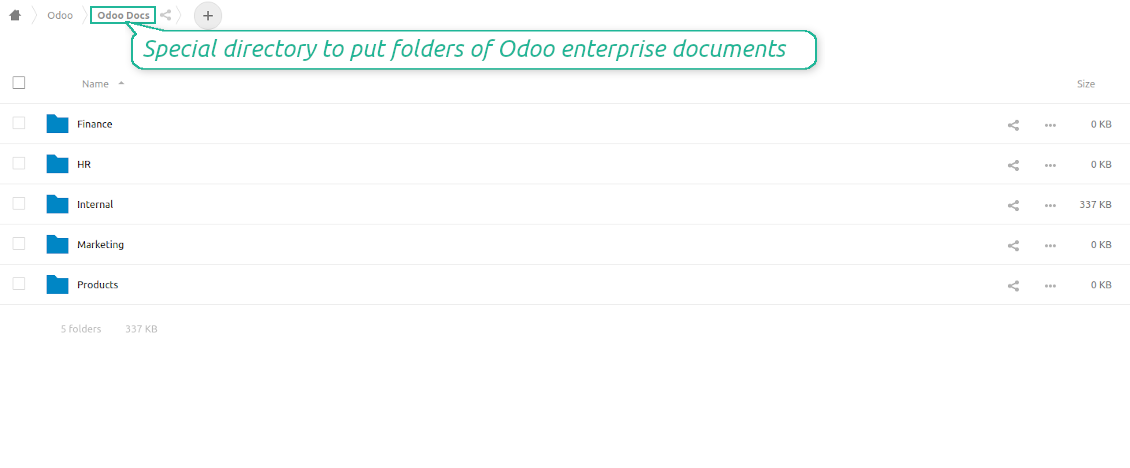
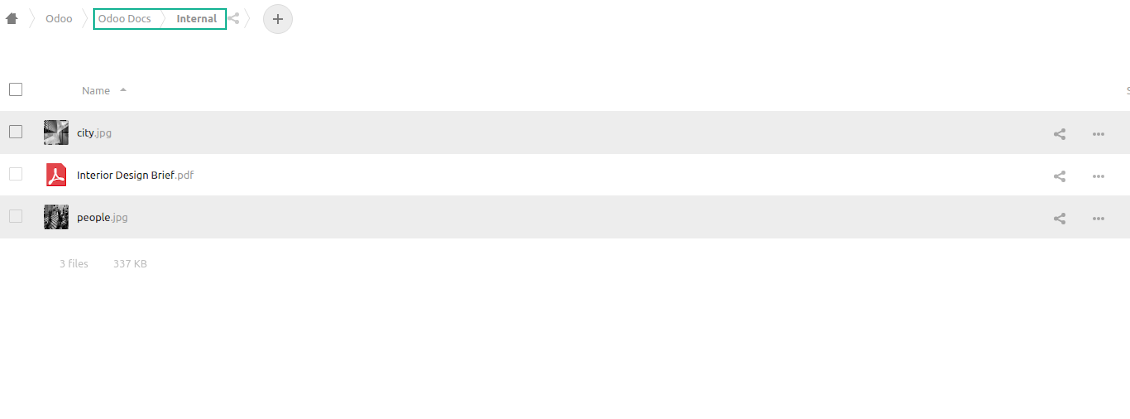
- The documents hierarchy is reflected within the folder 'Odoo / Odoo Docs'
- Each Odoo folder has a linked cloud folder. Take into account that folders created in the cloud storage will be synced as Odoo attachments. The key principle is: folders are managed by Odoo, files are managed by the cloud client
- All files are synced with the same logic as usual attachments. Files created in Odoo will be added to the cloud storage and will be replaced with links in Odoo. Files created in cloud storage will generate attachments within a paired directory
- Please do not name synced models as 'Odoo Docs'. This is the reserved name for Odoo Enterprise Documents
A few other peculiarities to take into account
- Do not add folders inside root or document types' folders. If they have the same name as newly synced folders, the latter would not be uploaded
- Make sure your database has a proper SSL certificate which is required to use OwnCloud API
- Try to avoid the following symbols in folders' and files' names: *, ?, ", ', :, <, >, |, +, %, !, @, \, /,. Direct sync will replace such symbols with '-'. It is done to avoid conflicts with file systems.
スクリーンショット
Direct access from Odoo documents to NextCloud / OwnCloud
Enterprise Documents in NextCloud / OwnCloud
Enterprise files in NextCloud / OwnCloud
Very good product
A perfect solution to integrate Owncloud with Odoo. We sync a high volume of objects across multiple Odoo models, which works seamless and stable. For us it is the perfect solution to have an external DMS instead of the Odoo native attachment handling, which also enables us to interchange files between systems in our best-of-breed setup.
The team behind this module is extremely professional and responsive. They helped us on a few occasions and provided clear answers and prompt support when required, and they even went out of their way to assist us with another requirement we had. Cannot recommend the product and team highly enough, try this if you're in the market to connect Odoo with an external document solution.
Works according to specs
I have used this app with Odoo 12 and Nextcloud 16 and it works as specified. Odoo Tools offers very responsive support which is really helpful. Of course 5 stars...!
This is Awesome
I have used Cloud Sync on Next/Own Cloud and works really great.
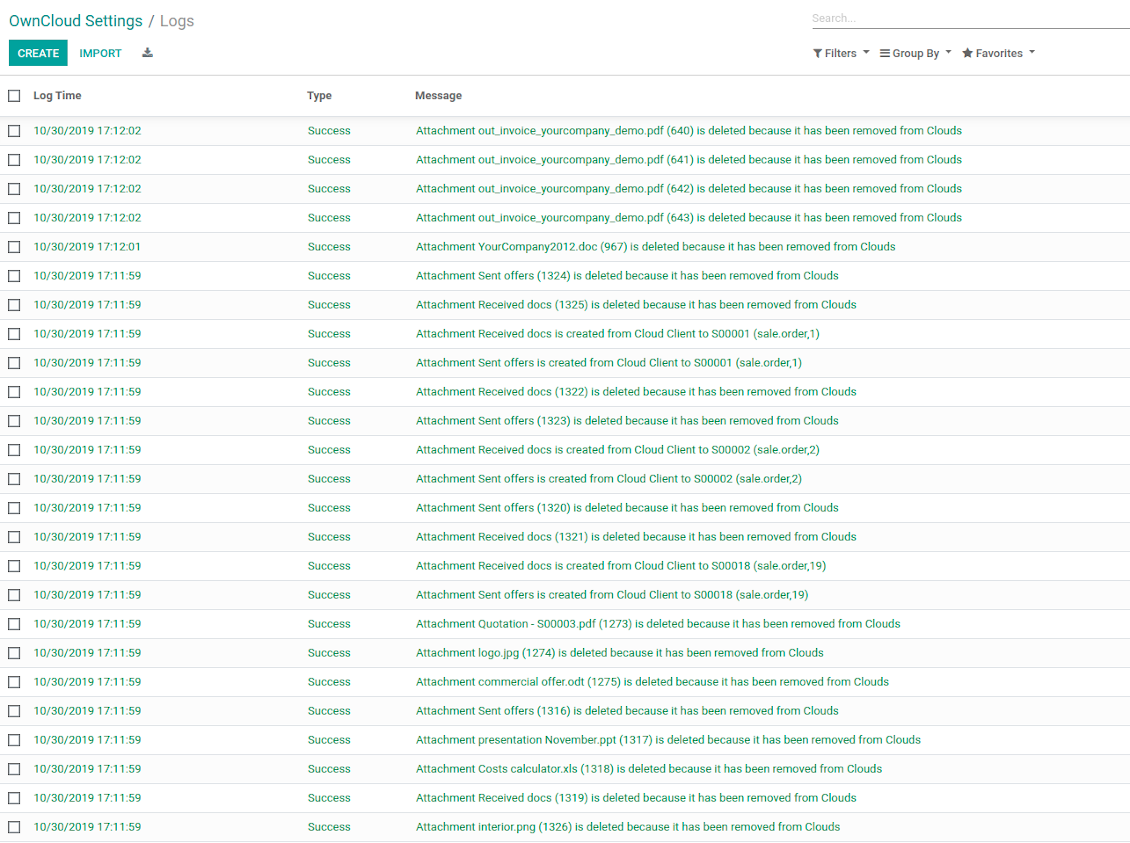
NextCloud / OwnCloud Sync logs in Odoo
スクリーンショット
Logged synchronization activities
Default folders for documents
設定とインストールのヒント: OwnCloud / NextCloud Odoo Integration Odoo v.13
Python dependency
pip3 install pyocclientConfiguration and log in
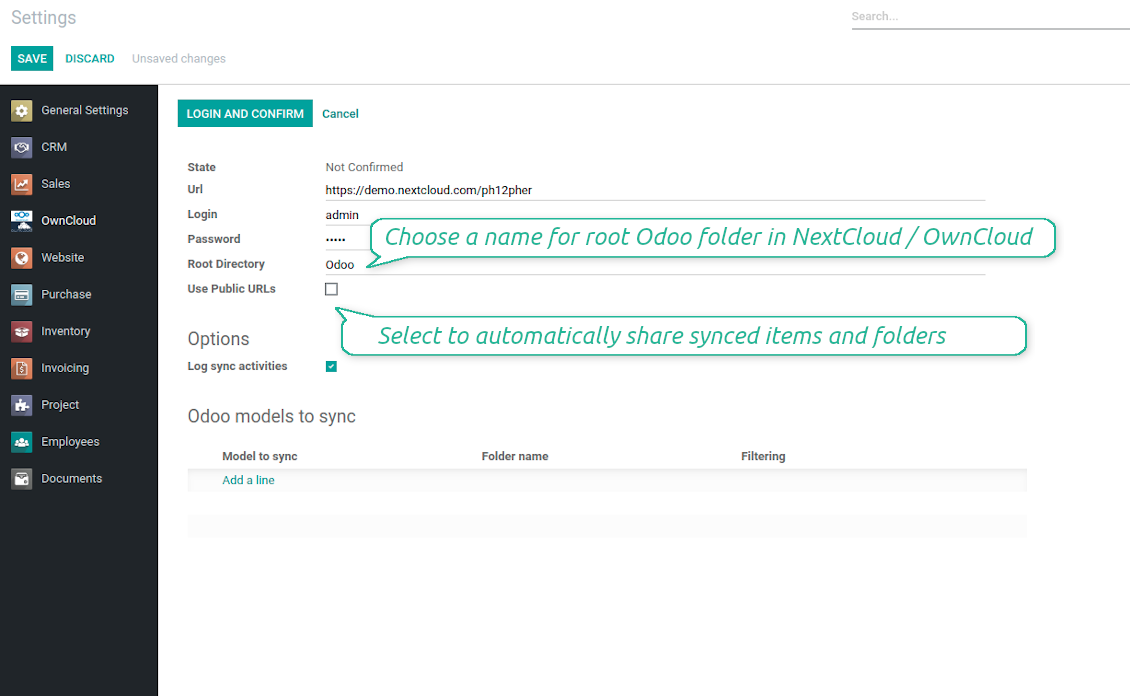
- Enter your cloud storage full url
- Select an OwnCloud / NextCloud user, which has full rights to read, create, write and delete files and folders within a root directory
- Enter login and password of this user
- Introduce the title for OwnCloud / NextCloud folder, e.g. Odoo
- Push the button 'Save', and then - the button 'Login and Confirm'
- If everything is fine, push the button 'Sync'
- Make sure that the root directory or its children are shared with your colleagues
Enter OwnCloud / NextCloud credentials
Odoo server configuration and cron job configuration
To make sure the synchronization works correctly apply proper timeouts to the Odoo configuration file: LIMIT_TIME_CPU, LIMIT_TIME_REAL, LIMIT_TIME_REAL_CRON should be more than 900 seconds.
For Odoo.sh this should not be done, since timeouts are predefined and are not configurable.
Then, timeout should be entered to your Odoo. To that goal find the section 'Settings' on the app configuration page and copy the number there.
Afterwards, it is needed to make the cron jobs suit the applied timeouts. In the debug mode go to the Settings > Technical > Automation > Scheduled Jobs:
- Set up the job 'Synchronize attachments with cloud' as (a) frequency - 2*timeout; (b) the next execution as the next hour +timeout. For example, for 900seconds timeout: frequency - as 30minutes; the next execution - at 08:15
- Set up the job 'Synchronize attachments from cloud' as (a) frequency - 2*timeout; (b) the next execution as the next hour + timeout*2. For example, for 900seconds timeout: frequency - as 30minutes; the next execution- at 08:30.
に関するよくある質問 OwnCloud / NextCloud Odoo Integration Odoo v.13
同期ジョブの頻度を変更できますか?
はい、できます。その手順は次のとおりです:
デバッグモードをオンにする
技術設定 > 自動化 > スケジュール済みジョブ に移動します
ジョブ 'Synchronize attachments with cloud' と 'Update attachments from cloud' を探します。
実行頻度を高くしすぎないでください。次のジョブが始まる前に、現在のジョブが終わるのが望ましいです。設定は同期する項目数に応じて変えます。通常、頻度は15分から4時間です。
Odoo 設定ファイルでも十分な時間制限を設定してください。LIMIT_TIME_CPU と LIMIT_TIME_REAL は、予定した cron ジョブ時間以上である必要があります。バージョン 13 以降はパラメータ LIMIT_TIME_REAL_CRON も考慮してください。
Odoo.sh のお客様への重要な注意: cron ジョブの最大時間が 15 分のみに設定されている場合があります。
同期が想定するのではなく、同期ディレクトリの別構造を設定できますか?
いいえ。この機能はバージョン15以降でのみ利用できます。それ以前のバージョンでは、モジュールは事前定義されたフォルダ構造で動作します:
Odoo - 同期の中核フォルダ
Models - 各 Odoo ドキュメントタイプ用のフォルダ。例: 'Projects'、'Partners'。domain で区別すると、より具体的なフォルダがある場合があります。例: 'Customer 1 Projects'、'Projects of the Customer 2'、'Internal Projects' など。
Objects - 各ドキュメント用フォルダ。例: 'Project 1' または 'Customer 1'
この Odoo ドキュメントに関連し、同期されるファイルとフォルダ。
その結果、例えば次のようになります:
Odoo / Projects / Project 1 / project 1 に関連するファイルとフォルダ
Odoo / Customer 1 Projects / Project 1; Odoo / Customer 2 Projects / Project 3, ...
Odoo / Customers / Customer 1 / customer 1 に関連するファイルとフォルダ
この構造は常にフラットです。つまり階層はそのレベルだけです。そのため、異なるドキュメントタイプを同じ構造内に置けないのは正しいです。フォルダ 'Customer 1' 内に、販売オーダ、請求書、プロジェクトのすべてに関連するファイルを置くことはできません。各ドキュメントタイプには独自のフォルダ(または複数)があります。そうでなければ、依拠する基準がなく、逆方向の同期ができません。
Odoo で特定ユーザーのアクセスを設定すべきですか?
いいえ。本ツールは単一ユーザーのエンドポイントに依存します。同期はすべて 1 人のクラウド管理者(アプリ)で行われます。作成したフォルダ / ファイルのアクセス権は自動化されません。クラウドストレージ側で管理してください。
同期フィールドはどこに保存されますか?Odooとクラウドに重複しますか?
本アプリは、添付のバイナリ内容が Odoo サーバーではなく Cloud Client に保管されることを前提とします。そのため、Odoo 上の該当添付は URL タイプになり、添付ボックスまたは Cloud Client からいつでもアクセスできます。
セットアップ後は同期が完全に自動のため、手動操作は不要です。同期する Odoo のドキュメントタイプを決め、それぞれに関連モデルを設定してください(顧客、販売オーダまたは購買オーダ、タスク、プロジェクトなど)。
同じ文書タイプに複数のフォルダを持てますか?例えば社内プロジェクトと顧客プロジェクトです。
はい。それぞれにルールを用意し、その後フィルタを適用します。例: プロジェクトの種類。
文書を確実に割り当てられるよう、フィルタは互いに排他的にしてください。例: 「顧客だが仕入先ではない」「仕入先だが顧客ではない」。そうしないと、特定文書のフォルダがモデル間を行き来します。
Cloud Storage Solutionアプリだけが必要ですか?
いいえ。本ツールは技術コアのみです。ご利用の cloud client 用コネクタも必要です。
同期するオブジェクトが例えば10000件と多くても問題ありませんか?
はい。ただし同期するフォルダ/添付が多いと遅くなることがあります。一方、>10k の取引先と約 5k のプロダクトバリアントを同期した環境でも処理は許容範囲だったとお客様から報告があります。
強調すべき点:
- 同期は、どの項目も失われず同期されるように作られています。速くない場合もあります。FIFO キューと各ジョブのコミットがそれを保証します。
- 対象数は論理的に制限できます。モデル設定で古い項目の同期を制限できます(例: アーカイブ済み取引先や 2 年前のオーダを同期する意味はありません)。
同期をリアルタイムにできますか?
いいえ。リアルタイム同期を避ける確かな理由があります:
パフォーマンスの問題。同期がリアルタイムだと、ファイルアップロードのたびに読み込み画面が出ます。
競合の問題。2 人のユーザーが同時に項目を変更すると、解決できない状況になり得ます。定期ジョブなら後から直せますが、リアルタイムではキューとして保存する必要があり、ユーザーにとってさらに分かりにくくなります。
機能上の問題。特に項目の名前変更と再構成です。逆方向同期ではディレクトリ論理に厳密に依存し、毎回 100% の項目を確認します。更新のたびに行うと毎秒数千リクエストになります。行わなければ変更は失われます。
添付をいくつかのクラウドクライアントと同期できますか
いいえ、この機能はバージョン 15 以降でのみ利用できます。
クラウドでは専用エディタ(OnlyOffice、Office 365 など)を使っています。ファイルはそのエディタで開きますか?
はい、cloud client の設定によります。
コネクタでOwnCloudタグを更新できますか?
いいえ。タグは同期されません。以前この機能を検討しましたが、いくつかの理由で導入しないことにしました:
コネクタライブラリは ownCloud タグの取得や更新をサポートしていません
Odoo の添付には属性「tags」がなく、それらのタグをいつユーザーに割り当てるかも明確ではありません。
アプリは双方向同期のため、同期中に解決が難しい重大な競合が起きる可能性があります。
ツールの更新ポリシーは何ですか?
現行の Odoo Apps Store ポリシーによると:
- バージョン 12.0 以前向けに購入したモジュールは、12.0 までの全バージョンにアクセスできます。
- バージョン 13.0 以降、各モジュールバージョンは個別に購入します。
- バージョンに関係なく、購入するとメジャーバージョン内の すべての更新と不具合修正の権利が得られます。
faOtools チームはこれらのポリシーを管理していません。ご質問は Odoo Apps Store の担当者へ直接お問い合わせください。
アプリを Odoo.sh にインストールする方法は?
最も単純な方法は、Odooストア組み込みのワークフローを使うことです:
1. モジュールのページを開き、Deploy on odoo.sh ボタンをクリックします。
2. その後 GitHub ページにリダイレクトされます。アカウントにログインし、'Create a new repo' をクリックするか既存のものを使います。リポジトリはプライベートにしてください。OPL-1 ライセンスのアプリを公開することは許可されていません。必要なら Odoo.sh プロジェクト用に新しい repo を作成します。
3. 次に odoo.sh に行き、Deploy ボタンをクリックします。ポップアップで決定を送信し、'Continue.' をクリックします。これでインストールが始まります。
これらの手順でプロジェクトの本番ブランチにアプリがインストールされます。他のブランチにデプロイする、またはモジュールを更新する場合は、次の操作を行います:
1. Odooストアからアプリのソースコードをアップロードします。
2. モジュールを必要な GitHub リポジトリにコミットします。アプリのフォルダ/ファイルが無視されていないこと(repo の .gitignore に含まれていないこと)を確認してください。リポジトリは odoo.sh が自動作成し、既定で重要な項目(例: /lib)が含まれることがあります。モジュールのディレクトリ、サブディレクトリ、ファイルを例外なくすべてアップロードしてください。
3. odoo.sh プロジェクトの対象ブランチを Deploy するか、 設定がそうなっている場合は自動ビルドされるまで待ちます。
自分のサーバーにアプリをインストールするには?
2. Odoo サーバーを再起動します;
3. 開発者モードをオンにします(技術設定);
4. アプリ一覧を更新します(アプリメニュー);
5. アプリを見つけて「Activate」/「Install」を押します;
6. アプリページにガイドラインがあれば従ってください。
アプリに追加アドオンがあるのに気づきました。後から購入できますか?
はい、もちろんです。同時に Odoo は依存関係をすべてカートに自動追加するので、二重払いを避けるには既に購入したツールを除外してください。
アプリを Odoo.sh にデプロイしたらテストで警告/エラーが出ます
赤/オレンジの警告はアプリの機能に影響しません。残念ながら、標準の自動テストがアプリの目的と衝突する動作を想定するため、モジュールが通らないことがあります。たとえば価格計算を変える一方、標準 Odoo モジュールのテストは最終価格を標準アルゴリズムと比較します。
まず、デプロイ済みデータベースの機能を確認してください。すべて正しく動いていますか?
それでも警告が実機能に影響すると考える場合はご連絡のうえ、インストールログ一式とデプロイ済みモジュールの全一覧(コアおよびサードパーティ含む)を送ってください。
アプリを御社から直接購入できますか?
いいえ、ツールは 公式の Odoo アプリストア.
割引をいただきたいです
残念ながら、個別価格を提示する技術的手段が ありません。
Odoo Online (SaaS)データベースにアプリをインストールできますか?
いいえ、サードパーティアプリは Odoo Online では使えません。残念ながら Odoo SaaS がその可能性をブロックします。
ツールは他のアプリに依存しています。それらも購入すべきですか?
はい、ツールが正しく動くには依存関係に記されたすべてのモジュールが必要です。アプリページの価格には必要な依存関係がすでに含まれています。
モジュールの米ドル価格はいくらですか?なぜ変わりましたか?
モジュールの価格はユーロ建てです。Odoo ストアは内部為替レートで他通貨に換算します。そのため為替が更新されると米ドル価格が変わることがあります。
英語以外のアプリ・サイト文言は AI 支援で作成され、 公式の Odoo 翻訳に揃えています。誤りを見つけたら、 翻訳の正確さについてチケットを送る 修正します。
不具合報告
不具合や一貫しない動作があれば、遠慮なくご連絡ください。購入から60日以内の修正を保証し、その後もツール改善に力を入れています。
ご連絡に電話番号やクレジットカードは不要です。30 秒以内の短いメール登録だけです。
リクエストにはできるだけ多くの詳細を含めてください:スクリーンショット、Odoo サーバーログ、問題の再現手順の完全な説明など。通常、問題の作業計画の作成(不具合が確認された場合)または実施すべき内容の案内(それ以外)には数営業日かかります。
公開の機能リクエストとモジュールのアイデア(無償開発)
ツール改善への意欲は強く、フィードバックには感謝します。要件が広く役立ち、効率よく実装できる場合、チームは To-do リストに加えます。
このような To-do リストは定期的に処理され、追加料金は発生しません。期限や最終デザインは約束できませんが、投資とリスクなしで望む機能を得る良い方法になることがあります。
ご連絡に電話番号やクレジットカードは不要です。30 秒以内の短いメール登録だけです。


社内・社外向けに深く構造化されたナレッジベースを構築するツール。Knowledge System。KMS。Wiki のような改訂。
398€


お気に入りの AI チャットから MCP 経由で Odoo を管理するツール。Claude。MCP 対応の任意の AI。

Odoo の添付ファイルをフォルダに柔軟に整理し、Google Drive、OneDrive/SharePoint、Nextcloud/ownCloud、Dropbox、Amazon S3、Box、NAS とディレクトリを同期するツール。DMS。ファイルマネージャー。文書管理システム
398€


Odoo の添付ファイルを NAS ソリューションと自動で双方向同期するツール。Synology、QNAP、TrueNAS、および WebDav 対応のその他の NAS
487€