OwnCloud / NextCloud Odoo Integration v.13
The tool to automatically synchronize Odoo attachments with OwnCloud / NextCloud files in both ways
- the technical core which provides basic mechanics of auto synchronization. This is a required module for integration. कीमत है 398€.
- the connector itself which introduces links between Odoo and NextCloud / OwnCloud. कीमत है 89€.
- an optional add-on to sync Odoo documents (introduced by the enterprise app 'Documents') with clouds. The features assumed by this add-on are marked by the icon . कीमत है 44€.
Selectable documents types for sync
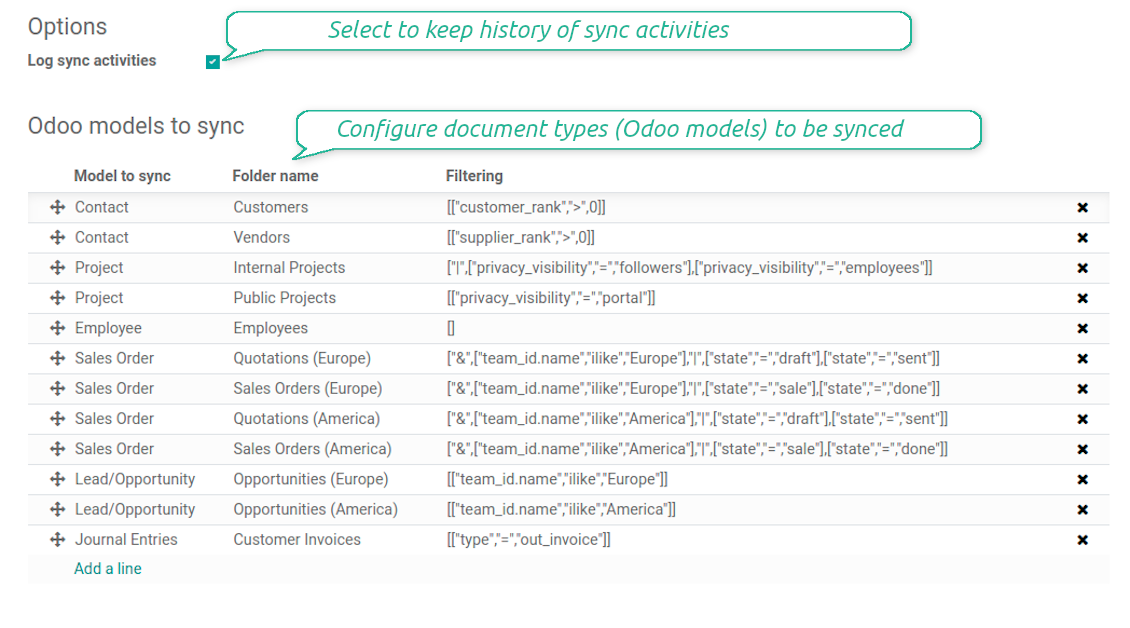
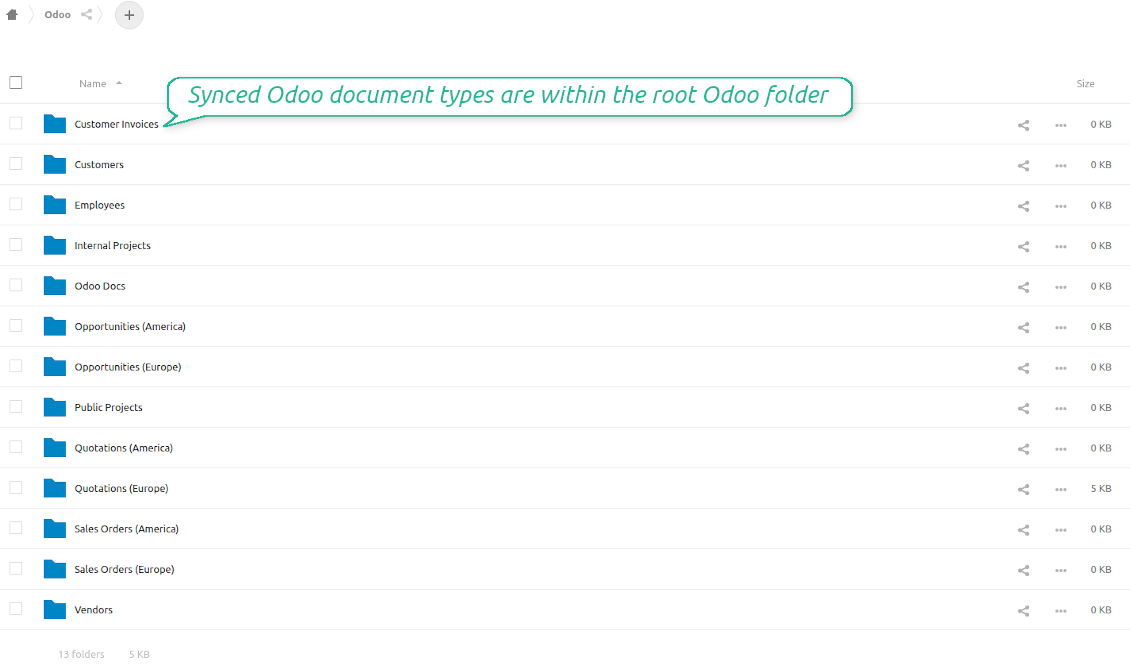
The tool let you split any business model into a few directories. Have a separate folder for individuals and companies, for European and American opportunities, for each project, etc.
Moreover, it is possible to guarantee that only topical documents are synced by using relative periods: leads registered in the last 3 months, invoices updated the last week, and so on.
Typical use cases
- Projects: have an own NextCloud / OwnCloud folder for each customer project.
- Customers: add all partner files in a single directory available both from Odoo and from NextCloud / OwnCloud. Modify those using default cloud editors and access them when working in Odoo.
- Employees: gather all files by this employee in a single cloud folder: photos, document scans, contracts. Access and upload those from Odoo and NextCloud / OwnCloud alternatively.
- Opportunities: carefully store all specifications, requirements, any files which would let you make a good offer.
- Orders: keep all printings and contracts in NextCloud / OwnCloud with simple availability from Odoo.
स्क्रीनशॉट
Choose document types to be synced
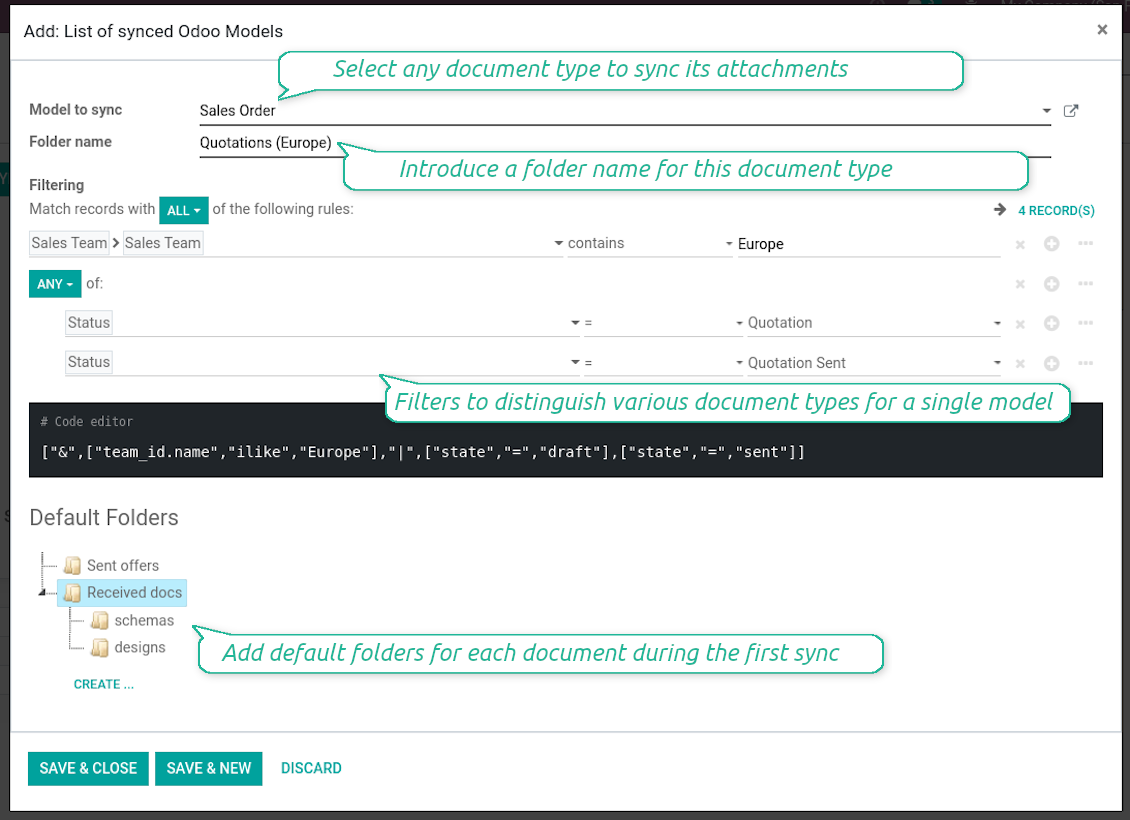
Document type might have a few folders based on filters
Automatic and bilateral integration
Synced attachments are physically kept only in a cloud storage, what increases Odoo interface performance. Simultaneously, you can open documents from Odoo or download those in a single click.
How files and folders are synced from Odoo to NextCloud / OwnCloud
Based on the scheduled job 'Synchronize attachments with cloud' Odoo regularly checks whether:
- Any new attachment should be forwarded to NextCloud / OwnCloud;
- Any new document type (e.g. Sale orders) is added / replaced / renamed as a sync model and, hence, whether a directory should be created / removed / renamed in NextCloud / OwnCloud;
- Any new document (e.g. Sale Order SO019) is generated / updated / unlinked and, hence, whether a NextCloud / OwnCloud folder should be created / moved or renamed / deleted.
- Any new attachment should be removed from NextCloud / OwnCloud if it has been deleted from Odoo.
Based on results of that checks, Odoo starts processing queue of changes, and makes sure that all items are located correctly. The final goal is to have the structure 'Odoo / Document Types / Documents / Files. For example, 'Odoo / Quotations / SO019 / commercial offer.pdf'.
During the synchronization all synced Odoo attachments change their type to a link (URL), while binary content is removed with a next Odoo cleaner. So, no actual files would be stored on your Odoo server.
Please take into account:
- Each sync (especially the very first one) might take quite a long. It is not recommended to make sync too frequent: once an hour seems reasonable frequency.
- File names should be managed in NextCloud / OwnCloud: each backward sync would recover NextCloud / OwnCloud names, Odoo is here less important.
How items are retrieved from NextCloud / OwnCloud to Odoo
Based on the scheduled job 'Synchronize attachments from cloud' Odoo regularly checks whether:
- Any file is added / moved / removed in a NextCloud / OwnCloud document folder. If yes, Odoo would create a link to this file in a target object (e.g. a new attachment to SO019) or would move / delete such an attachment.
- Any file of a NextCloud / OwnCloud document folder is renamed. If yes, an attachment would be renamed in Odoo as well.
- In document folders you can put not only files but also child folders. In that case a link for this folder (not its content) would be kept in Odoo attachments.
- If you deleted a folder related to this document type or this document, their child files would be deleted as well. Thus, Odoo would remove related attachments. The folders, however, will be recovered with a next direct sync.
- Each backward sync might take quite a long. It is not recommended to make sync too frequent: once an hour seems safe enough.
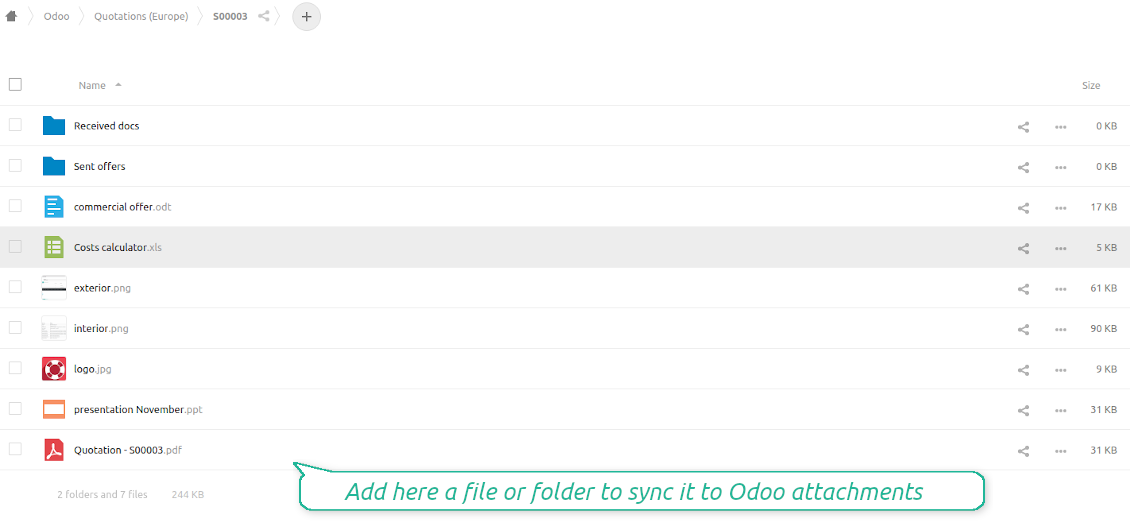
स्क्रीनशॉट
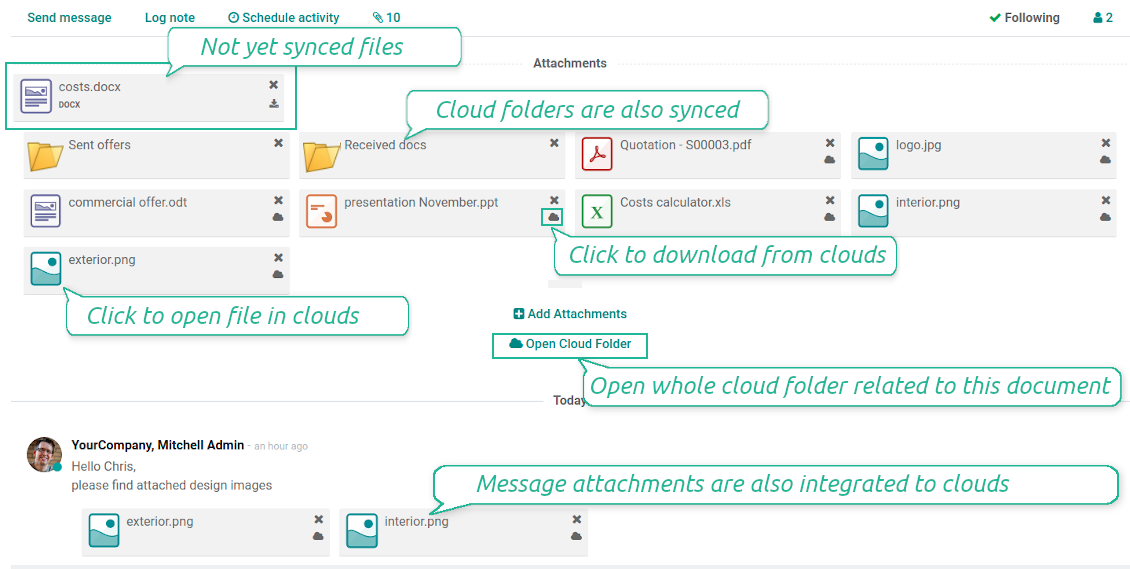
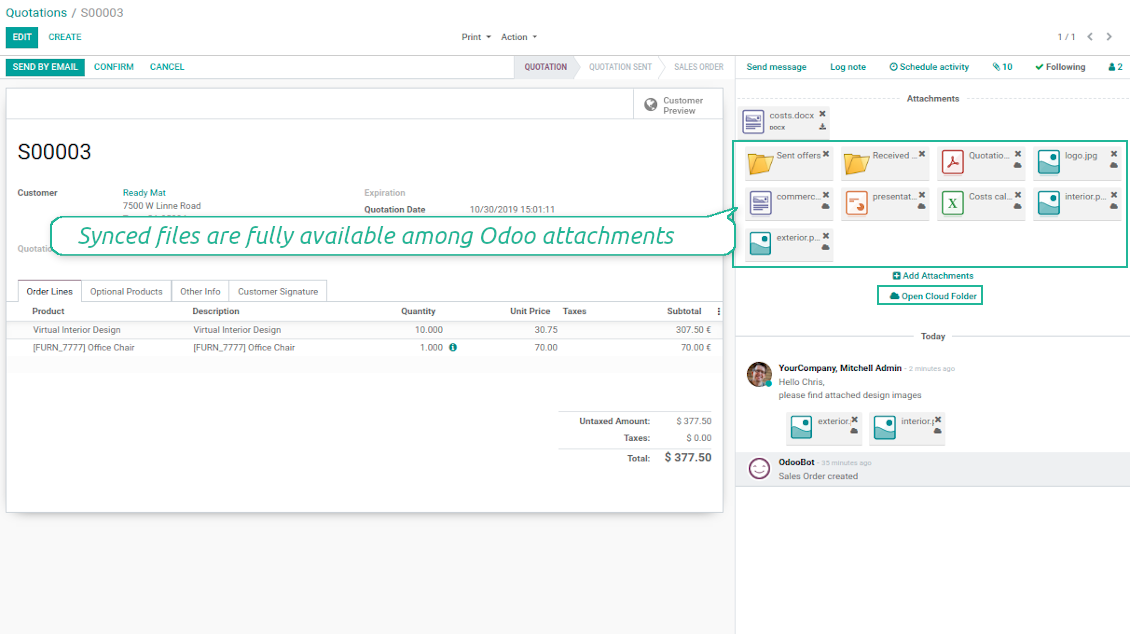
Synced files are simply found in NextCloud / OwnCloud. Add unlimited number of files or folders
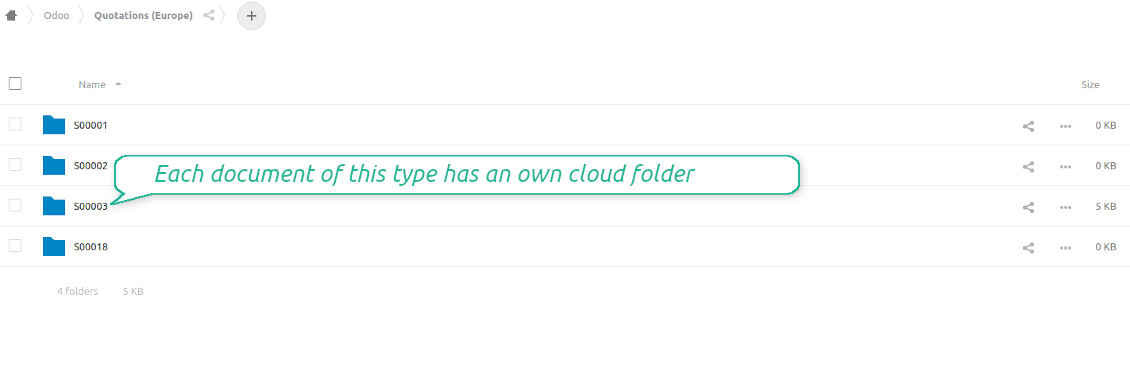
Document types folders in NextCloud / OwnCloud
All document of this type has an own folder
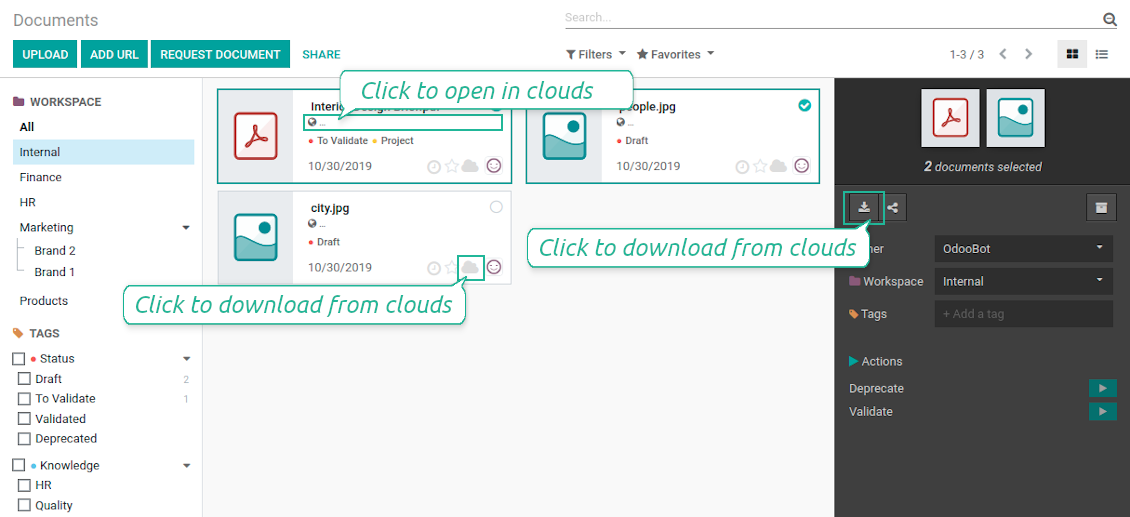
Direct access to NextCloud / OwnCloud items
- Click on attachment to open it in NextCloud / OwnCloud in a new tab (necessary to be logged in NextCloud / OwnCloud). Look also at the section 'Internal and Public URLs' below.
- Click the icon of cloud to start downloading file from NextCloud / OwnCloud (no extra check in is required)
- Push the button "Open cloud folder" to open all files related to this document.
Internal and public URLs
By default all links from Odoo to OwnCloud / NextCloud are internal. It means that only authorized users may access them and, after that, generate shared URLs for others.
It is possible to make them public using the option 'Use Public URLs'. In that case links will become 'shared', meaning that everybody may access those files by links. Although the links would be hardly known by external users, there is a slight chance that they become available as a result of some user actions. Besides, sharing links generation is not fast and might make the synchronization slower. Thus, be cautious if you decide to use shared links.
स्क्रीनशॉट
Quick access to NextCloud / OwnCloud files and folders
Apply to NextCloud / OwnCloud right from Odoo chatter
Fully integrated and compatible with Enterprise Documents
It does not contradict printing, mailing, or Enterprise documents features.
For the latter it is also possible to fully reflect directories structure, not only sync standard attachments.
How Odoo Enterprise Documents are synced
This tool is not in conflict with the 'documents' module provided under the Enterprise license. Attachments related to Enterprise folders would be synced as any other files: according to a document they relate to.
It is not always comfortable, and you might be interested in reflecting directories' structure introduced by the module 'Documents'. To this end the special extension is developed. This extension introduces the following features:
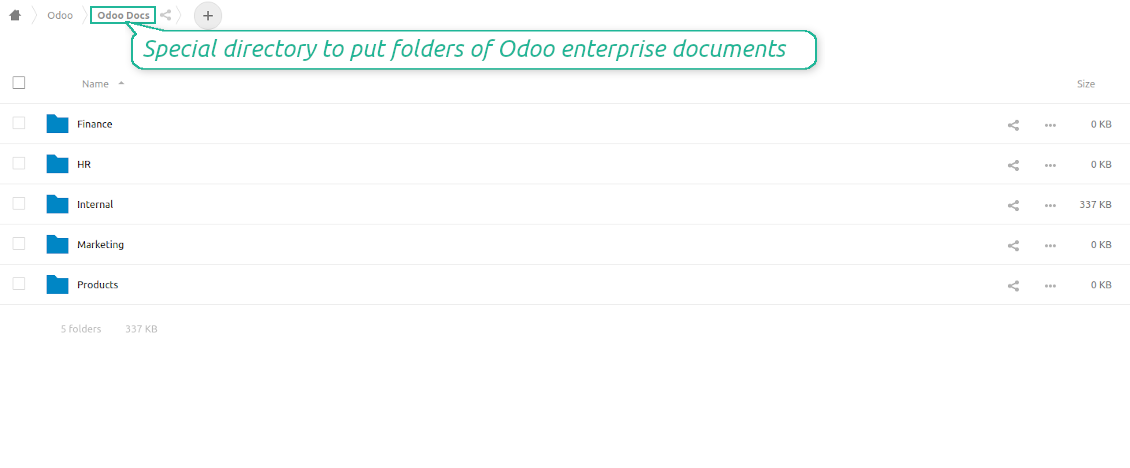
- The documents hierarchy is reflected within the folder 'Odoo / Odoo Docs'
- Each Odoo folder has a linked cloud folder. Take into account that folders created in the cloud storage will be synced as Odoo attachments. The key principle is: folders are managed by Odoo, files are managed by the cloud client
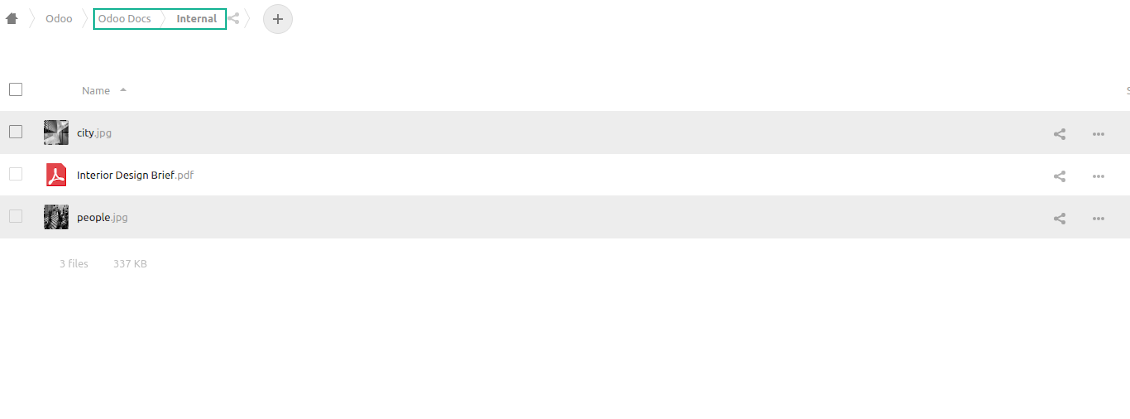
- All files are synced with the same logic as usual attachments. Files created in Odoo will be added to the cloud storage and will be replaced with links in Odoo. Files created in cloud storage will generate attachments within a paired directory
- Please do not name synced models as 'Odoo Docs'. This is the reserved name for Odoo Enterprise Documents
A few other peculiarities to take into account
- Do not add folders inside root or document types' folders. If they have the same name as newly synced folders, the latter would not be uploaded
- Make sure your database has a proper SSL certificate which is required to use OwnCloud API
- Try to avoid the following symbols in folders' and files' names: *, ?, ", ', :, <, >, |, +, %, !, @, \, /,. Direct sync will replace such symbols with '-'. It is done to avoid conflicts with file systems.
स्क्रीनशॉट
Direct access from Odoo documents to NextCloud / OwnCloud
Enterprise Documents in NextCloud / OwnCloud
Enterprise files in NextCloud / OwnCloud
Very good product
A perfect solution to integrate Owncloud with Odoo. We sync a high volume of objects across multiple Odoo models, which works seamless and stable. For us it is the perfect solution to have an external DMS instead of the Odoo native attachment handling, which also enables us to interchange files between systems in our best-of-breed setup.
The team behind this module is extremely professional and responsive. They helped us on a few occasions and provided clear answers and prompt support when required, and they even went out of their way to assist us with another requirement we had. Cannot recommend the product and team highly enough, try this if you're in the market to connect Odoo with an external document solution.
Works according to specs
I have used this app with Odoo 12 and Nextcloud 16 and it works as specified. Odoo Tools offers very responsive support which is really helpful. Of course 5 stars...!
This is Awesome
I have used Cloud Sync on Next/Own Cloud and works really great.
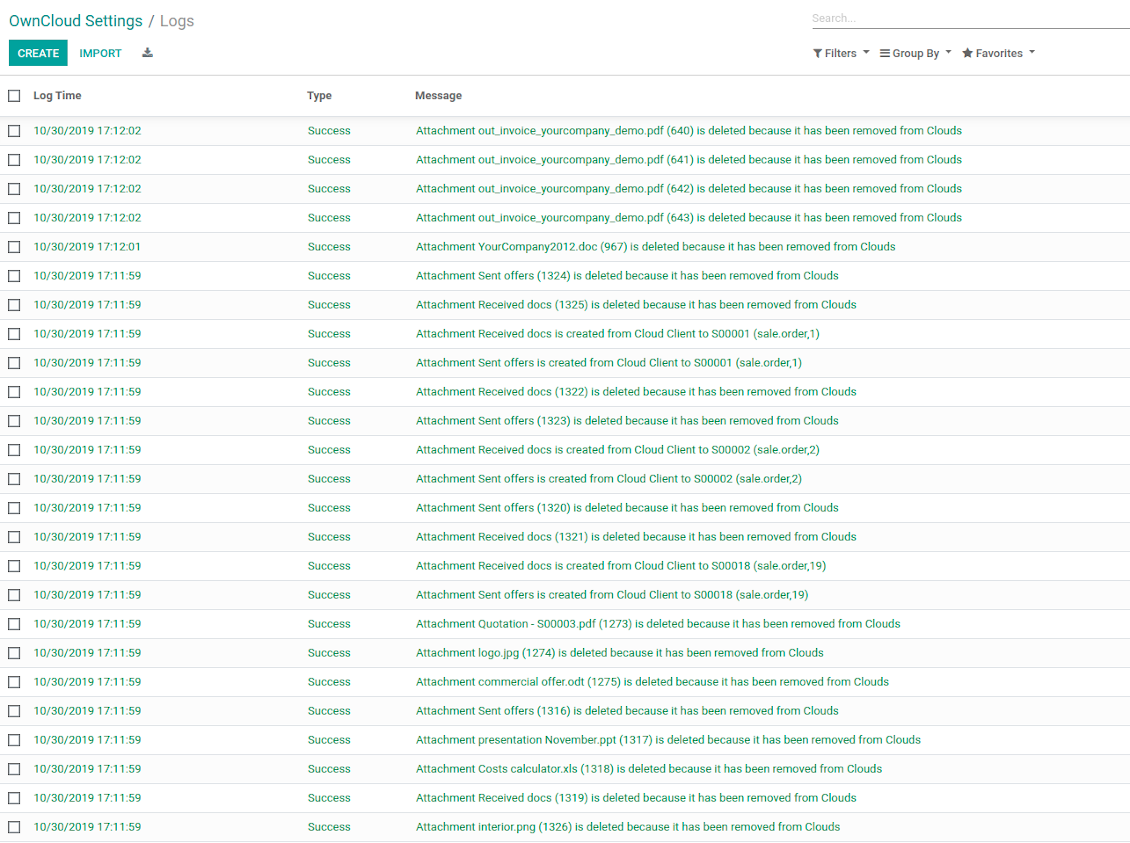
NextCloud / OwnCloud Sync logs in Odoo
स्क्रीनशॉट
Logged synchronization activities
Default folders for documents
कॉन्फ़िगरेशन और इंस्टॉलेशन सुझाव: OwnCloud / NextCloud Odoo Integration Odoo v.13
Python dependency
pip3 install pyocclientConfiguration and log in
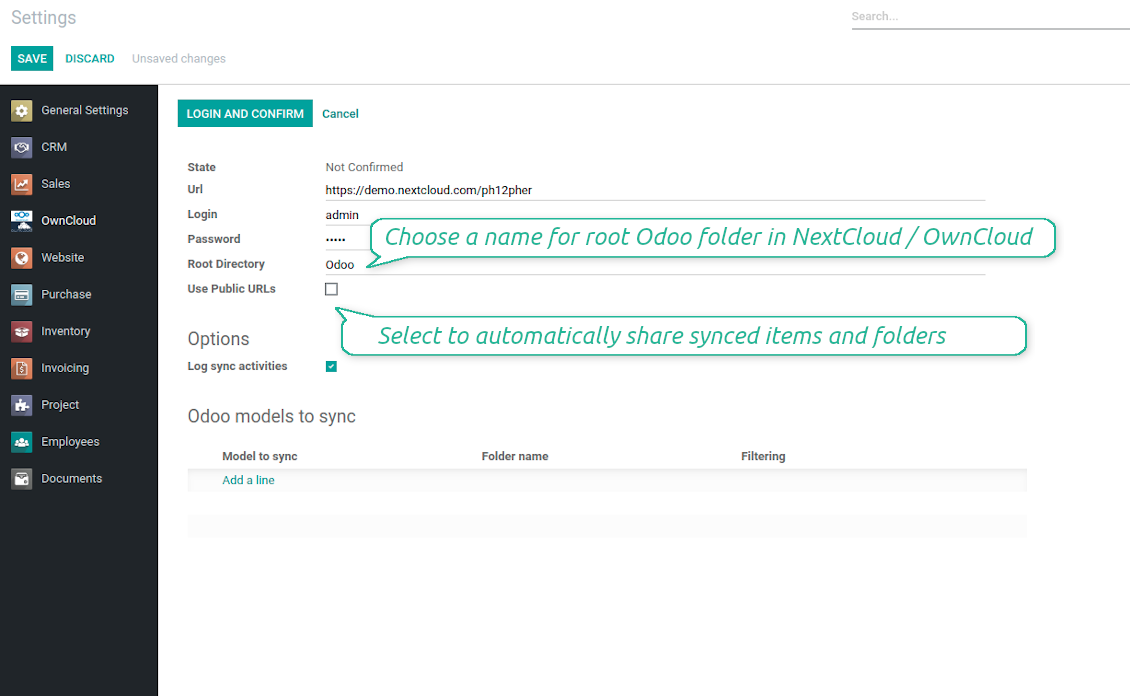
- Enter your cloud storage full url
- Select an OwnCloud / NextCloud user, which has full rights to read, create, write and delete files and folders within a root directory
- Enter login and password of this user
- Introduce the title for OwnCloud / NextCloud folder, e.g. Odoo
- Push the button 'Save', and then - the button 'Login and Confirm'
- If everything is fine, push the button 'Sync'
- Make sure that the root directory or its children are shared with your colleagues
Enter OwnCloud / NextCloud credentials
Odoo server configuration and cron job configuration
To make sure the synchronization works correctly apply proper timeouts to the Odoo configuration file: LIMIT_TIME_CPU, LIMIT_TIME_REAL, LIMIT_TIME_REAL_CRON should be more than 900 seconds.
For Odoo.sh this should not be done, since timeouts are predefined and are not configurable.
Then, timeout should be entered to your Odoo. To that goal find the section 'Settings' on the app configuration page and copy the number there.
Afterwards, it is needed to make the cron jobs suit the applied timeouts. In the debug mode go to the Settings > Technical > Automation > Scheduled Jobs:
- Set up the job 'Synchronize attachments with cloud' as (a) frequency - 2*timeout; (b) the next execution as the next hour +timeout. For example, for 900seconds timeout: frequency - as 30minutes; the next execution - at 08:15
- Set up the job 'Synchronize attachments from cloud' as (a) frequency - 2*timeout; (b) the next execution as the next hour + timeout*2. For example, for 900seconds timeout: frequency - as 30minutes; the next execution- at 08:30.
के बारे में अक्सर पूछे जाने वाले प्रश्न OwnCloud / NextCloud Odoo Integration Odoo v.13
क्या मैं सिंक जॉब की आवृत्ति बदल सकता हूँ?
हाँ, आप कर सकते हैं। इसके लिए:
डीबग मोड चालू करें
तकनीकी सेटिंग > ऑटोमेशन > शेड्यूल्ड जॉब पर जाएँ
जॉब 'Synchronize attachments with cloud' और 'Update attachments from cloud' खोजें।
उन्हें बहुत बार न चलाएँ। बेहतर है कि नया जॉब शुरू होने से पहले यह जॉब पूरा हो जाए। सेटिंग इस बात पर निर्भर करती है कि कितनी वस्तुएँ सिंक करनी हैं। आमतौर पर आवृत्ति 15 मिनट से 4 घंटे के बीच होती है।
यह भी सुनिश्चित करें कि Odoo कॉन्फ़िगरेशन फ़ाइल में पर्याप्त समय सीमाएँ सेट की गई हैं। LIMIT_TIME_CPU और LIMIT_TIME_REAL पैरामीटर नियोजित cron जॉब समय के बराबर या उससे बड़े होने चाहिए। संस्करण 13 से पैरामीटर LIMIT_TIME_REAL_CRON को भी ध्यान में रखें।
Odoo.sh ग्राहकों के लिए महत्वपूर्ण सूचना: cron जॉब का अधिकतम समय केवल 15 मिनट हो सकता है।
क्या मैं सिंक द्वारा मानी गई के बजाय सिंक की गई निर्देशिकाओं की अलग संरचना कॉन्फ़िगर कर सकता हूँ?
नहीं, यह सुविधा केवल संस्करण 15 से उपलब्ध है। उससे पहले मॉड्यूल पूर्व-निर्धारित फ़ोल्डर संरचना के साथ काम करता है:
Odoo - सिंक के लिए मुख्य फ़ोल्डर
Models - प्रत्येक Odoo दस्तावेज़ प्रकार के फ़ोल्डर। उदाहरण, 'Projects', 'Partners'। domain से अलग करके अधिक विशिष्ट फ़ोल्डर हो सकते हैं: जैसे 'Customer 1 Projects', 'Projects of the Customer 2', 'Internal Projects' आदि।
Objects - प्रत्येक दस्तावेज़ के फ़ोल्डर, जैसे 'Project 1' या 'Customer 1'
इस Odoo दस्तावेज़ से जुड़े वे फ़ाइलें और फ़ोल्डर जिन्हें सिंक करना है।
परिणामस्वरूप आपके पास उदाहरण के लिए हो सकता है:
Odoo / Projects / Project 1 / project 1 से संबंधित फ़ाइलें और फ़ोल्डर
Odoo / Customer 1 Projects / Project 1; Odoo / Customer 2 Projects / Project 3, ...
Odoo / Customers / Customer 1 / customer 1 से संबंधित फ़ाइलें और फ़ोल्डर
यह संरचना हमेशा सपाट होती है, यानी पदानुक्रम के केवल वही स्तर होते हैं। इसलिए यह सही है कि विभिन्न दस्तावेज़ प्रकार एक ही संरचना में नहीं रखे जा सकते। फ़ोल्डर 'Customer 1' में हम बिक्री आदेश, चालान और परियोजना—तीनों से जुड़ी फ़ाइलें नहीं रख सकते। उन दस्तावेज़ प्रकारों में से प्रत्येक का अपना (या कुछ अपने) फ़ोल्डर होता है। वरना पिछली सिंक करने का मौका नहीं मिलेगा, क्योंकि कोई मानदंड नहीं होगा जिस पर भरोसा किया जाए।
क्या मुझे Odoo में विशिष्ट उपयोगकर्ता पहुँच सेट अप करनी चाहिए?
नहीं, टूल एक ही उपयोगकर्ता एंडपॉइंट पर निर्भर करता है। सभी सिंक प्रक्रियाएँ एक cloud व्यवस्थापक (ऐप) के अंतर्गत होती हैं। बनाए गए फ़ोल्डर / फ़ाइलों के अधिकार स्वचालित नहीं होते। वे अधिकार आपको अपने क्लाउड स्टोरेज समाधान में प्रशासित करने चाहिए।
सिंक किए गए फ़ील्ड कहाँ संग्रहीत होते हैं? क्या वे Odoo और क्लाउड में डुप्लिकेट होते हैं?
ऐप मानता है कि अटैचमेंट की बाइनरी सामग्री Odoo सर्वर के बजाय Cloud Client में रखी जाती है। इसलिए Odoo में ऐसे अटैचमेंट URL प्रकार के हो जाते हैं, और आप उन्हें किसी भी समय अटैचमेंट बॉक्स या Cloud Client से खोल सकते हैं।
सेटअप के बाद कोई मैन्युअल कार्रवाई नहीं चाहिए, क्योंकि सिंक पूरी तरह स्वचालित है। तय करें कि कौन से Odoo दस्तावेज़ प्रकार सिंक हों और प्रत्येक के लिए संबंधित मॉडल सेट करें (ग्राहक, विक्रय या खरीद आदेश, टास्क, प्रोजेक्ट आदि)।
क्या मैं एक ही दस्तावेज़ प्रकार के लिए कुछ फ़ोल्डर रख सकता हूँ? उदाहरण के लिए, आंतरिक प्रोजेक्ट और ग्राहक प्रोजेक्ट?
हाँ, आप कर सकते हैं। इसके लिए प्रत्येक के लिए नियम बनाएँ, फिर फ़िल्टर लागू करें: उदाहरण के लिए प्रोजेक्ट के प्रकार से।
फ़िल्टर परस्पर-अनन्य रखें ताकि दस्तावेज़ निश्चित रूप से असाइन हो। उदाहरण: 'ग्राहक पर आपूर्तिकर्ता नहीं', 'आपूर्तिकर्ता पर ग्राहक नहीं'। वरना किसी खास दस्तावेज़ का फ़ोल्डर एक मॉडल से दूसरे पर कूदेगा।
क्या मुझे केवल Cloud Storage Solution ऐप चाहिए?
नहीं, यह टूल केवल तकनीकी कोर है। आपको अपने cloud client का कनेक्टर भी चाहिए।
क्या यह ठीक है अगर सिंक करने के लिए बहुत सारी वस्तुएँ हों, उदाहरण के लिए 10000?
हाँ, हालांकि कई फ़ोल्डर/अटैचमेंट सिंक करने पर प्रक्रिया धीमी हो सकती है। साथ ही ग्राहकों ने >10k साथी और ~5k उत्पाद वेरिएंट सिंक वाले वातावरण बताए, और प्रक्रियाएँ स्वीकार्य थीं।
कुछ बातें ज़ोर देने योग्य:
- सिंक ऐसा बनाया गया है कि कोई भी आइटम सिंक होगा और खोएगा नहीं, हालांकि तेज़ नहीं भी हो सकता। FIFO कतारें और प्रत्येक जॉब का कमिट यह गारंटी देते हैं।
- वस्तुओं की संख्या तार्किक रूप से सीमित की जा सकती है। मॉडल कॉन्फ़िगरेशन पुराने आइटम का सिंक रोकने देती है (जैसे संग्रहीत साथी या 2 वर्ष पुराने आदेश सिंक करने का अर्थ नहीं)।
क्या सिंक को रीयल-टाइम बनाना संभव है?
नहीं। रीयल-टाइम सिंक से बचने के हमारे ठोस कारण हैं:
प्रदर्शन संबंधी समस्याएँ। यदि सिंक रीयल-टाइम हो, तो हर फ़ाइल अपलोड पर लोडिंग स्क्रीन आएगी।
संघर्ष संबंधी समस्याएँ। यदि 2 उपयोगकर्ता एक साथ किसी आइटम को बदलें, तो अनसुलझी स्थितियाँ हो सकती हैं। नियमित जॉब में हम बाद में ठीक कर सकते हैं; रीयल-टाइम में इसे कतार के रूप में सहेजना पड़ेगा, जो उपयोगकर्ताओं के लिए और भ्रमित करने वाला होगा।
कार्यक्षमता संबंधी समस्याएँ। खासकर आइटम का नाम बदलना और पुनर्गठन। बैकवर्ड सिंक में टूल निर्देशिका तर्क पर सख्ती से निर्भर करता है, और हर सिंक में 100% आइटम जाँचे जाते हैं। यदि हर अपडेट के बाद हो, तो प्रति सेकंड हज़ारों अनुरोध होंगे। नहीं तो: बदलाव खो जाएँगे।
क्या मैं अटैचमेंट कुछ क्लाउड क्लाइंट से सिंक कर सकता हूँ
नहीं, यह सुविधा केवल संस्करण 15 से उपलब्ध है।
हम अपने क्लाउड में विशेष संपादक उपयोग करते हैं (जैसे OnlyOffice, Office 365 आदि)। क्या फ़ाइलें उसी संपादक में खुलेंगी?
हाँ, आपके cloud client कॉन्फ़िगरेशन पर निर्भर करता है।
क्या मैं कनेक्टर से OwnCloud टैग अपडेट कर सकता हूँ?
नहीं, टैग सिंक नहीं होते। हमने पहले इस सुविधा पर विचार किया, पर कई कारणों से इसे नहीं जोड़ा:
कनेक्टर लाइब्रेरी ownCloud टैग प्राप्त या अद्यतन करने का समर्थन नहीं करती
Odoo अटैचमेंट में गुण 'tags' नहीं होता और यह पूरी तरह स्पष्ट नहीं कि वे टैग उपयोगकर्ताओं को कब असाइन होंगे।
चूँकि ऐप द्विपक्षीय सिंक देता है, सिंक के दौरान गंभीर संघर्ष हो सकते हैं जिन्हें सुलझाना कठिन होगा।
आपके टूल की अपडेट नीतियाँ क्या हैं?
वर्तमान Odoo Apps Store नीतियों के अनुसार:
- संस्करण 12.0 और उससे पहले के लिए खरीदा प्रत्येक मॉड्यूल 12.0 तक सभी संस्करणों तक पहुँच देता है।
- संस्करण 13.0 से प्रत्येक मॉड्यूल संस्करण अलग खरीदना होता है।
- संस्करण चाहे जो हो, खरीद से उस प्रमुख संस्करण के सभी अपडेट और बग ठीक करने का अधिकार मिलता है।
ध्यान दें कि faOtools टीम इन नीतियों को नियंत्रित नहीं करती। सभी प्रश्नों के लिए सीधे Odoo Apps Store प्रतिनिधियों से संपर्क करें।
आपका ऐप Odoo.sh पर कैसे इंस्टॉल करूँ?
सबसे सीधा तरीका Odoo स्टोर की अंतर्निहित वर्कफ़्लो का उपयोग करना है:
1. मॉड्यूल का पृष्ठ खोलें और Deploy on odoo.sh बटन पर क्लिक करें
2. उसके बाद आपको GitHub पृष्ठ पर भेजा जाएगा। अपने खाते में लॉग इन करें, फिर 'Create a new repo' पर क्लिक करें या मौजूदा का उपयोग करें। सुनिश्चित करें कि रिपॉज़िटरी निजी हो। OPL-1 लाइसेंस के तहत ऐप प्रकाशित करना अनुमति नहीं है। ज़रूरत हो तो Odoo.sh प्रोजेक्ट के लिए नया repo बनाएँ
3. फिर odoo.sh पर जाएँ और Deploy बटन पर क्लिक करें। पॉप-अप विंडो में निर्णय जमा करें और 'Continue.' पर क्लिक करें। इससे इंस्टॉलेशन शुरू होगा।
ये चरण प्रोजेक्ट की production शाखा पर ऐप इंस्टॉल करेंगे। अन्य शाखाओं पर ऐप तैनात करने या मॉड्यूल अपडेट करने के लिए ये क्रियाएँ करें:
1. Odoo स्टोर से ऐप का स्रोत कोड अपलोड करें
2. मॉड्यूल को आवश्यक GitHub रिपॉज़िटरी में commit करें। सुनिश्चित करें कि ऐप के कोई फ़ोल्डर/फ़ाइल अनदेखी न हों (यानी repo के .gitignore में न हों)। रिपॉज़िटरी odoo.sh अपने आप बनाता है और डिफ़ॉल्ट रूप से कुछ ज़रूरी चीजें शामिल हो सकती हैं (जैसे /lib)। मॉड्यूल की सभी निर्देशिकाएँ, उपनिर्देशिकाएँ और फ़ाइलें बिना अपवाद अपलोड करें
3. odoo.sh प्रोजेक्ट की लक्ष्य शाखा Deploy करें या, अगर सेटिंग्स ऐसा मानती हैं, स्वतः बनने तक प्रतीक्षा करें।
अपने सर्वर पर आपका ऐप कैसे इंस्टॉल करूँ?
2. Odoo सर्वर पुनः प्रारंभ करें;
3. डेवलपर मोड चालू करें (तकनीकी सेटिंग्स);
4. ऐप सूची अपडेट करें (ऐप्स मेनू);
5. ऐप खोजें और 'Activate'/'Install' दबाएँ;
6. ऐप पृष्ठ पर दिशानिर्देश हों तो उनका पालन करें।
आपके ऐप में अतिरिक्त ऐड-ऑन हैं। क्या बाद में खरीद सकता हूँ?
हाँ, ज़रूर। साथ ही Odoo सभी निर्भरताएँ कार्ट में अपने आप जोड़ता है, इसलिए दोहरी भुगतान से बचने के लिए पहले खरीदे टूल हटा दें।
मैंने आपका ऐप Odoo.sh पर डिप्लॉय किया और टेस्ट में चेतावनी/त्रुटि दिख रही है
लाल/नारंगी चेतावनी ऐप की सुविधाओं को प्रभावित नहीं करती। खेद है कि कभी-कभी हमारे मॉड्यूल मानक स्वचालित परीक्षण पास नहीं करते, क्योंकि वे ऐसा व्यवहार मानते हैं जो ऐप के लक्ष्यों से टकराता है। उदाहरण के लिए हम मूल्य गणना बदलते हैं, जबकि मानक Odoo मॉड्यूल परीक्षण अंतिम मूल्य की तुलना मानक एल्गोरिदम से करते हैं।
सबसे पहले तैनात डेटाबेस की सुविधाएँ जाँचें। क्या सब सही काम कर रहा है?
यदि फिर भी मानते हैं कि चेतावनी वास्तविक सुविधाओं को प्रभावित करती है, तो संपर्क करें और पूर्ण इंस्टॉलेशन लॉग तथा तैनात मॉड्यूलों की पूरी सूची (कोर और तृतीय-पक्ष सहित) भेजें।
क्या मैं ऐप आपकी कंपनी से सीधे खरीद सकता हूँ?
नहीं, हम उपकरण केवल आधिकारिक Odoo ऐप स्टोर.
मुझे छूट चाहिए
खेद है, हमारे पास व्यक्तिगत कीमतें देने के तकनीकी साधन नहीं हैं।
क्या मैं ऐप अपने Odoo Online (SaaS) डेटाबेस पर इंस्टॉल कर सकता हूँ?
नहीं, तृतीय-पक्ष ऐप Odoo Online पर नहीं चल सकते। दुर्भाग्य से Odoo SaaS यह संभावना रोकता है।
आपके टूल की अन्य ऐप पर निर्भरता है। क्या मुझे वे खरीदनी चाहिए?
हाँ, सही काम के लिए टूल को निर्भरता में चिह्नित सभी मॉड्यूल चाहिए। ऐप पृष्ठ पर दी गई कीमत में आवश्यक निर्भरताएँ पहले से शामिल हैं।
मॉड्यूल की कीमत अमेरिकी डॉलर में क्या है? यह क्यों बदली?
हमारे मॉड्यूल की कीमत यूरो में है। Odoo स्टोर आंतरिक विनिमय दर से अन्य मुद्राओं में बदलता है। इसलिए अमेरिकी डॉलर में कीमत दर अपडेट होने पर बदल सकती है।
अंग्रेज़ी के अलावा अन्य भाषाओं में ऐप और वेबसाइट का शब्द AI-सहायता से है और आधिकारिक Odoo अनुवादों से मेल खाता है। यदि आपको कोई गलती दिखे, अनुवाद शुद्धता का टिकट भेजें और हम इसे ठीक करेंगे।
बग रिपोर्टिंग
यदि आपको बग या असंगत व्यवहार मिले तो हमसे संपर्क करें। हम खरीद के 60 दिनों के भीतर सुधार देने की गारंटी देते हैं और इस अवधि के बाद भी टूल सुधारने में रुचि रखते हैं।
हमसे संपर्क करने के लिए फ़ोन नंबर या क्रेडिट कार्ड की आवश्यकता नहीं है। केवल एक छोटी ईमेल साइन-अप करनी है, जिसमें 30 सेकंड से अधिक नहीं लगता।
अपने अनुरोध में जितना संभव हो उतना विवरण शामिल करें: स्क्रीनशॉट, Odoo सर्वर लॉग, समस्या को दोहराने का पूरा वर्णन आदि। आमतौर पर किसी मुद्दे की कार्य योजना तैयार करने (यदि बग पुष्टि हो) या आगे क्या करना है इसके दिशानिर्देश देने (अन्यथा) में कुछ कार्यदिवस लगते हैं।
सार्वजनिक सुविधा अनुरोध और मॉड्यूल विचार (निःशुल्क विकास)
हम अपने टूल सुधारने के लिए दृढ़ता से प्रेरित हैं और किसी भी प्रतिक्रिया के आभारी होंगे। यदि आपकी आवश्यकताएँ सार्वजनिक उपयोग की हैं और कुशलता से लागू की जा सकती हैं, तो टीम उन्हें हमारी कार्य सूची में शामिल करेगी।
ऐसी कार्य सूची नियमित रूप से संसाधित होती है और अतिरिक्त शुल्क नहीं लगती। यद्यपि हम समय सीमा और अंतिम डिज़ाइन का वादा नहीं कर सकते, यह बिना निवेश और जोखिम के वांछित सुविधाएँ पाने का अच्छा तरीका हो सकता है।
हमसे संपर्क करने के लिए फ़ोन नंबर या क्रेडिट कार्ड की आवश्यकता नहीं है। केवल एक छोटी ईमेल साइन-अप करनी है, जिसमें 30 सेकंड से अधिक नहीं लगता।


आंतरिक और बाहरी उपयोग के लिए गहरी और संरचित ज्ञान आधार बनाने का उपकरण। Knowledge System. KMS. विकि जैसी पुनरीक्षण।
398€
KPI लक्ष्य सेट करने और अवधियों के अनुसार पूर्ति नियंत्रित करने का उपकरण। KPI डैशबोर्ड। डैशबोर्ड डिज़ाइनर। KPI चार्ट

अपॉइंटमेंट बुकिंग से बिक्री और समीक्षा तक समय-आधारित सेवा प्रबंधन का उपकरण
398€
पसंदीदा AI चैट से MCP के ज़रिए Odoo प्रबंधित करने का उपकरण। Claude. कोई भी MCP-समर्थित AI.

Odoo अनुलग्नकों को फ़ोल्डरों में लचीले ढंग से व्यवस्थित करने और निर्देशिकाओं को क्लाउड क्लाइंट से सिंक करने का उपकरण: Google Drive, OneDrive/SharePoint, Nextcloud/ownCloud, Dropbox, Amazon S3, Box और NAS. DMS. फ़ाइल प्रबंधक. दस्तावेज़ प्रबंधन प्रणाली
398€
Odoo अनुलग्नकों को OneDrive फ़ाइलों के साथ स्वचालित रूप से दोनों दिशाओं में सिंक करने का उपकरण
487€
Odoo अनुलग्नकों को Google Drive फ़ाइलों के साथ स्वचालित रूप से दोनों दिशाओं में सिंक करने का उपकरण
487€
Odoo अनुलग्नकों को NAS समाधानों के साथ स्वचालित रूप से दोनों दिशाओं में सिंक करने का उपकरण। Synology, QNAP, TrueNAS और कोई भी अन्य WebDav-समर्थित NAS
487€