Google Drive Odoo Integration v.17
The tool to automatically synchronize Odoo attachments with Google Drive files in both ways
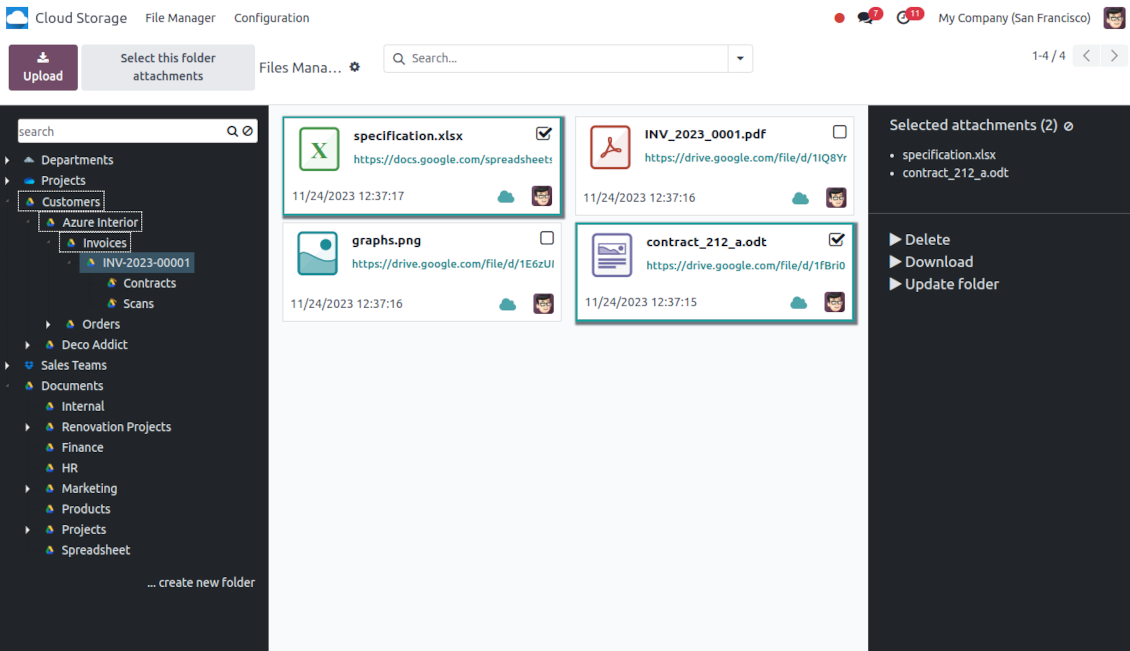
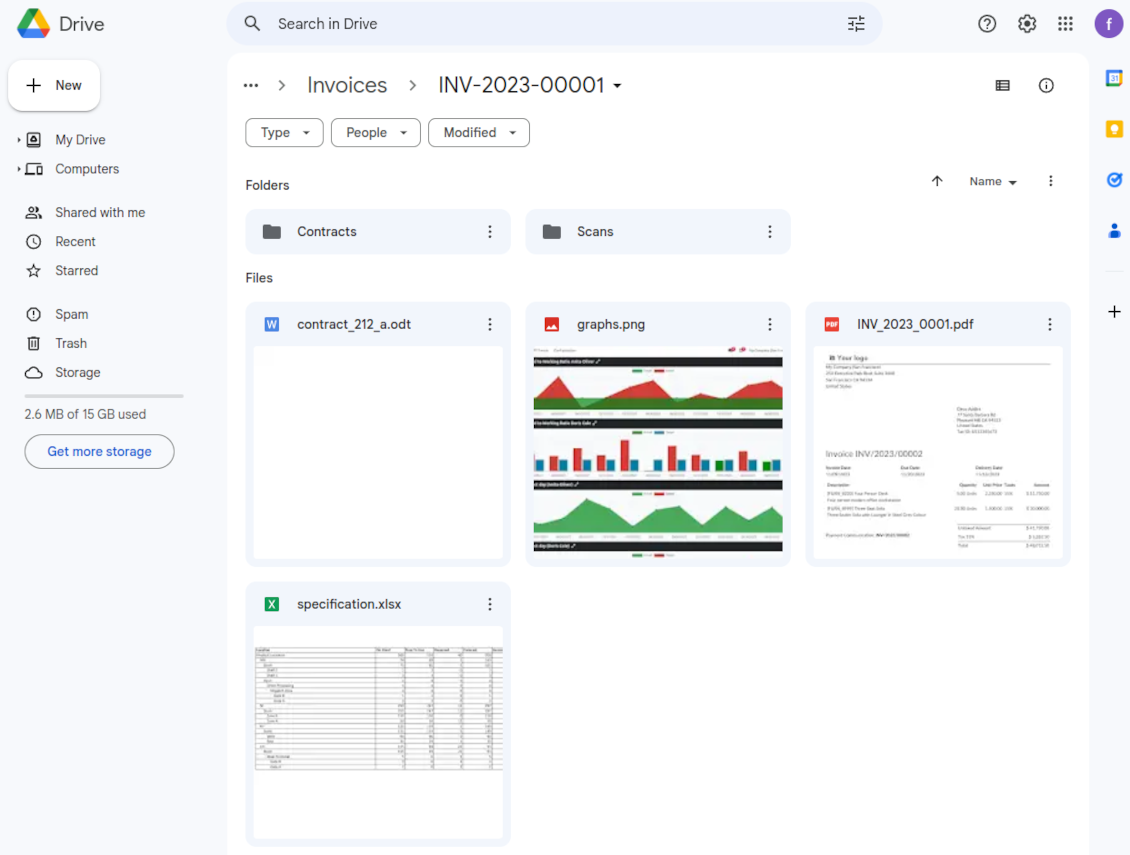
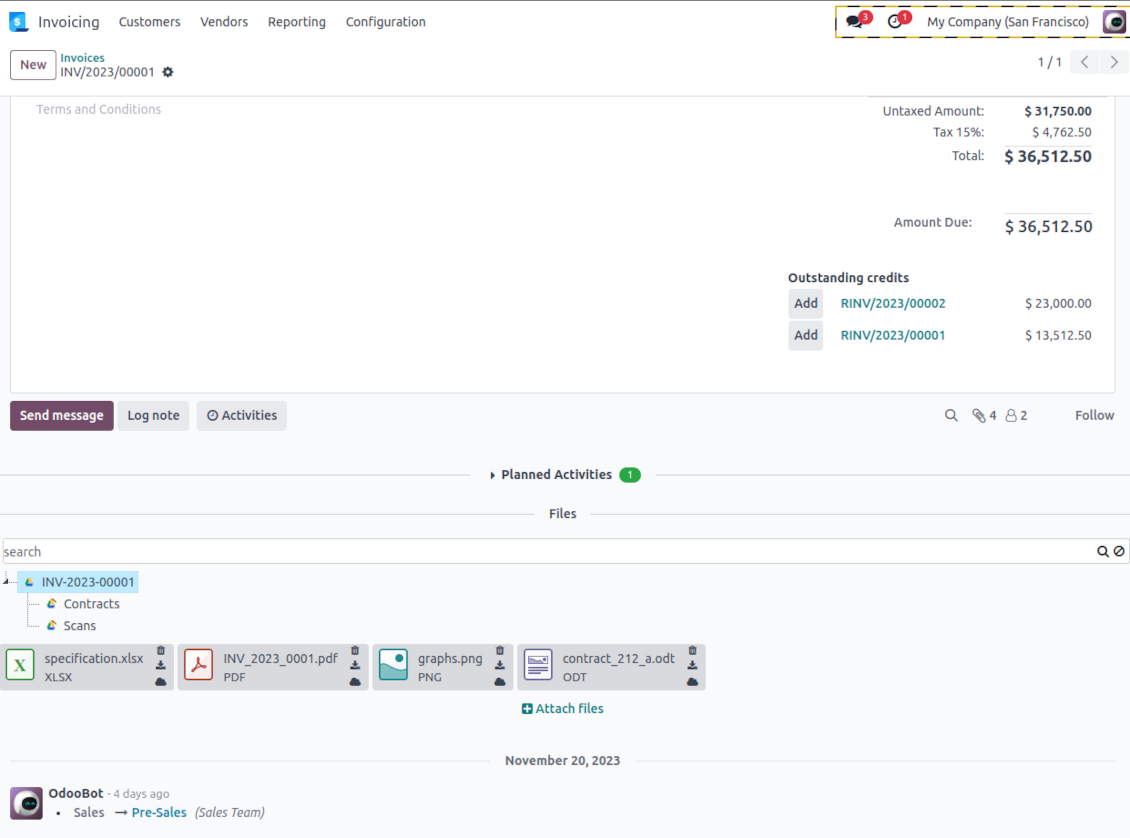
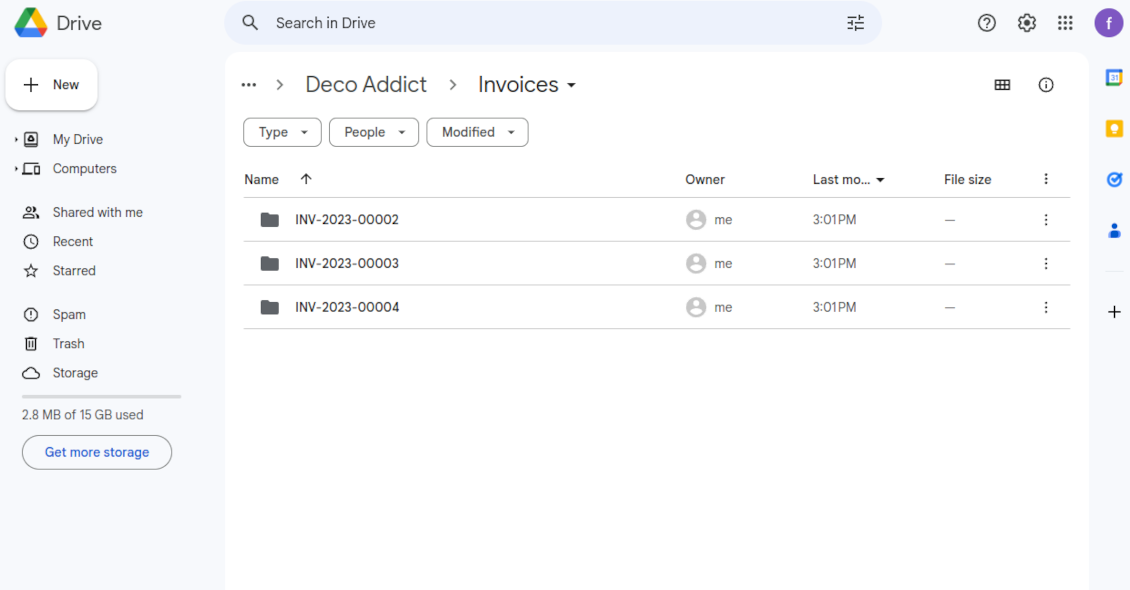
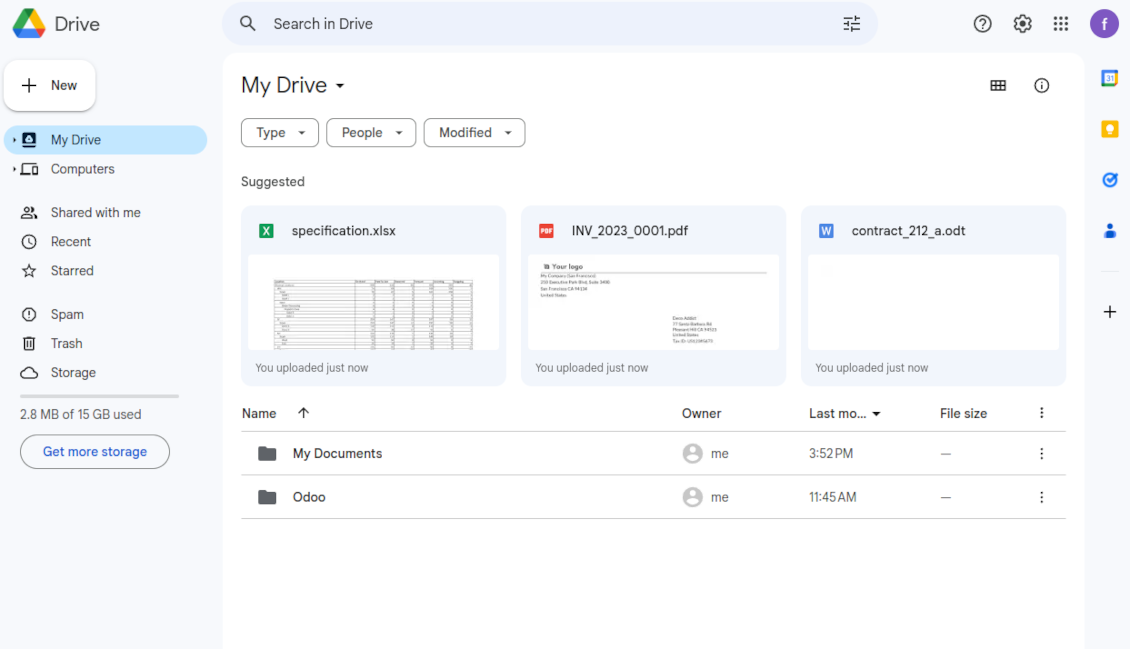

This is the tool to integrate Google Drive features with Odoo folders and files. The app automatically stores Odoo attachments and directories in Google Drive and provides instant access to them via web links.
Automatic folders' structure
Decide which Odoo document types should have their own folders trees and synchronize those to Google Drive
Automatic regular sync
Rely on auto-synchronization between Odoo and Google Drive based on scheduled jobs. No manual interaction is required
Bilateral sync
Odoo sends attachments to Google Drive and retrieves files from there. Binary content is kept in clouds, while Odoo provides direct access to synced items
Cloud synchronization history
Control Google Drive sync logs right in Odoo. Export and share those in case of any issues. Be notified of any client disconnections
File manager interface
Manage synced folders and attachments from a single Odoo view. Comfortably navigate by directories. Search and download files one by one or in batch. Upload and move attachments to folders
Attachment box
Organize files of any Odoo object in a set of subfolders. Instantly access folders and files in the attachment box and in Google Drive.
Automatic backups
The app allows you to automatically sync and manage your current database backups to Google Drive.
Tricky setup, but works perfectly now
Really solid module. We managed to get a very flexible folder structure (sorted by clients) and synced all our sales orders, invoices and tasks by projects to Google Drive.
Initial setup was a bit of a pain and kinda tricky to configure everything at first, but now it's running smoothly and works perfectly. The faotools team helped a lot. Def worth it if u need to keep your docs organized in Odoo and Google Drive.
Recommended!
Excellent !!!
Great App and great Service from faOtools.
Best module for integration with google drive
The module performs its function correctly and faOtools responds quickly to any problem and, in case of detecting any bug, quickly apply the changes. Its support is 10 stars.
How synchronization works
Automatic two-sided sync
-
Configure sync for one or multiple Google Drive instances
-
Integration is based on scheduled jobs and is fully automatized. The app regularly checks changes in systems and runs sync operations
-
Synchronization is bilateral. Updates in Odoo are reflected in Google Drive (direct sync); changes in Google Drive modify Odoo folders and attachments (backward sync)
-
Cloud connection with Google Drive might be reset. In this way, the app assumes getting back all items back to Odoo (reverse sync)
-
Odoo folders and attachments might be re-attached to a new cloud client from Google Drive. Hence, items will be first taken back to Odoo (reverse sync) and then will be put into the new cloud storage (direct sync)
Queue-based synchronization
-
Once in 15 minutes, the app examines updates in Odoo and Google Drive to prepare a synchronization queue
-
Folders' checks follow the First-In-First-Out (FIFO) principle. So, directories that have not been examined for the longest will be processed first
-
Once in 15 minutes, the sync queue is run by the special scheduled job. Firstly, the most important (blocking) tasks would be done
-
Control planned jobs and their fulfillment in the special Odoo logs interface (Cloud Storage > Configuration > Sync Logs). Subscribe for particular cloud clients notifications
-
If the app faces sync failures, it will re-try operations afterward. Sync queue processing would not be stopped if there are items not blocked by such failures
Odoo attachments for Google Drive: direct sync
-
Direct sync prepares the folders' hierarchy and uploads Odoo attachments for Google Drive
-
Direct sync checks whether attachments are added or deleted for synced directories. If so, they will be created in Google Drive or removed from there. In particular, it means that any file added to a folder-related Odoo object (e.g. Quotation), would be automatically moved to a linked cloud client
-
Direct sync makes all synced Odoo attachments change their type to a link (URL), while binary content is removed with one of the next Odoo cleaners. So, no actual files would be stored on your Odoo server
-
Direct sync checks whether a new folder is added. Disregarding whether it is done manually or automatically, the app would generate a peer directory in Google Drive
-
Direct sync checks whether there are any updates in folders. If so, such changes are reflected in Google Drive
Google Drive files and folders for Odoo: backward sync
-
Backward sync checks whether any files or subfolders are added to Google Drive folders. If so, the app would create URL attachments/subdirectories inside linked Odoo directories (and hence Odoo objects if any)
-
Backward sync checks whether there are any updates in folders or attachments. Such updates would be then reflected in Odoo
-
Backward sync checks whether any files are deleted/moved in a Google Drive document folder. If so, a linked Odoo attachment would be also unlinked or moved
-
If you deleted a Google Drive folder related to a folder rule / Odoo object, their child files would be deleted as well. Thus, Odoo would remove related attachments. The folders, however, will be recovered with a direct sync
-
In case of conflicts, direct sync changes are in general considered more important than backward updates.
Resetting or changing Google Drive: reverse sync
-
In case you decided to reset the connection with Google Drive, files would be moved back to Odoo
-
In case you decided to change the cloud client of a folder rule or a folder, files would be first taken back to Odoo, and then direct sync for a new client would be done
-
Reverse sync operations are prioritized to direct and backward sync operations
-
Not all items can be correctly reversed to Odoo due to cloud client peculiarities. For example, there are documents that may exist only in cloud storage environments (e.g. Google Sheets). The app would try to convert such documents, but in some cases, it will require manual interactions.
कॉन्फ़िगरेशन और इंस्टॉलेशन सुझाव: Google Drive Odoo Integration Odoo v.17
Configuration and log in
- Turn on the option 'Google Drive Sync' (cloud Storage > Configuration > Configuration). The optional add-on Google Drive Odoo Integration is required
- Go to the Google Cloud Console via the URL https://console.cloud.google.com
- Select or create a project
- After the project is selected, the console opens the Google Auth Platform. Press 'Get Started'
- Add app information
- As an app name select any suitable
- As a user support email select your email address
- Press 'Next'
- As the audience select 'External' and press 'Next'. Note: you are anyway going to use this app only for your own Odoo connection
- As the contact information enter your Google or Google Workspace email address and press 'Next'
- Agree with the Google API Services User Data Policy, press 'Continue', and then press 'Create'
- Go to 'Clients' and press 'Create client'
- As the application type select 'Web application'
- As a name select any suitable
- As the authorized redirect URI, add the link in a format [YOURODOOSITENAME]/google_drive_token (e.g. https://odootools.com/google_drive_token).
- Press 'Create'
- Copy and safely store 'Client ID' and 'Client secret'. The client secret is shown only once
- Enable the Google Drive API for this project: type 'Google Drive API' in the top search box, open the found product, and press 'Enable'
- Go to 'Audience' and add your email address as a test user
- Publish the app. Otherwise, the app stays in the testing state and its token expires every 7 days
- Open 'Branding' and fill in the application home page and the application privacy policy link (for example, the links to your Odoo website). Add the domains of those links as the authorized domains
- Open 'Audience' and press 'Publish app'
- Do not upload an app logo. This would invoke a long and complex Google verification process that is of no actual need to you
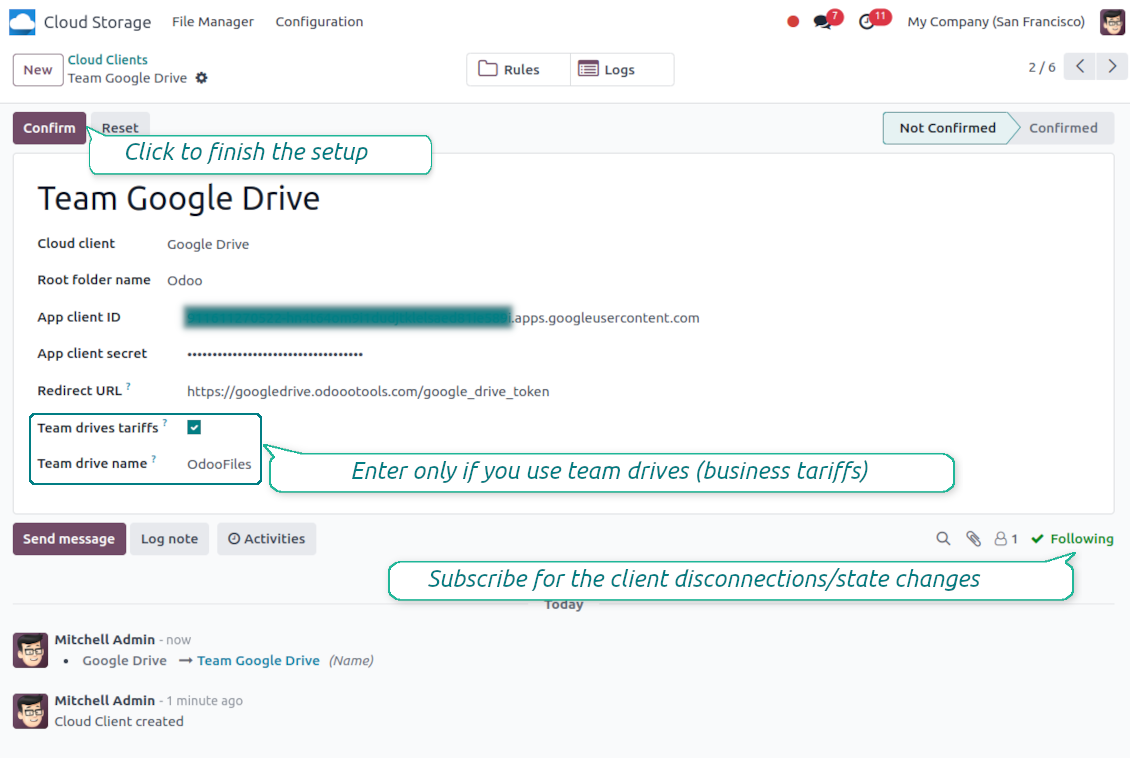
- Go to Odoo Cloud Storage > Configuration > Cloud Clients press 'Create'
- As a reference, introduce any name which would be clear to all users
- As a Cloud client, choose 'Google Drive'
- As a Root folder name, enter a title that will be used as the parent Google Drive directory for all synced folders. For example, 'Odoo' or 'OdooERP'
- Copy 'Client ID' from step 9 into the field 'App client ID'
- Copy 'Client secret' from step 9 into the field 'App client secret'
- Insert the redirect URL you entered in step 9
- If you use team drives, check the related box. Make sure you really use team drives. In your Google Drive you should find the item 'Team Drives' in the left sidebar. This feature is available only for business and enterprise tariffs
- If the option 'Team Drive' is enabled, introduce its name. It should be absolutely the same as you see it in your Google Drive. Make sure that your user has full rights to all Google drives (usually, it is the same user who configures your team Google Drive)
- Press 'Confirm'. Odoo redirects you to the Google login page. Check in the system, agree with all conditions, and grant all permissions asked
- After login, Google redirects you back to Odoo. Google Drive - Odoo synchronization is ready to be done
- Apply the newly created cloud client to folder rules and/or manual folders which should be synced to that Google Drive
- Await the sync scheduled job to be started. For testing purposes only: trigger integration manually from Cloud Storage > Configuration > Configuration > the button 'Launch sync'.
Watch also the configuration video, Note: the Google console part of the video is outdated; follow the steps above instead
Open the Google Auth Platform
Add app information
Select the external audience
Add contact information
Agree with the policies and create the app
Create an OAuth client
Configure the web application client
Copy the client ID and client secret
Find the Google Drive API
Enable the Google Drive API
Fill in branding to publish the app
Add test users and publish the app
Enter Google app credentials to Odoo
के बारे में अक्सर पूछे जाने वाले प्रश्न Google Drive Odoo Integration Odoo v.17
क्या जनरेट किए गए Google Drive फ़ोल्डर Odoo उपयोगकर्ताओं में स्वतः साझा होते हैं?
ऐप स्वयं Google Drive पक्ष पर पहुँच अधिकार नहीं नियंत्रित करता। यह वहाँ हाथ से करना होता है। Odoo, Google Drive में लक्ष्य फ़ोल्डर बनाता है, जो डिफ़ॉल्ट रूप से साझा नहीं होते; किसी भी फ़ोल्डर की अनुमतियाँ बदल सकते हैं। उदाहरण: 'Odoo' निर्देशिका या किसी 'Odoo > Sale Orders' या 'Odoo > Sale Orders > SO-001' को पूर्ण अधिकार देना।
ऐप एक ही उपयोगकर्ता एंडपॉइंट सिद्धांत पर चलता है। इसलिए सभी सिंक उसी Google Drive उपयोगकर्ता के तहत होते हैं (आपके द्वारा कॉन्फ़िगर किए Google API ऐप के अनुसार)।
मैंने Google Drive में फ़ाइल हटा दी, लेकिन वह अभी भी Odoo में है
फ़ाइल पूरी तरह हटाने के लिए Google Drive का बिन भी साफ़ करें।
यह भी याद रखें कि फ़ाइल अभी Odoo में हो सकती है, क्योंकि पिछली सिंक ने अटैचमेंट अभी प्रोसेस नहीं किया। यह निर्धारित प्रक्रिया है, समय लगता है।
क्या Google API अनुरोध के आधार पर शुल्क लेगा?
मॉड्यूल केवल मुफ़्त API का उपयोग करता है, इसलिए Google आपसे शुल्क नहीं लेगा।
सिंक किए गए फ़ील्ड कहाँ संग्रहीत होते हैं? क्या वे Odoo और क्लाउड में डुप्लिकेट होते हैं?
ऐप मानता है कि अटैचमेंट की बाइनरी सामग्री Odoo सर्वर के बजाय Cloud Client में रखी जाती है। इसलिए Odoo में ऐसे अटैचमेंट URL प्रकार के हो जाते हैं, और आप उन्हें किसी भी समय अटैचमेंट बॉक्स या Cloud Client से खोल सकते हैं।
सेटअप के बाद कोई मैन्युअल कार्रवाई नहीं चाहिए, क्योंकि सिंक पूरी तरह स्वचालित है। तय करें कि कौन से Odoo दस्तावेज़ प्रकार सिंक हों और प्रत्येक के लिए संबंधित मॉडल सेट करें (ग्राहक, विक्रय या खरीद आदेश, टास्क, प्रोजेक्ट आदि)।
क्या मैं एक ही दस्तावेज़ प्रकार के लिए कुछ फ़ोल्डर रख सकता हूँ? उदाहरण के लिए, आंतरिक प्रोजेक्ट और ग्राहक प्रोजेक्ट?
हाँ, आप कर सकते हैं। इसके लिए प्रत्येक के लिए नियम बनाएँ, फिर फ़िल्टर लागू करें: उदाहरण के लिए प्रोजेक्ट के प्रकार से।
फ़िल्टर परस्पर-अनन्य रखें ताकि दस्तावेज़ निश्चित रूप से असाइन हो। उदाहरण: 'ग्राहक पर आपूर्तिकर्ता नहीं', 'आपूर्तिकर्ता पर ग्राहक नहीं'। वरना किसी खास दस्तावेज़ का फ़ोल्डर एक मॉडल से दूसरे पर कूदेगा।
क्या सिंक को रीयल-टाइम बनाना संभव है?
नहीं। रीयल-टाइम सिंक से बचने के हमारे ठोस कारण हैं:
प्रदर्शन संबंधी समस्याएँ। यदि सिंक रीयल-टाइम हो, तो हर फ़ाइल अपलोड पर लोडिंग स्क्रीन आएगी।
संघर्ष संबंधी समस्याएँ। यदि 2 उपयोगकर्ता एक साथ किसी आइटम को बदलें, तो अनसुलझी स्थितियाँ हो सकती हैं। नियमित जॉब में हम बाद में ठीक कर सकते हैं; रीयल-टाइम में इसे कतार के रूप में सहेजना पड़ेगा, जो उपयोगकर्ताओं के लिए और भ्रमित करने वाला होगा।
कार्यक्षमता संबंधी समस्याएँ। खासकर आइटम का नाम बदलना और पुनर्गठन। बैकवर्ड सिंक में टूल निर्देशिका तर्क पर सख्ती से निर्भर करता है, और हर सिंक में 100% आइटम जाँचे जाते हैं। यदि हर अपडेट के बाद हो, तो प्रति सेकंड हज़ारों अनुरोध होंगे। नहीं तो: बदलाव खो जाएँगे।
क्या मैं क्लाउड में डिफ़ॉल्ट फ़ोल्डर के नाम बदल सकता हूँ?
किसी भी दस्तावेज़ प्रकार के लिए मॉडलों की निर्देशिकाओं (बिक्री आदेश, अवसर, आपूर्तिकर्ता आदि) को अपना नाम दे सकते हैं।
ऑब्जेक्ट फ़ोल्डरों (SO-001, John Smith आदि) के लिए टूल इस दस्तावेज़ प्रकार का प्रदर्शन नाम बनाने की Odoo विधि पर निर्भर करता है। फिर भी नाम अभिव्यक्ति परिभाषित करके बदल सकते हैं। Odoo ईमेल टेम्पलेट वाली ही वाक्य रचना उपयोग होती है।
क्या मैं सिंक जॉब की आवृत्ति बदल सकता हूँ?
नहीं, संस्करण 15 से निर्धारित जॉब नहीं बदलने चाहिए। सबसे स्थिर और तेज़ कनेक्शन के लिए वे हर 15 मिनट चलने हेतु अनुकूलित हैं।
सुनिश्चित करें कि आपके Odoo सर्वर टाइमआउट कम से कम 15 मिनट (900 सेकंड) हों।
यदि कुछ समय के लिए सिंक रोकना हो, तो किसी खास cloud client फ़ॉर्म पर करें।
क्या मैं अटैचमेंट कुछ क्लाउड क्लाइंट से सिंक कर सकता हूँ
हाँ, संस्करण 15 से कई कनेक्शन सेट किए जा सकते हैं। इस तरह कुछ फ़ोल्डर एक cloud client से और कुछ दूसरे से सिंक होते हैं।
ध्यान दें कि एक ही फ़ोल्डर को एक साथ कई cloud storages से सिंक नहीं किया जा सकता।
हम अपने क्लाउड में विशेष संपादक उपयोग करते हैं (जैसे OnlyOffice, Office 365 आदि)। क्या फ़ाइलें उसी संपादक में खुलेंगी?
हाँ, आपके cloud client कॉन्फ़िगरेशन पर निर्भर करता है।
क्या मुझे केवल Cloud Storage Solution ऐप चाहिए?
संस्करण 15 से ऐप अकेले चलकर अटैचमेंट को फ़ोल्डर में व्यवस्थित कर फ़ाइल मैनेजर इंटरफ़ेस दे सकता है।
लेकिन यदि लक्ष्य किसी क्लाउड क्लाइंट से कनेक्शन है, तो कम से कम एक वैकल्पिक क्लाइंट ऐप इंस्टॉल करना होगा।
फ़ोल्डर नियम बदलने पर क्या होता है?
फ़ोल्डर नियम बदलने पर फ़ोल्डरों की सूची भी बदलती है। यदि फ़ोल्डर नियमों की शर्तों से मेल नहीं खाता, उसे हटा दिया जाता है। यदि फ़ाइलें सिंक हो चुकी हैं, उलटा सिंक उन्हें Odoo में लौटाता है और Cloud Client से हटाता है।
यदि दस्तावेज़ का ऑब्जेक्ट फ़ोल्डर नियम की शर्तों से मेल नहीं खाता, उसका फ़ोल्डर नहीं बनेगा। बाद में मेल खाए तो संबंधित फ़ोल्डर बनेगा।
आपके टूल की अपडेट नीतियाँ क्या हैं?
वर्तमान Odoo Apps Store नीतियों के अनुसार:
- संस्करण 12.0 और उससे पहले के लिए खरीदा प्रत्येक मॉड्यूल 12.0 तक सभी संस्करणों तक पहुँच देता है।
- संस्करण 13.0 से प्रत्येक मॉड्यूल संस्करण अलग खरीदना होता है।
- संस्करण चाहे जो हो, खरीद से उस प्रमुख संस्करण के सभी अपडेट और बग ठीक करने का अधिकार मिलता है।
ध्यान दें कि faOtools टीम इन नीतियों को नियंत्रित नहीं करती। सभी प्रश्नों के लिए सीधे Odoo Apps Store प्रतिनिधियों से संपर्क करें।
आपका ऐप Odoo.sh पर कैसे इंस्टॉल करूँ?
सबसे सीधा तरीका Odoo स्टोर की अंतर्निहित वर्कफ़्लो का उपयोग करना है:
1. मॉड्यूल का पृष्ठ खोलें और Deploy on odoo.sh बटन पर क्लिक करें
2. उसके बाद आपको GitHub पृष्ठ पर भेजा जाएगा। अपने खाते में लॉग इन करें, फिर 'Create a new repo' पर क्लिक करें या मौजूदा का उपयोग करें। सुनिश्चित करें कि रिपॉज़िटरी निजी हो। OPL-1 लाइसेंस के तहत ऐप प्रकाशित करना अनुमति नहीं है। ज़रूरत हो तो Odoo.sh प्रोजेक्ट के लिए नया repo बनाएँ
3. फिर odoo.sh पर जाएँ और Deploy बटन पर क्लिक करें। पॉप-अप विंडो में निर्णय जमा करें और 'Continue.' पर क्लिक करें। इससे इंस्टॉलेशन शुरू होगा।
ये चरण प्रोजेक्ट की production शाखा पर ऐप इंस्टॉल करेंगे। अन्य शाखाओं पर ऐप तैनात करने या मॉड्यूल अपडेट करने के लिए ये क्रियाएँ करें:
1. Odoo स्टोर से ऐप का स्रोत कोड अपलोड करें
2. मॉड्यूल को आवश्यक GitHub रिपॉज़िटरी में commit करें। सुनिश्चित करें कि ऐप के कोई फ़ोल्डर/फ़ाइल अनदेखी न हों (यानी repo के .gitignore में न हों)। रिपॉज़िटरी odoo.sh अपने आप बनाता है और डिफ़ॉल्ट रूप से कुछ ज़रूरी चीजें शामिल हो सकती हैं (जैसे /lib)। मॉड्यूल की सभी निर्देशिकाएँ, उपनिर्देशिकाएँ और फ़ाइलें बिना अपवाद अपलोड करें
3. odoo.sh प्रोजेक्ट की लक्ष्य शाखा Deploy करें या, अगर सेटिंग्स ऐसा मानती हैं, स्वतः बनने तक प्रतीक्षा करें।
अपने सर्वर पर आपका ऐप कैसे इंस्टॉल करूँ?
2. Odoo सर्वर पुनः प्रारंभ करें;
3. डेवलपर मोड चालू करें (तकनीकी सेटिंग्स);
4. ऐप सूची अपडेट करें (ऐप्स मेनू);
5. ऐप खोजें और 'Activate'/'Install' दबाएँ;
6. ऐप पृष्ठ पर दिशानिर्देश हों तो उनका पालन करें।
आपके ऐप में अतिरिक्त ऐड-ऑन हैं। क्या बाद में खरीद सकता हूँ?
हाँ, ज़रूर। साथ ही Odoo सभी निर्भरताएँ कार्ट में अपने आप जोड़ता है, इसलिए दोहरी भुगतान से बचने के लिए पहले खरीदे टूल हटा दें।
मैंने आपका ऐप Odoo.sh पर डिप्लॉय किया और टेस्ट में चेतावनी/त्रुटि दिख रही है
लाल/नारंगी चेतावनी ऐप की सुविधाओं को प्रभावित नहीं करती। खेद है कि कभी-कभी हमारे मॉड्यूल मानक स्वचालित परीक्षण पास नहीं करते, क्योंकि वे ऐसा व्यवहार मानते हैं जो ऐप के लक्ष्यों से टकराता है। उदाहरण के लिए हम मूल्य गणना बदलते हैं, जबकि मानक Odoo मॉड्यूल परीक्षण अंतिम मूल्य की तुलना मानक एल्गोरिदम से करते हैं।
सबसे पहले तैनात डेटाबेस की सुविधाएँ जाँचें। क्या सब सही काम कर रहा है?
यदि फिर भी मानते हैं कि चेतावनी वास्तविक सुविधाओं को प्रभावित करती है, तो संपर्क करें और पूर्ण इंस्टॉलेशन लॉग तथा तैनात मॉड्यूलों की पूरी सूची (कोर और तृतीय-पक्ष सहित) भेजें।
क्या मैं ऐप आपकी कंपनी से सीधे खरीद सकता हूँ?
नहीं, हम उपकरण केवल आधिकारिक Odoo ऐप स्टोर.
मुझे छूट चाहिए
खेद है, हमारे पास व्यक्तिगत कीमतें देने के तकनीकी साधन नहीं हैं।
क्या मैं ऐप अपने Odoo Online (SaaS) डेटाबेस पर इंस्टॉल कर सकता हूँ?
नहीं, तृतीय-पक्ष ऐप Odoo Online पर नहीं चल सकते। दुर्भाग्य से Odoo SaaS यह संभावना रोकता है।
आपके टूल की अन्य ऐप पर निर्भरता है। क्या मुझे वे खरीदनी चाहिए?
हाँ, सही काम के लिए टूल को निर्भरता में चिह्नित सभी मॉड्यूल चाहिए। ऐप पृष्ठ पर दी गई कीमत में आवश्यक निर्भरताएँ पहले से शामिल हैं।
मॉड्यूल की कीमत अमेरिकी डॉलर में क्या है? यह क्यों बदली?
हमारे मॉड्यूल की कीमत यूरो में है। Odoo स्टोर आंतरिक विनिमय दर से अन्य मुद्राओं में बदलता है। इसलिए अमेरिकी डॉलर में कीमत दर अपडेट होने पर बदल सकती है।
अंग्रेज़ी के अलावा अन्य भाषाओं में ऐप और वेबसाइट का शब्द AI-सहायता से है और आधिकारिक Odoo अनुवादों से मेल खाता है। यदि आपको कोई गलती दिखे, अनुवाद शुद्धता का टिकट भेजें और हम इसे ठीक करेंगे।
Odoo डेमो डेटाबेस (लाइव पूर्वावलोकन)
इस ऐप के लिए हम मुफ़्त व्यक्तिगत डेमो डेटाबेस दे सकते हैं।
हमसे संपर्क करने के लिए फ़ोन नंबर या क्रेडिट कार्ड की आवश्यकता नहीं है। केवल एक छोटी ईमेल साइन-अप करनी है, जिसमें 30 सेकंड से अधिक नहीं लगता।
आपके अनुरोध पर हम एक व्यक्तिगत लाइव पूर्वावलोकन डेटाबेस तैयार करेंगे, जहाँ आप लगभग दो सप्ताह परीक्षण और धारणाएँ जाँच सकते हैं।
बग रिपोर्टिंग
यदि आपको बग या असंगत व्यवहार मिले तो हमसे संपर्क करें। हम खरीद के 60 दिनों के भीतर सुधार देने की गारंटी देते हैं और इस अवधि के बाद भी टूल सुधारने में रुचि रखते हैं।
हमसे संपर्क करने के लिए फ़ोन नंबर या क्रेडिट कार्ड की आवश्यकता नहीं है। केवल एक छोटी ईमेल साइन-अप करनी है, जिसमें 30 सेकंड से अधिक नहीं लगता।
अपने अनुरोध में जितना संभव हो उतना विवरण शामिल करें: स्क्रीनशॉट, Odoo सर्वर लॉग, समस्या को दोहराने का पूरा वर्णन आदि। आमतौर पर किसी मुद्दे की कार्य योजना तैयार करने (यदि बग पुष्टि हो) या आगे क्या करना है इसके दिशानिर्देश देने (अन्यथा) में कुछ कार्यदिवस लगते हैं।
सार्वजनिक सुविधा अनुरोध और मॉड्यूल विचार (निःशुल्क विकास)
हम अपने टूल सुधारने के लिए दृढ़ता से प्रेरित हैं और किसी भी प्रतिक्रिया के आभारी होंगे। यदि आपकी आवश्यकताएँ सार्वजनिक उपयोग की हैं और कुशलता से लागू की जा सकती हैं, तो टीम उन्हें हमारी कार्य सूची में शामिल करेगी।
ऐसी कार्य सूची नियमित रूप से संसाधित होती है और अतिरिक्त शुल्क नहीं लगती। यद्यपि हम समय सीमा और अंतिम डिज़ाइन का वादा नहीं कर सकते, यह बिना निवेश और जोखिम के वांछित सुविधाएँ पाने का अच्छा तरीका हो सकता है।
हमसे संपर्क करने के लिए फ़ोन नंबर या क्रेडिट कार्ड की आवश्यकता नहीं है। केवल एक छोटी ईमेल साइन-अप करनी है, जिसमें 30 सेकंड से अधिक नहीं लगता।


The tool to build a deep and structured knowledge base for internal and external use. Knowledge System. KMS. Wiki-like revisions.
398€
The tool to set up KPI targets and control their fulfillment by periods. KPI dashboards. Dashboard designer. KPI charts

The tool for time-based service management from booking appointments to sales and reviews
398€
The tool to manage your Odoo from your favorite AI chats through MCP. Claude. Any MCP-supporting AI.

The tool to flexibly structure Odoo attachments in folders and synchronize directories with cloud clients: Google Drive, OneDrive/SharePoint, Nextcloud/ownCloud, Dropbox, Amazon S3, Box, and NAS. DMS. File Manager. Document management system
398€
The tool to automatically synchronize Odoo attachments with OneDrive files in both ways
487€
The tool to automatically synchronize Odoo attachments with ownCloud/Nextcloud files in both ways
487€
The tool to automatically synchronize Odoo attachments with NAS Solutions in both ways. Synology, QNAP, TrueNAS and any other WebDav-supporting NAS solutions
487€